
Now if perfection could have been attained through the Levitical priesthood (for on this basis the people received the law), why was there still need for another priest to appear—one in the order of Melchizedek and not in the order of Aaron? For when the priesthood is changed, the law must be changed as well. (Hebrews 7:11-12)
One of the most misinterpreted passages in all of Scripture is found in the Book of Hebrews, Chapter 7, where on the surface the author makes an ambiguous statement. In comparing the superior priesthood of Jesus to the Levitical priesthood, Hebrews 7:12 states, “For when the priesthood is changed, the law must be changed as well.”
Antinomians are quick to claim this verse as an irrefutable proof text for their position, fueling their confirmation bias. For centuries, pastors and theologians have cherry picked verses like Hebrews 7:12 to build a case against the ongoing validity of Torah and consequently reinforce the wall of separation between Jew and Gentile — a wall that Jesus intended to tear down.
Unfortunately, it is precisely this interpretive error that has caused “ignorant and unstable men” to distort the immutable Word of God and be “carried away by the error of the lawless” (see 2 Peter 3:16-17). As a result, we now have generations of Gentile Christians who have inherited a theological system that not only disregards the Torah, but even demonizes those who keep it.
I also inherited this system, blindly believing what I was told from men much more knowledgeable than me. And although the pastors and teachers I sat under were godly, well- meaning men, I now have grown to understand how God’s word has been twisted in ignorance only to promote lawlessness.
“The law has been done away with,” they say. “Jesus has made the law obsolete,” they assert. “We are no longer under the law but grace,” they say. “We don’t have to obey those Old Testament laws because Jesus changed all that,” they insist.
But is it possible that “they” are wrong? Could it be that “they” have misinterpreted some of the “hard to understand” writings of the Apostle Paul and other passages such as Hebrews 7? What if there is a better explanation? A more consistent hermeneutic. Could it be possible that a predominantly Gentile church, centuries removed from the original Hebrew context of Scripture, has failed to understand the intended meaning of the text?
Not only do I think it is possible. I am convinced that is precisely what has happened.
So let’s take another look at our passage in context, and let’s discover what the author of Hebrews really means when he says the “law must be changed.”
A Change in the Priesthood
It is imperative that we first understand that the change in the law referenced here in Hebrews 7 is specific to the Levitical priesthood, not to the Torah as a whole. In light of the death and resurrection of Jesus, the author recognizes the temporary and limited efficacy of the Levitical priesthood.
This change functions more like an amendment, transferring the authority of High Priest from Aaron and his descendants to a superior order in Jesus, who now operates as both High Priest and King in the order of Melchizedek.

Hebrews describes the Levitical priesthood in inferior terms, such as mortal, sinful, temporal, weak, and fading away.
The priesthood of Jesus, however, is perfect, sinless, eternal, powerful, permanent, and indestructible.
The Levitical priesthood served its purpose and provided access and mediation between a Holy God and His people Israel. A better priesthood is now in place, however, which has “changed” the law by transferring all power and authority to the Risen Lord.
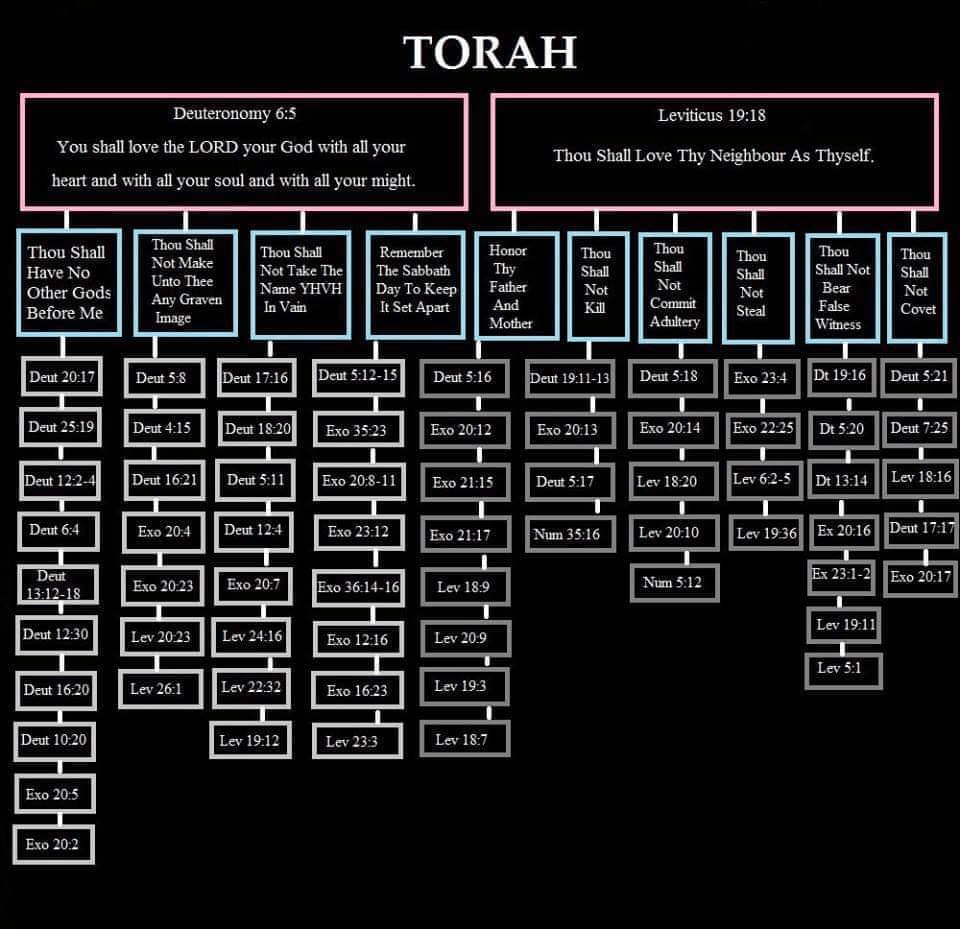
This amendment to the law only strengthens and perfects a system that served its purpose for a time. But again, this change is specific to the priesthood and does not apply to the Torah as a whole. Any logical person understands this, as we all know that laws against idolatry, murder, rape, kidnapping, adultery, witchcraft, uncleanness, covetousness etc… remain in full force.
A Change in Location
Not only was the office of priesthood transferred from Aaron to Jesus, but also the location of ministry and mediation was changed from the earthly temple to the heavenly temple.
Hebrews reminds us that the earthly tabernacle was merely a copy and shadow of the heavenly tabernacle not made with human hands. By offering His own blood once and for all, Jesus tore the veil and provided permanent access between the Father in heaven and fallen mankind on earth. As Hebrews 9:24 says …
For Christ did not enter a man-made copy of the true sanctuary, but He entered heaven itself, now to appear on our behalf in the presence of God.
Beyond that, the presence of God changed location from a man-made structure to a living temple in the body of Christ. The Holy Spirit now dwells in every believer, taking up permanent residence in human temples. As the Apostle Paul says in 1 Corinthians 3:16-17 …
Do you not know that you yourselves are God’s temple, and that God’s Spirit dwells in you? If anyone destroys God’s temple, God will destroy him; for God’s temple is holy, and you are that temple.
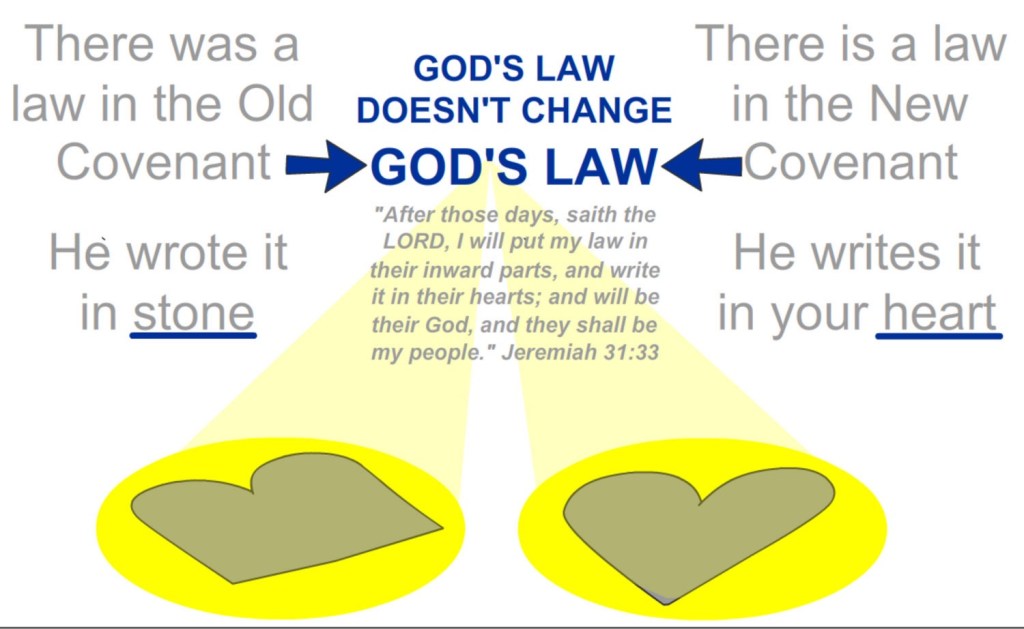
Finally, the location of the Torah changed from tablets of stone to now being written on human hearts. This truth alone proves the ongoing validity of the Torah for followers of Jesus today. Why would God write His commandments on our hearts if the law is no longer in effect? Obviously, as believers in Christ, we not only are expected to walk in obedience to Torah, but we now are supernaturally empowered to do so through the ministry of the Spirit.
It is clear that you are a letter from Christ, the result of our ministry, written not with ink but with the Spirit of the living God, not on tablets of stone but on tablets of human hearts. (1 Corinthians 3:3)
Even the prophets foresaw the day when the eternal law of God would be written on human hearts.
But this is the covenant I will make with the house of Israel after those days, declares the LORD. I will put My law in their minds and inscribe it on their hearts. And I will be their God, and they will be My people. (Jeremiah 31:33)
Ezekiel echoes this promise …
I will give you a new heart and put a new spirit within you; I will remove your heart of stone and give you a heart of flesh. And I will put My Spirit within you and cause you to walk in My statutes and to carefully observe My ordinances. (Ezekiel 36:26-27)
A Change in the Covenant
Finally, the author of Hebrews clearly regards the New Covenant in Christ as better than the original covenant mediated by Moses at Sinai. But even this concept is grossly misunderstood in the modern church.

The first distinction that must be made is between the covenant and the Torah as a whole. They are not the same thing. The Torah represents God’s eternal value system and life-giving instructions that are given to mankind for our blessing and our good. God does not change nor do His values.
A covenant, however, is either a conditional or unconditional promise made between two separate parties with specific obligations and expectations. The covenant that God made with Israel at Mount Sinai was a marriage contract with certain conditions. The Torah served as the vows themselves providing clear expectations for Israel in how to prove her love and fidelity to God. So the covenant is the legal marriage contract, whereas the Torah is the way the relationship is to be honored. They are not the same.
The author of Hebrews says that fault can be found in this original marriage covenant, but notice where the fault is found. Fault is not found with the Torah but rather with the people themselves, who failed to keep God’s commandments and therefore uphold their vows.
As Hebrews 8:6-8 says …
Now, however, Jesus has received a much more excellent ministry, just as the covenant He mediates is better and is founded on better promises. For if that first covenant had been without fault, no place would have been sought for a second. But God found fault with the people …
The New Covenant is established on better promises because Jesus did what we could never do. He perfectly obeyed God’s law on our behalf, fulfilling all righteousness, and then He willingly died in our place becoming a curse for us because we have broken God’s commandments bringing the curse of the law (death) upon ourselves.
Jesus was able to do what no other man could do — not Abraham, not Moses, not David, not anyone. Though He is without sin, He became sin for us so that in Him we might become the righteousness of God by faith.
By dying as the Bridegroom, Jesus made the original marriage covenant that we broke both null and void, and He established a new and better marriage covenant in His blood to provide the way for mankind to be restored in relationship to God.
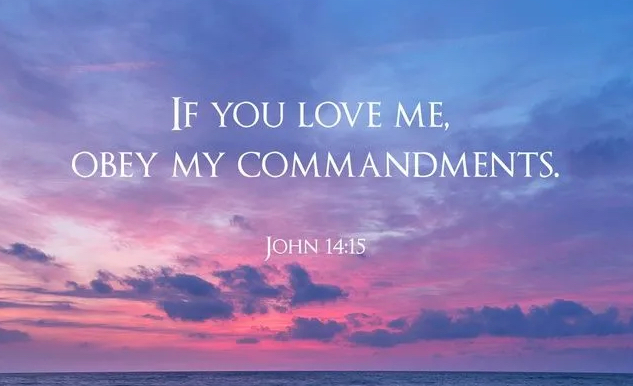
But notice, the marriage vows — God’s instructions — have not changed. The expectations and obligations of the covenant remain in place. The Torah was never intended to save us and is powerless to do so; however, the Torah remains the righteous standard for godly living that defines sin and measures our love for God. Just as Jesus says, “If you love me, you will obey my commandments.” (John 14:15)
God expects us to pursue the Torah today just as He always has. His people should desire to obey Him and keep His ways.
We don’t pursue Torah to earn our salvation. For we are saved by grace through faith, not of works. Yet neither do we throw away the Torah and render it useless once we receive His grace. God forbid!
We obey the Torah the best we can because we love God and seek to please Him as our loving King.
Although elements of the priesthood have been amended and improved in the New Covenant, God’s holy commandments have not and will never change.





 Days of Noah