Signs of the End Times — Part 3 — Spiritual Apostasy and Mass Defection from the Faith

“Now the Spirit expressly says that in latter times some will depart from the faith, giving heed to deceiving spirits and doctrines of demons.”

[1 Timothy 4:1]

King Solomon once famously penned the words … “What has been will be again, what has been done will be done again; there is nothing new under the sun” [Ecclesiastes 1:9].

Looking through that universal prism, I am inclined to believe that the battle for truth has pervaded all of human history to this very day. When one considers just how many competing belief systems exist and how many denominational differences we discover within Christendom itself, it becomes an overwhelming task to sort through the theological weeds of faith. We are forced to ask questions that define the parameters of the faith. In other words, how far from sound doctrine can one be to disqualify himself from the true ekklesia – the covenant people of God?

Couple that with outright false prophets and feel-good preachers who prey on the mentally and spiritually weak, especially the Biblically illiterate, and it is evident that many who identify with Christ, howbeit in name only, will be susceptible to mass spiritual deception in the last days.

Jesus warned us as much …

At that time many will fall away and will betray and hate one another, 11and many false prophets will arise and deceive many. 12Because of the multiplication of wickedness, the love of most will grow cold. 13But the one who perseveres to the end will be saved. 14And this gospel of the kingdom will be preached in all the world as a testimony to all nations, and then the end will come … For at that time there will be great tribulation, unseen from the beginning of the world until now, and never to be seen again. 22If those days had not been cut short, nobody would be saved. But for the sake of the elect, those days will be cut short. 23At that time, if anyone says to you, ‘Look, here is the Christ!’ or ‘There He is!’ do not believe it. 24For false Christs and false prophets will appear and perform great signs and wonders to deceive even the elect, if that were possible. 25See, I have told you in advance. [Matthew 24:10-14, 21-25]

I have come to conclude and understand that the battle for truth is the fiercest of all and that a real enemy to truth exists — the evil one — who is the father of lies and the great deceiver of mankind. The Bible reminds us that the whole world is held under the sway of the evil one.

Couple this satanic system of mass deception with the proliferation of technology and artificial intelligence, and there is a recipe for disaster of historic proportions. As I said, there is nothing new under the sun. From the garden to Babel to Egypt to throne of Ahab and Jezebel, Satan’s most powerful weapon has been the distortion, perversion, corruption of the truth in exchange for the lie.

As Hitler himself is quoted as saying, “Tell a lie loud enough for long enough and people will believe it.” The prince of the power of the air is a master at blinding those in unbelief. This spiritual defection will be so great, this rebellious hardening toward God so defiant, that God will send them a strong delusion to believe Satan’s great lie. The world will sell its soul in exchange for a vain promise and the collective conscience will be seared past the point of no return.

And then the lawless one will be revealed, whom the Lord Jesus will slay with the breath of His mouth and annihilate by the majesty of His arrival. 9The coming of the lawless one will be accompanied by the working of Satan, with every kind of power, sign, and false wonder, 10and with every wicked deception directed against those who are perishing, because they refused the love of the truth that would have saved them. 11For this reason God will send them a powerful delusion so that they believe the lie12in order that judgment may come upon all who have disbelieved the truth and delighted in wickedness. [2 Thessalonians 2]

Of course the technological revolution is a key component to this end times apostasy. Entire lives integrated with the beast system. As the human race becomes more reliant on technology, we find ourselves at a crossroads – a transitional point – where trans-humanists and technocrats are leading mankind to shed the image of God and clothe itself with the image of the Beast.

The more we give our minds to this demonically charged, artificially derived “intelligence”, we are one step closer to world-wide mind control, otherwise known as a hive mind. Every believer in Messiah, every loyal follower of Yeshua, will be forced to draw a line and soon deviate from the trans-human path and defect from this world system. Mind augmentation will devolve into mind control, which will lead to blind allegiance and worship of the Beast.

And all who dwell on the earth will worship the beast—all whose names have not been written from the foundation of the world in the Book of Life belonging to the Lamb who was slain … And the second beast performed great signs, even causing fire from heaven to come down to earth in the presence of the people. 14Because of the signs it was given to perform on behalf of the first beast, it deceived those who dwell on the earth, telling them to make an image to the beast that had been wounded by the sword and yet had lived. 15The second beast was permitted to give breath to the image of the first beast, so that the image could speak and cause all who refused to worship it to be killed. [Revelation 13:8, 13-15]

In one way, this separation will be an extreme disadvantage, insomuch that those participating in the beast system will have instant access to unlimited information at the speed of thought. Language will no longer be a barrier, as AI has already crossed the language threshold. Babel has reemerged.

In contrast, those faithful, set-apart believers who refuse to integrate with the Beast system will be outcasts in a hostile surveillance state. Not only will the remnant of God’s people be forced to flee to places of refuge in the wilderness, but also will be targeted enemies of the state, hunted and persecuted by a superior “race” of enhanced humanity 2.0

In another way, however, God’s faithful remnant will have the greatest advantage of all. We will have the presence of the Holy Spirit, the power of the Almighty, the protection of the angelic host, and the gospel of King Jesus. God will supernaturally provide and protect a faithful remnant in the wilderness.

We will see God’s display of power and glory again in the form of signs and wonders and miracles. We will experience God’s presence like the great saints of old, such as Abraham, Moses, Joshua, Elijah, and Daniel. Perhaps the Lord will once again provide manna from heaven and water from the rock to sustain His people in the last-days wilderness wanderings (see Revelation 12:6, 14].

Only those sealed with the Spirit of God will be able to withstand the schemes of the evil one.

The Spirit searches all things and leads us in all truth. The Spirit will speak on our behalf when we are taken captive and stand as witnesses before the rulers and kings of this world. The Spirit discerns truth from error and intercedes on our behalf through a groaning too deep for words.

But beware of men, for they will hand you over to their councils and flog you in their synagogues. 18On My account you will be brought before governors and kings as witnesses to them and to the Gentiles. 19But when they hand you over, do not worry about how to respond or what to say. In that hour you will be given what to say20For it will not be you speaking, but the Spirit of your Father speaking through you. [Matthew 10]

Beloved, do not believe every spirit, but test the spirits to see whether they are from God. For many false prophets have gone out into the world. 2By this you will know the Spirit of God: Every spirit that confesses that Jesus Christ has come in the flesh is from God, 3and every spirit that does not confess Jesus is not from God. This is the spirit of the antichrist, which you have heard is coming and which is already in the world at this time. 4You, little children, are from God and have overcome them, because greater is He who is in you than he who is in the world5They are of the world. That is why they speak from the world’s perspective, and the world listens to them. 6We are from God. Whoever knows God listens to us; whoever is not from God does not listen to us. That is how we know the Spirit of truth and the spirit of deception. [1 John 4]

I find it practically impossible for anyone truly sealed by and united with the Spirit to renounce Christ, serve the Beast, sell his soul for the world, participate in the Beast system, take the mark, become genetically altered and mentally integrated with machine (AI), and revel in the spirit of lawlessness. The Spirit of God is essential to withstand the evil one, especially in these days of deep fakes and fake news and fake people and fake preachers and fake prophets and fake signs and wonders.

The mind of the flesh is death, but the mind of the Spirit is life and peace, 7because the mind of the flesh is hostile to God: It does not submit to God’s law, nor can it do so. 8Those controlled by the flesh cannot please God. 9You, however, are controlled not by the flesh, but by the Spirit, if the Spirit of God lives in you. And if anyone does not have the Spirit of Christ, he does not belong to Christ. 10But if Christ is in you, your body is dead because of sin, yet your spirit is alive because of righteousness. 11And if the Spirit of Him who raised Jesus from the dead is living in you, He who raised Christ Jesus from the dead will also give life to your mortal bodies through His Spirit, who lives in you. [Romans 8]

We know that the whole creation has been groaning together in the pains of childbirth until the present time. 23Not only that, but we ourselves, who have the firstfruits of the Spirit, groan inwardly as we wait eagerly for our adoption as sons, the redemption of our bodies 26In the same way, the Spirit helps us in our weakness. For we do not know how we ought to pray, but the Spirit Himself intercedes for us with groans too deep for words. 27And He who searches our hearts knows the mind of the Spirit, because the Spirit intercedes for the saints according to the will of God. [Romans 8]

I realize there is tension with the text concerning those who fall away. It is not unreasonable to assume that one cannot fall away, or defect from the faith, if he first does not belong in the faith. This tension is felt strongest concerning the once-saved, always-saved debate.

As the argument goes, if an apostate walks away from the faith and Jesus altogether, then it implies he once was “saved,” only later to defect from the family of God. Therefore, the popular teachings of eternal security and the perseverance of the saints seem to be in contrast with these examples in the Scriptures. Obviously this confluence of ideas is much more nuanced than that.

The question that inevitably arrises concerns whether or not these “apostates” were ever truly obedient as faithful followers of Christ and regenerate children of God to begin with? In my studies, I see valid arguments on both sides; however, I see more Scriptural evidence in eternal security, where true repentance and faith in Messiah leads to the regeneration of the believer. As a result, he becomes a new creation in Christ, is supernaturally sealed by the Holy Spirit, awaits in hopeful expectation for the promise of future resurrection, will persevere to the end, and who relies daily on the supernatural provision of Spirit to walk in obedience to God’s commandments.

The Apostle John provides some clarity when it comes to this mass spiritual rebellion on the horizon. It seems that those with nominal affiliation with Christ will be separated from the true remnant of God’s children, especially when the refining fires of tribulation are burning the hottest. In other words, the wheat will be separated from the chaff in the end, revealing the nature of the true sons of the Kingdom.

Children, it is the last hour; and just as you have heard that the antichrist is coming, so now many antichrists have appeared. This is how we know it is the last hour. 19They went out from us, but they did not belong to us. For if they had belonged to us, they would have remained with us. But their departure made it clear that none of them belonged to us. [1 John 2]

How can we survive the deceptive spirit of this age? Only with the presence and provision of the Holy Spirit. Otherwise, it will be impossible to have the spiritual eyes and ears necessary to overcome the evil one during the coming time of Jacob’s trouble.

And in Him, having heard and believed the word of truth—the gospel of your salvation—you were sealed with the promised Holy Spirit14who is the pledge of our inheritance until the redemption of those who are God’s possession, to the praise of His glory. [Ephesians 1]

The Spirit searches all things, even the deep things of God. 11For who among men knows the thoughts of man except his own spirit within him? So too, no one knows the thoughts of God except the Spirit of God. 12We have not received the spirit of the world, but the Spirit who is from God, that we may understand what God has freely given us. 13And this is what we speak, not in words taught us by human wisdom, but in words taught by the Spirit, expressing spiritual truths in spiritual words. 14The natural man does not accept the things that come from the Spirit of God. For they are foolishness to him, and he cannot understand them, because they are spiritually discerned. 15The spiritual man judges all things, but he himself is not subject to anyone’s judgment. 16“For who has known the mind of the Lord, so as to instruct Him?” But we have the mind of Christ. [1 Corinthians 2]

And I will ask the Father, and He will give you another Advocate to be with you forever— 17the Spirit of truth. The world cannot receive Him, because it neither sees Him nor knows Him. But you do know Him, for He abides with you and will be in you. [John 14]

I still have much to tell you, but you cannot yet bear to hear it. 13However, when the Spirit of truth comes, He will guide you into all truth. For He will not speak on His own, but He will speak what He hears, and He will declare to you what is to come. 14He will glorify Me by taking from what is Mine and disclosing it to you. [John 16]

Considering the convergence of these signs, it’s not a big leap to discern that we are living in a unique generation that is primed both for unprecedented spiritual deception and a supernatural witness for Christ to the world He so desperately wants to save. And the point of demarkation will be the witness and work of the Holy Spirit.

Jesus is the Good Shepherd — 1 Peter 2:21-25

For “you were like sheep going astray,”but now you have returned to the Shepherd and Overseer of your souls. [1 Peter 2:25]

One of the most significant theological concepts in all of Scripture is the division of the Kingdom of Israel into two distinct houses — the House of Israel (Ephraim) and the House of Judah. This division took place after the death of King Solomon and persisted until the northern House of Israel was exiled from the land, scattered and assimilated into the nations, and permanently estranged from God [see Hosea 1-2].

The House of Judah (aka the Jews), however, were not divorced from the LORD and even though having been exiled into Babylon, the Jews retained their identity and returned to the land, which paved the way for the coming of the Son of David — Jesus the Messiah.

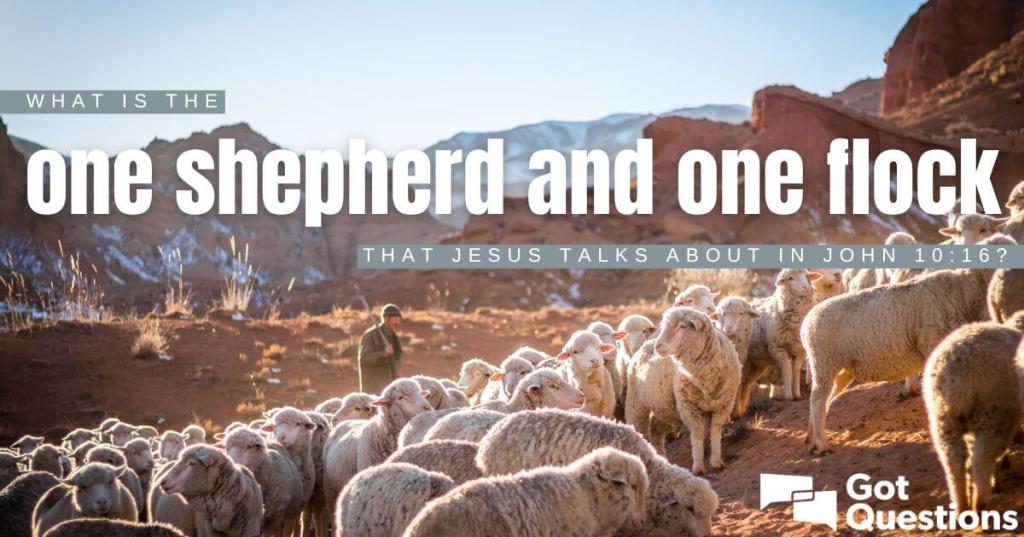
Once on the scene, Jesus refers to Himself as the Good Shepherd who gives His life for the sheep. In John 10, Jesus specifically makes reference to the separation of these two houses, or kingdoms. He came first for the Jews, but His mission did not stop there. Jesus sent out His followers to make disciples of all nations, which is precisely where the lost sheep of the House of Israel had been scattered and lost.

“I am the good shepherd. I know My sheep and My sheep know Me, 15just as the Father knows Me and I know the Father. And I lay down My life for the sheep. 16I have other sheep that are not of this fold. I must bring them in as well, and they will listen to My voice. Then there will be one flock and one shepherd. [John 10:14-16]

Notice that the mission of Jesus was in effect to bring both of these houses — Jew and Gentile — back together into one fold and under one Shepherd.

The prophets and the Apostles often speak of this redemptive plan of God to reunite God’s covenant people. Here are just a few examples.

“Return, O faithless children,” declares the LORD, “for I am your master, and I will take you—one from a city and two from a family—and bring you to Zion. 15Then I will give you shepherds after My own heart, who will feed you with knowledge and understanding … 17At that time they will call Jerusalem The Throne of the LORD, and all the nations will be gathered in Jerusalem to honor the name of the LORD. They will no longer follow the stubbornness of their evil hearts. 18In those days the house of Judah will walk with the house of Israel, and they will come together from the land of the north to the land that I gave to your fathers as an inheritance. [Jeremiah 3:14-15, 17-18]

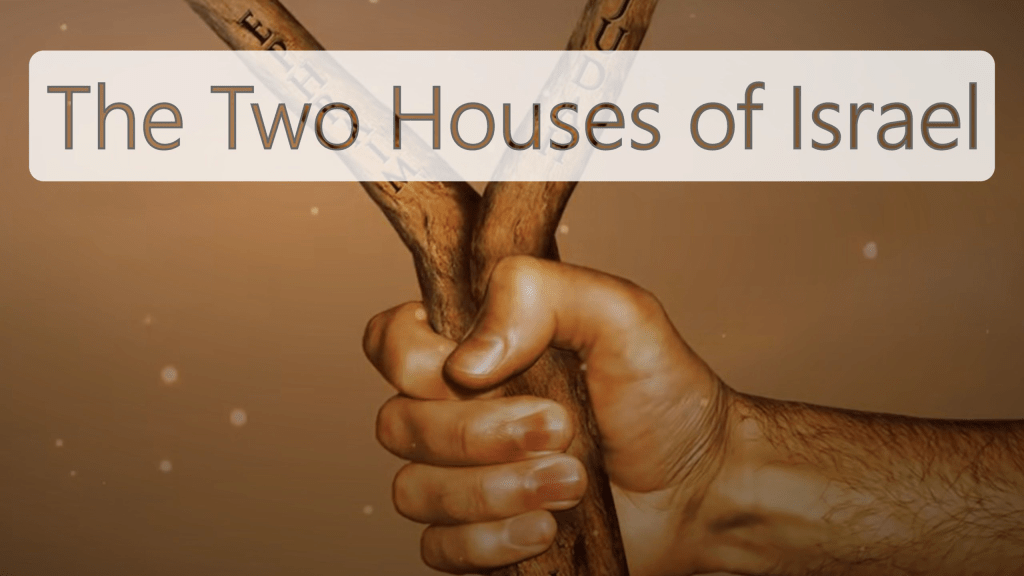
“This is what the Lord GOD says: ‘I will take the stick of Joseph, which is in the hand of Ephraim, and the tribes of Israel associated with him, and I will put them together with the stick of Judah. I will make them into a single stick, and they will become one in My hand.’ 20When the sticks on which you write are in your hand and in full view of the people, 21you are to tell them that this is what the Lord GOD says: ‘I will take the Israelites out of the nations to which they have gone, and I will gather them from all around and bring them into their own land. 22I will make them one nation in the land, on the mountains of Israel, and one king will rule over all of them. Then they will no longer be two nations and will never again be divided into two kingdoms. [Ezekiel 37:19-22]

As you can see, the mission of Jesus our Good Shepherd has always been about reuniting the two houses into one Kingdom.

To learn more about this fascinating topic, please view and share the following teaching from 1 Peter 2.

The Remarriage and Restoration of Israel — 1 Peter 2:9-12

But you are a chosen people, a royal priesthood, a holy nation, a people for God’s own possession, to proclaim the virtues of Him who called you out of darkness into His marvelous light. Once you were not a people, but now you are the people of God; once you had not received mercy, but now you have received mercy.

[1 Peter 2:9-10]

The LORD God entered into a marriage covenant with the people of Israel at Mt. Sinai — a covenant that Israel repeatedly broke. Israel was split into two kingdoms after the death of Solomon, and the northern Kingdom of Israel perpetuated generational idolatry with other gods. After years of calling His people back through the words of the prophets, the LORD made a heartbreaking decision.

God would divorce the northern House of Israel and send them away into exile. The southern nation of Judah, however, the LORD did not divorce on account of His promise to send the Messiah through the royal line of David . While the remnant of Judah would be preserved, the House of Israel (aka Joseph/Ephraim) would be integrated with the nations effectively becoming one with the Gentiles.

Yeshua — the Bridegroom — came into to world to accomplish God’s will — not the least of which was to redeem the lost sheep of the House of Israel and restore both Judah and Joseph back together as one nation under One King. Yeshua sent His disciples to all nations into which the House of Israel was lost, and that same Great Commission continues to this day.

Furthermore, by willingly dying for His people, Jesus nullified the original marriage contract and the certificate of divorce issued against Israel. And by rising from the dead, Jesus was able to remarry both the House of Israel and the House of Judah in a New Covenant (Jeremiah 31:31-34), restoring the two back into one.

Discover this amazing story of remarriage and redemption in my teaching below and share this amazing story with as many people as possible.

The Elect in Exile — An Introduction to the Books of 1&2 Peter

Peter, an apostle of Jesus Christ, To the elect who are exiles of the Dispersion throughout Pontus, Galatia, Cappadocia, Asia, and Bithynia, chosen 2according to the foreknowledge of God the Father and sanctified by the Spirit for obedience to Jesus Christ and sprinkling by His blood:Grace and peace be yours in abundance.

[1 Peter 1:1-2]

Who is Israel?

Who are the Jews?

What is the “Gentile” church?

Who are God’s elect?

How do we become part of the “elect” of God?

How are we to understand the relationship of Jews and Gentiles when it comes to our identity in Chirst?

These are fundamental questions that have been debated for centuries, and yet it seems we are no closer to understanding our true identity today than we were centuries ago.

In my study in 1st Peter, I unpack the meaning of what it means to be God’s Elect in Exile.

If you want to discover more about these essential topics, you can watch my teaching in the following YouTube Video below.

Signs of the End Times — Part 2 — The Return of the House of Judah

The LORD will save the tents of Judah first, so that the glory of the house of David and of the people of Jerusalem may not be greater than that of Judah. 8On that day the LORD will defend the people of Jerusalem, so that the weakest among them will be like David, and the house of David will be like God, like the angel of the LORD going before them. 9So on that day I will set out to destroy all the nations that come against Jerusalem.

[Zechariah 12:7-9]

I am often asked what makes this generation different from past generations when it comes to discerning the signs of the end times. After all, the 20th Century alone produced two world wars and the introduction of the atomic bomb, which naturally caused many to assume that the end was near.

As understandable as the sentiment was in those days, there was just one very important piece of the prophetic puzzle that was missing.

By the end of World War II, there was no nation-state of Judah. Jerusalem and Judea were still under the control of foreign nations. The overwhelming majority of Jewish people remained in exile. The house of Judah had no unified government or religious solidarity in their homeland.

The reason this is so significant is because there are dozens of Biblical prophecies that describe the events leading up to the end of the age, the return of the Messiah, and the final battle of Armageddon, and all of these prophecies share one necessary component.

The house of Judah is depicted as not only living in the land but more importantly as having governmental and religious authority and autonomy. These end-times prophecies describe the house of Judah under political and spiritual leadership in Jerusalem.

In other words, it was impossible for any of these prophecies to ever come to pass until a nation-state of Judah existed.

And of course, that is precisely what happened against all odds in the wake of World War II and the horrors of the Jewish holocaust. In May of 1948, by the most narrow of margins, the United Nations voted to recognize an autonomous Jewish state, and after 1,900 years of exile, the Jewish people were once again united and established in their homeland.

For the first time in nearly two millennia, the Jewish nation was reborn.

For the Bible scholar and prophecy watcher alike, this historical event was seen as perhaps the greatest fulfillment of Biblical prophecy since the coming of Christ Himself. And for good reason.

To demonstrate this point more specifically, allow me to share some of the prophetic passages that clearly depict a national Jewish presence in Jerusalem and Judea before the return of Christ.

The Leadership of Judah in Power

Many prophecies describing the political and religious establishment of Judah in the last days clearly depict Jewish leadership having the power to make significant geopolitical decisions. This would have been impossible before 1948 when the Jewish nation was reborn.

Therefore hear the word of the Lord, you scornful men, Who rule this people who are in Jerusalem, 15 Because you have said, “We have made a covenant with death, And with Sheol we are in agreement.
When the overflowing scourge passes through, It will not come to us, For we have made lies our refuge,
And under falsehood we have hidden ourselves.” 16 Therefore thus says the Lord God:“Behold, I lay in Zion a stone for a foundation, A tried stone, a precious cornerstone, a sure foundation; Whoever believes will not act hastily. 17 Also I will make justice the measuring line, And righteousness the plummet;
The hail will sweep away the refuge of lies, And the waters will overflow the hiding place. 18 Your covenant with death will be annulled, And your agreement with Sheol will not stand; When the overflowing scourge passes through, Then you will be trampled down by it. 19 As often as it goes out it will take you; For morning by morning it will pass over, And by day and by night; It will be a terror just to understand the report.”

Isaiah 28:14-19

Beyond that, Jesus Himself gave a prophetic warning to the leaders of Judah and Jerusalem of His day. The Jewish leadership had rejected their own Messiah and condemned Him to death, and Jesus pronounced a severe judgment upon them. He said that they would not see His face again until they repented and acknowledged Him as Messiah.

O Jerusalem, Jerusalem, who kills the prophets and stones those sent to her, how often I have longed to gather your children together, as a hen gathers her chicks under her wings, but you were unwilling! 38Look, your house is left to you desolate39For I tell you that you will not see Me again until you say, ‘Blessed is He who comes in the name of the Lord.‘”

Matthew 23:27-29

Hosea also prophecies about the necessity of the house of Judah to repent before Messiah returns.

“Then I will return to My place until they admit their guilt and seek My face; in their affliction they will earnestly seek Me.”

Hosea 5:15

The House of Judah will Repent and Mourn for Jesus

The prophet Zechariah describes a spiritual awakening of the house of Judah just before the Lord Jesus returns to wage war against God’s enemies.

“Then I will pour out on the house of David and on the people of Jerusalem a spirit of grace and prayer, and they will look on Me, the One they have pierced. They will mourn for Him as one mourns for an only child, and grieve bitterly for Him as one grieves for a firstborn son. 11On that day the wailing in Jerusalem will be as great as the wailing of Hadad-rimmon in the plain of Megiddo.”

Zechariah 12:10-11

The Final Invasion of Jerusalem

Jerusalem is the epicenter of the world, and all of redemptive history will culminate with the final battle for Zion. It only makes sense that the Jewish people first had to be dwelling in Jerusalem and Judea in order for enemy forces to invade and surround the city. Certainly Jerusalem is no stranger to such foreign invasions.

History reveals significant antichrist figures besieging Jerusalem on more than one occasion. King Nebuchadnezzar, Antiochus Epiphanes, and Roman Emperor Titus are among the most prominent rulers to capture Jerusalem. Interestingly enough, Hitler and the Nazis had little regard for Jerusalem primarily because the city was not under Jewish leadership at the time.

Scripture, however, reveals at least one last invasion of Jerusalem at the very end of this age, predicting a coalition of many nations will once again surround the city to prepare for the final battle. The primary distinction characterizing this final invasion will be the return of Christ to fight for the city of the Great King!

“For behold, in those days and at that time, When I bring back the captives of Judah and Jerusalem,
I will also gather all nations, And bring them down to the Valley of Jehoshaphat
; And I will enter into judgment with them there On account of My people, My heritage Israel, Whom they have scattered among the nations; They have also divided up My land … Multitudes, multitudes in the valley of decision! For the day of the Lord is near in the valley of decision. 15 The sun and moon will grow dark, And the stars will diminish their brightness. 16 The Lord also will roar from Zion,
And utter His voice from Jerusalem
; The heavens and earth will shake; But the Lord will be a shelter for His people, And the strength of the children of Israel.17 “So you shall know that I am the Lord your God, Dwelling in Zion My holy mountain. Then Jerusalem shall be holy, And no aliens shall ever pass through her again.”

Joel 3:1-2, 14-17

“Behold, I will make Jerusalem a cup of drunkenness to all the surrounding peoples. Judah will be besieged, as well as Jerusalem. 3On that day, when all the nations of the earth gather against her, I will make Jerusalem a heavy stone for all the peoples; all who would heave it away will be severely injured. 4On that day, declares the LORD, I will strike every horse with panic, and every rider with madness. I will keep a watchful eye on the house of Judah, but I will strike with blindness all the horses of the nations. 5Then the leaders of Judah will say in their hearts: ‘The people of Jerusalem are my strength, for the LORD of Hosts is their God.’

Zechariah 12:2-5

For I will gather all the nations for battle against Jerusalem, and the city will be captured, the houses looted, and the women ravished. Half of the city will go into exile, but the rest of the people will not be removed from the city. 3Then the LORD will go out to fight against those nations, as He fights in the day of battle. 4On that day His feet will stand on the Mount of Olives, east of Jerusalem, and the Mount of Olives will be split in two from east to west, forming a great valley, with half the mountain moving to the north and half to the south. 5You will flee by My mountain valley, for it will extend to Azal. You will flee as you fled from the earthquake in the days of Uzziah king of Judah. Then the LORD my God will come, and all the holy ones with Him.”

Zechariah 14:2-5

Drawing from the prophets, Jesus also prophesied of this final invasion of Jerusalem just before His return.

But when you see Jerusalem surrounded by armies, you will know that her desolation is near. 21Then let those who are in Judea flee to the mountains, let those in the city get out, and let those in the country stay out of the city. 22For these are the days of vengeance, to fulfill all that is written. 23How miserable those days will be for pregnant and nursing mothers! For there will be great distress upon the land and wrath against this people. 24They will fall by the edge of the sword and be led captive into all the nations. And Jerusalem will be trodden down by the Gentiles, until the times of the Gentiles are fulfilled.

Luke 21:20-24

Clearly these prophesies have not been fulfilled at any point in history and could not have been fulfilled until the Jewish nation was reestablished in 1948.

Beyond that, the current war in Israel is escalating into a regional conflict and causing alarm for the potential for another world war. Again, we must wait and see, but for the first time in centuries the signs of the times are pointing to the end of the age, the great tribulation, and the return of Christ.

Even so, Lord Jesus, come.

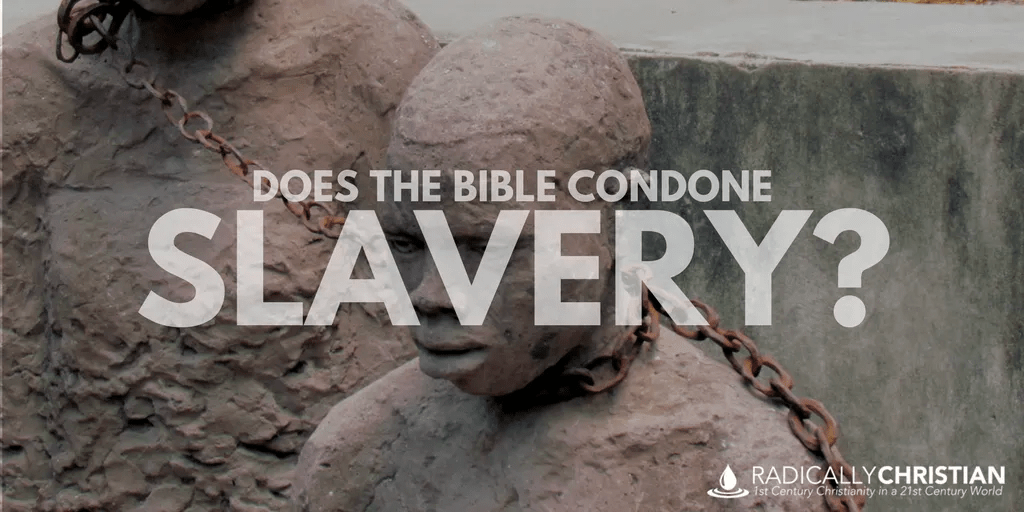
Returning to Torah — Part 6 — Does Torah Endorse Slavery?

An ambitious young Christian heads off to university ready to change the world. As he settles in to his first freshman sociology class, he is confronted with a seasoned professor who makes it clear from day one that he not only is antagonistic toward the Bible but also finds great satisfaction in dismantling and destroying the Christian faith.

After his opening rant about the absurdity of religion and the imbecilic nature of anyone who would believe such nonsense, the professor pulls out a Bible from his desk to prove his point. He turns to Exodus 21:20 and reads aloud with disdain for the text.

“Anyone who beats their male or female slave with a rod must be punished if the slave dies as a direct result, 21but they are not to be punished if the slave recovers after a day or two, since the slave is their property.”

The professor looks up and then drives home the proverbial nail in the coffin.

“So for all you Bible believing Christians out there who claim that this is somehow the Word of God … tell me, how can you explain the indisputable fact that your “God” endorses the buying and selling and the beating of human slaves as property? Anyone? Anybody want to defend your God and your Bible now,” asks the professor as he tosses the Bible in the trash can. “I didn’t think so. I utterly reject your God and your Bible and any forward-thinking, intelligent person who wants to pass this class would be wise to do the same.”

The young Christian feels himself shrinking and sinking down into his seat, fighting back a flood of emotions welling up within him — confusion, anger, fear, and discouragement. The seed of doubt now firmly planted in his heart, the young student begins to question everything he has ever known and finding no adequate answers, he eventually abandons his faith altogether.

Unfortunately, such a scenario is all too common today, and I believe it is mostly due to the “church” neglecting the Scriptures for centuries and becoming ignorant of the foundational truths contained within the Torah.

Only by returning to God’s good instructions and eternal value system can we recover the true faith that was once and for all entrusted to the saints.

So does God and the Bible condone slavery? Let’s return to Torah to find out.

Context is Key

Before I answer this most important question, I must make a distinction and address a common misunderstanding surrounding the word “endorse.” When skeptics and opponents of the faith attack the Scriptures, they often will intentionally use language, such as, “the Bible endorses or promotes or condones or justifies slavery.”

But nothing could be further from the truth.

This why context is key. We cannot understand anything without proper context. One of the skeptic’s favorite tricks is to lift obscure verses right out of their original context and violate the meaning of the text. For example …

Any cursory reading of the Bible reveals that there is a significant difference in what the Bible generally describes and what God specifically prescribes or commands. There are plenty of social constructs and personal examples of gross misconduct mentioned in the Scripture that clearly do not qualify as condoned behavior. This is precisely why God revealed His law to begin with — as the standard of love and righteousness.

God never endorsed, justified, or promoted slavery, but knowing that social cast systems inevitably would be a part of human civilization, God provided good laws and righteous instructions to protect slaves, promote justice, and preserve basic human rights. These laws both are radically unique and morally superior in comparison to the other Ancient Near Eastern cultures and the pagan world at large.

The heart of Torah is to love God and love our neighbors, and all the laws pertaining to slavery in the Torah are put in place by God Himself to promote His values and His standards. Slavery was conceived out of the sinful desires for men to lord their power over others, yet God reveals the remedy by showing us how to redeem all human relationships — including between servants and their masters. Torah is rooted in loving and serving one another — not oppressing them — and bringing life to a broken system with equal protection and basic provision for both the slave and free man.

Furthermore, the very meaning of the Hebrew word used for “slave” — ebed — is more accurately translated “servant” within it’s original context. Our modern ears naturally recoil at the word slave and automatically associate it with the horrors of the North American and African slave trade. Biblical slavery did not even closely resemble this extreme example of chattel or plantation slavery, but rather is more accurately defined as voluntary indentured servitude.

Basically, when the Torah speaks of a “slave,” it is almost always referring to a debtor who cannot pay off his debt and therefore willingly and contractually sells himself as an indentured servant to work it off, much like working off a loan. There was no alternative recourse in the ancient world to pay off debt, so God made the very best of an imperfect situation and provided the very best option both for the individuals and the community at large. The boss/lender could still be financially compensated while the debtor/servant maintained his human dignity– being afforded the opportunity to regain his freedom and be elevated in society.

Once again, the Biblical context of slavery in no way resembled the egregious chattel or plantation slave trade that characterized colonial America for generations. As you will see, God’s word strictly forbid all forms of kidnapping, murder, rape, abuse, and mistreatment of anyone in His Kingdom, whether slave or free.

Quite the contrary. The Torah provides the only recourse in the ancient world that offers protection and human rights for the most vulnerable in society — such as the widows, the orphans, the divorced, the poor, the sick, the sojourner and the servant (aka slave).

Does Torah Endorse Slavery?

One may be surprised to discover that the Torah not only holds masters accountable to a higher standard, but also offers servants equal protection under the law. As I have already emphasized, the overwhelming majority of servants in the ancient Biblical context were voluntary indentured servants who entered into a legal contract to work off a debt and were given the same basic rights and privileges as free men. [*NOTE — On the rare occasion that God’s people took prisoners of war from nations outside the land, Israel was permitted to take the male captives as indentured servants or “vassal” subjects to subdue or thwart any threat of revolt or rebellion (see Deuteronomy 20), but even these servants were still treated with dignity and respect under the Torah.]

Just consider the following provisions and protections under Torah.

Equal Rest under the Sabbath

The Law of Moses commanded that servants, of whatever origin (Gentile or Hebrew), were to be treated as human beings who were part of the family household and covenant community. Unlike any other ANE society, the Law of Moses commanded that servants enjoy at least one day a week free from every kind of labour, participating in the Sabbath day of rest together with the same status as the free members of the community.

It was unheard of in the ancient world to give a slave a paid vacation day of rest, every week no less.

But the seventh day is a Sabbath to the Lord your God; on it you shall not do any work, you, or your son, or your daughter or your male servant, or your female servant, or your cattle, or the resident foreigner who is in your gates.

Exodus 20:10

But the seventh day is the Sabbath of the Lord your God. On that day you must not do any work, you, your son, your daughter, your male slave, your female slave, your ox, your donkey, any other animal, or the foreigner who lives with you, so that your male and female slaves, like yourself, may have rest.

Deuteronomy 5:14

Equal Protection under the Law

The Torah is unique in offering servants the same rights as the rest of society.

  • Same law for applies to everyone.

One law and one rule shall be for you and for the stranger who sojourns with you.” [Leviticus 15:16]

“You are to have the same law for the foreigner and the native-born. I am the Lord your God.” [Leviticus 24:22]

  • Kidnapping and human trafficking (slave trading) are forbidden and punishable by death in the Torah.

Exodus 21:16 — “He who kidnaps a man and sells him, or if he is found in his hand, shall surely be put to death.

Deuteronomy 24:7 — “If someone is caught kidnapping a fellow Israelite and treating or selling them as a slave, the kidnapper must die. You must purge the evil from among you.

  • Murdering (killing) a slave incurred the death penalty.

Exodus 21:12 — “Whoever strikes a man so that he dies shall be put to death.” 

Exodus 21:20-21 — “Anyone who beats their male or female servant with a rod must be avenged if the slave dies as a direct result …” [the word avenged explicitly refers to the death penalty]

  • Servants automatically were released if they suffered physical abuse leading to permanent damage or harm.

Exodus 21:26-27 — “When a man strikes the eye of his slave, male or female, and destroys it, he shall let the slave go free because of his eye. 27If he knocks out the tooth of his slave, male or female, he shall let the slave go free because of his tooth.

  • In the case of abuse, servants who escaped and fled from their master could not be forced to return and were considered free citizens to given protection and provided refuge in the community.

Deuteronomy 23:15-16 — “You must not return an escaped slave to his master when he has run away to you. 16 Indeed, he may live among you in any place he chooses, in whichever of your villages he prefers; you must not oppress him.

Once again, the Torah made no provision for any involuntary slave trade. It was permissible to purchase men and women who voluntarily sold themselves into indentured service, but not to sell them (Exodus 21:2, Leviticus 25:39, 42, 45, Deuteronomy 15:12). Taking men and women and enslaving them against their will, or selling them into slavery, was expressly forbidden on pain of death (Exodus 21:16, Deuteronomy 24:7).

Indentured servants could own property, get married, start a family, move and trade freely in the community, observe Sabbath, celebrate the Feasts [Exodus 12:46-50], participate in society, and ultimately regain their freedom.

If a fellow countryman, native citizen, or sojourner voluntarily sold himself into servitude, he would become a valued member of the master’s household, as it was to the master’s overall blessing and benefit to treat his servants well with dignity and respect. After 6 years of service, a servant would be given the option to stay with his master and basically be permanently grafted into the family or leave a free man much better off than he started.

“If your brother, a Hebrew man or a Hebrew woman, is sold to you, he shall serve you six years, and in the seventh year you shall let him go free from you. 13And when you let him go free from you, you shall not let him go empty-handed. 14You shall furnish him liberally out of your flock, out of your threshing floor, and out of your winepress. As the LORD your God has blessed you, you shall give to him. 15You shall remember that you were a slave in the land of Egypt, and the LORD your God redeemed you; therefore I command you this today. 16But if he says to you, ‘I will not go out from you,’ because he loves you and your household, since he is well-off with you, 17then you shall take an awl, and put it through his ear into the door, and he shall be your servant forever. And to your female servant you shall do the same. 18It shall not seem hard to you when you let him go free from you, for at half the cost of a hired worker he has served you six years. So the LORD your God will bless you in all that you do.

Deuteronomy 15:12-18

Clearly God and His Torah in no way endorses, promotes, or condones human trafficking and slave trading — but on the contrary provides the very principles and laws that offer equal protection to servants and regard all people worthy of love and human rights as bearing the image of God.

By returning to Torah, we don’t see an archaic, oppressive legal system that permits slavery, but rather a progressive, radically unique value system that elevates slaves to equal citizens and provides them the opportunity to regain their freedom and elevate their social status in the broader community.

A Few Last Words

It is worth noting that Jesus and the Apostles fully agree with Torah that slave trading, kidnapping and human trafficking of any kind is forbidden, just in case their was any question.

“We know that the law is good if one uses it properly9We also know that the law is made not for the righteous but for lawbreakers and rebels, the ungodly and sinful, the unholy and irreligious, for those who kill their fathers or mothers, for murderers, 10for the sexually immoral, for those practicing homosexuality, for slave traders and liars and perjurers—and for whatever else is contrary to the sound doctrine.”

[1 Timothy 1:8-10]

“Were you a slave when you were called? Don’t let it trouble you—although if you can gain your freedom, do so22For the one who was a slave when called to faith in the Lord is the Lord’s freed man; similarly, the one who was free when called is Christ’s slave. 23You were bought at a price; do not become slaves of human beings.

[1 Corinthians 7:21-23]

Now let’s take one last look at our opening passage from Exodus 20:20-21.

“Anyone who beats their male or female slave with a rod must be punished if the slave dies as a direct result, 21but they are not to be punished if the slave recovers after a day or two, since the slave is their property.”

Now that we understand the Biblical context of this verse, we can easily answer the hostile professor.

All that Exodus 21:21 is saying is that if a servant is beaten close to death (which is not God’s desire but only a potential description of what could happen), the master cannot receive the death penalty, but he risks incurring significant financial loss and criminal charges. The Torah puts the following provisions in place.

  1. Any slave trader that kidnapped and trafficked another human being was to be put to death.
  2. Any servant that was physically abused and permanently harmed was to be released as a free man.
  3. Any cruel master who beat or abused his slave was a considered a wicked man and guilty of violating the law.
  4. A good master loved and treated his servants with dignity and was obligated to eventually release the servant with an abundance of provisions and personal property.
  5. Any master who murdered his servant was to be put to death. Equal life for life.
  6. Any slave that escaped his master’s house was to be provided protection, provision and refuge und the Torah and could not be forced to return.

As you can see. Torah redeems the broken systems of this sinful world and breathes life into the oppressive structures of society until the Day that Christ returns and eradicates all sin, suffering, slavery, and sickness in the Kingdom to come!

GOD of ISRAEL of GOD — Part 10 — Israel — A Kingdom Divided

Then Ahijah laid hold of the new garment that was on him, and tore it into twelve pieces. 31And he said to Jeroboam, “Take for yourself ten pieces, for thus says the LORD, the God of Israel, ‘Behold, I am about to tear the kingdom from the hand of Solomon and will give you ten tribes 32(but he shall have one tribe, for the sake of my servant David and for the sake of Jerusalem, the city that I have chosen out of all the tribes of Israel).'”

[1 Kings 11:30-32]

Near the end of Solomon’s life, the LORD God pronounced a serious judgement against the king that would forever change the future of Israel and at the same time set into motion the most compelling display of love and redemption the world has ever known.

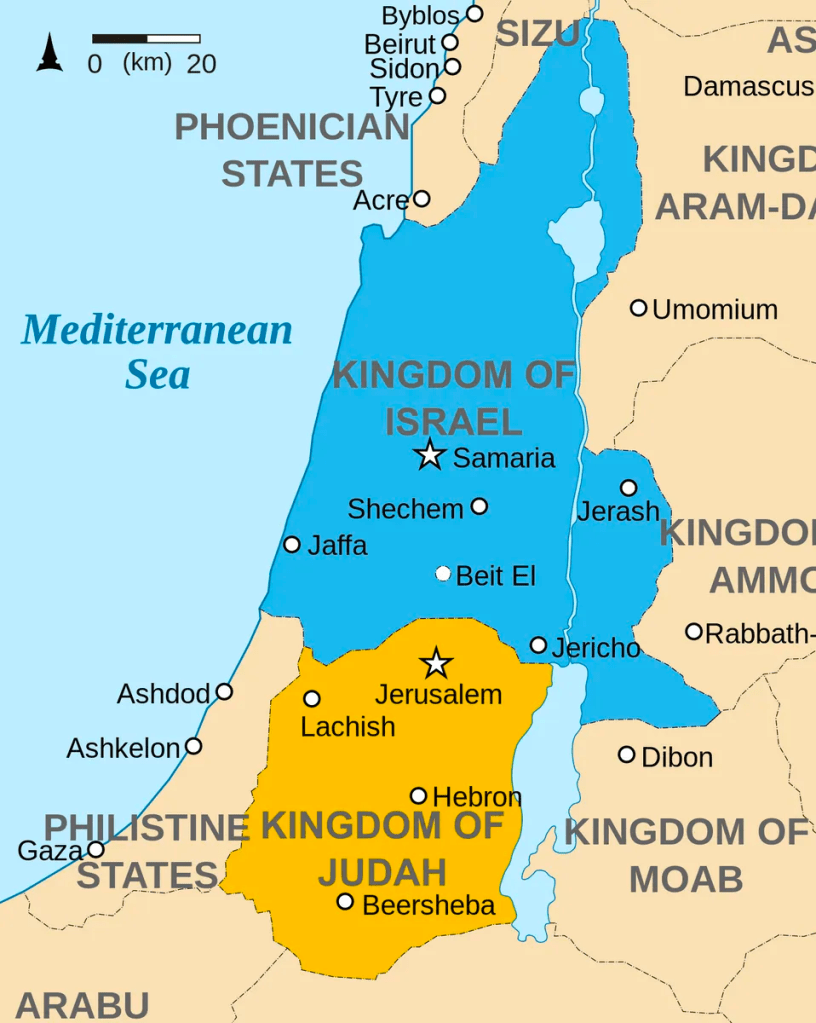
Showing total disregard for God’s commandments, King Solomon became spiritually compromised and corrupt, introducing all Israel to pagan idolatry and gross immorality (1 Kings 11:1-10). So severe was Solomon’s sin, the LORD swore to strip the Kingdom of Israel from the hands of his son and rightful heir to David’s throne — Rehoboam. Israel was ripe for rebellion and the very moment Solomon died (circa 932 B.C.), the kingdom quickly fractured into two distinct kingdoms/nations, or what commonly became known as the two houses of Israel.

Jeroboam — representing Ephraim — was given authority over the 10 tribes of the Northern Kingdom, which became known as the house of Israel (aka Joseph).

Rehoboam — representing the royal house of Judah/David — retained 2 tribes in the Southern Kingdom, which became known as the house of Judah (aka the Jews).

While the royal house of Judah retained control over the capital city Jerusalem and more importantly the administration of worship in the House of God, Jeroboam wasted no time in establishing his own capital in Samaria and creating a competitive religious system, which was at best a syncretic blend of pagan idolatry with a perverse form of the priesthood.

Although the LORD did prevent the two kingdoms — Judah and Israel — from escalating into all out civil war [1 Kings 12:21-24], they irreparably were broken. The Northern Kingdom of Israel would be subjected to an unbroken line of wicked kings and defined by generations of apostasy and idolatry, while the Kingdom of Judah would give rise to a only handful of righteous kings in David’s house and preserve a faithful remnant of God’s covenant people.

DEFINING OUR TERMS BIBLICALLY

“In those days and in that time, declares the LORD, the people of Israel and the people of Judah shall come together, weeping as they come, and they shall seek the LORD their God. 5They shall ask the way to Zion, with faces turned toward it, saying, ‘Come, let us join ourselves to the LORD in an everlasting covenant that will never be forgotten.’ 6“My people have been lost sheep. Their shepherds have led them astray, turning them away on the mountains. From mountain to hill they have gone. They have forgotten their fold.

[Jeremiah 50:4-6]

From the time the Kingdom of Israel was divided, the Biblical prophets were precise in how they communicated both to and about these two separate kingdoms, or houses. The Scriptures are replete with references specifically to the house of Israel — which also was identified with alternative nicknames such as Ephraim, Joseph, and sometimes Samaria. At the same time, the Bible clearly distinguishes Israel from the house of Judah, which exclusively represents the Jewish people.

In other words, a Jew is a person who distinctly can trace his ethnic descent from the tribe of Judah. This is most important in arriving at accurate Biblical terminology and concepts . While all Jews are Israelites, not all Israelites are Jews! For example, Moses — a Levite — was not a Jew. Joshua was not a Jew but rather from the tribe of Ephraim. Only those who come from the house of Judah are Jews.

One of the most unfortunate errors in all of orthodoxy is to automatically conflate the terms Jews and Israelites, or Judah and Israel. The Bible makes a distinction between Judah and Israel, and we should too. Otherwise, one of the most important theological threads throughout Scripture will be lost.

For a more modern analogy, consider the United States of America. While every Texan is an American, not all Americans are Texans. There remains important distinction among the 50 states, while every state is still a part of the greater national commonwealth of America.

It is no different with the 12 Tribes of Israel. Judah is just one of the tribes of Israel and therefore does not represent the “whole house” of Israel. When the Scriptures speak of the whole house of Israel, or “all” Israel, it is referring to all 12 tribes. Therefore, the Jews do not represent all Israel but only a remnant.

THE HOUSE OF ISRAEL IS SCATTERED

The house of Israel (Ephraim) persisted in idolatry for 200 years after the split, and the LORD sent His prophets, such as Elijah, Elisha, Amos, Isaiah, Jeremiah and Hosea, to desperately call Israel back to repentance. Sadly, Ephraim refused to come back to the LORD — her Husband — and pursued other gods instead, finally forcing the LORD to make a heartbreaking but necessary decision.

The God of Israel would divorce the Northern Kingdom, or the house of Israel [NOT JUDAHsee Hosea 1:6-7], and send her away in disgrace as a serial adulteress, removing her from her homeland and scattering her to the four winds of the earth, where the house of Israel (Ephraim) would become wanderers and exiles among the nations. The house of Israel effectively would cease to exist as a people and be absorbed by the Gentiles, while Judah would retain her ethnic identity up until this very day.

All their wickedness is in Gilgal,
For there I hated them.
Because of the evil of their deeds
I will drive them from My house;
I will love them no more
.
All their princes are rebellious.

16Ephraim is stricken,
Their root is dried up;
They shall bear no fruit.

Yes, were they to bear children,
I would kill the darlings of their womb.

17My God will cast them away,
Because they did not obey Him;
And they shall be wanderers among the nations
.

[Hosea 9:15-17]

The division of the two houses — Israel and Judah — seemed to be irreversible because the house of Israel permanently was lost as a people — God’s people Israel were no longer His people and He was no longer their Husband. The original marriage covenant of Sinai tragically ended in divorce!

But at the very same time … God made a promise that He would not abandon and forsake the house of Israel forever, but would one day bring her back and remarry Israel in righteousness and faithful covenantal love.

Consider the words of the LORD through Hosea.

Now when she had weaned Lo-Ruhamah, she conceived and bore a son. 

9Then God said: “Call his name Lo-Ammi,
For you are not My people,
And I will not be your God
.

10Yet the number of the children of Israel
Shall be as the sand of the sea,
Which cannot be measured or numbered.

And it shall come to pass
In the place where it was said to them,
‘You are not My people,’
There it shall be said to them,
‘You are sons of the living God.’

11Then the children of Judah and the children of Israel
Shall be gathered together,
And appoint for themselves one head
;
And they shall come up out of the land,
For great will be the day of Jezreel!

[Hosea 1:8-11]

God’s promise of a future restoration and a new marriage contract with Israel, however, was virtually impossible. At least two seemingly immovable obstacles persisted.

  1. The house of Israel intermingled and intermarried with the Gentiles and practically became a mixed multitude and therefore indistinguishable from the Gentiles. Israel was assimilated culturally, genetically, spiritually, and geographically. Truly lost in the sense that Israel as a distinct people could no longer be identified.
  2. In the Torah, God forbid the remarriage of an adulterous wife who had been divorced, calling it an abomination (see Deuteronomy 24 and Romans 7). God cannot break His own commandment!

How could the LORD bring a lost people, a wayward wife back home, if divorced Israel could never come back to their God (Husband) according to the law?

There was only one way … the Bridegroom had to die to release His adulteress wife from the original marriage contract, freeing her to remarry again, and then the Bridegroom had to be raised from the dead legally as a new man and therefore free to remarry His original Bride — Israel — in a new and better covenant because it was purchased and ratified in the blood of the sinless Son of God and Sacrificial Lamb — Yeshua the Christ — the Good Shepherd who laid down His life for the lost sheep of the house of Israel (see Matthew 15:24).

To get more details about the Bridegroom God’s amazing love demonstrated Israel at the cross, be sure to read my last post in this series HERE.

THE FULLNESS OF THE GENTILES — MELO HAGOYIM

For I do not desire, brethren, that you should be ignorant of this mystery, lest you should be wise in your own opinion, that blindness in part has happened to Israel until the fullness of the Gentiles has come in. 26And so all Israel will be saved, as it is written:

“The Deliverer will come out of Zion,
And He will turn away ungodliness from Jacob;
27For this is My covenant with them,
When I take away their sins.”

[Romans 11:25-27]

The Bridegroom was willing to die for His Bride to bring her back into covenant relationship, yet there still remained the undeniable fact that the house of Israel had dissolved into the nations and no longer could be identified as a people group. So how would God overcome this obstacle?

To find out, we must go all the way back to the patriarch Jacob (Israel) and discover God’s prophetic promise from the very beginning.

Just before Jacob died, he blessed Joseph’s two son, Manasseh and Ephraim, and he pronounced a fascinating prophecy over Ephraim, the younger son.

Then Jacob said to Joseph: “God Almighty appeared to me at Luz in the land of Canaan and blessed me, 4and said to me, ‘Behold, I will make you fruitful and multiply you, and I will make of you a multitude of people, and give this land to your descendants after you as an everlasting possession.’ 5And now your two sons, Ephraim and Manasseh, who were born to you in the land of Egypt before I came to you in Egypt, are mine; as Reuben and Simeon, they shall be mine.

[Genesis 48:3-5]

Then Israel stretched out his right hand and laid it on Ephraim’s head, who was the younger, and his left hand on Manasseh’s head, guiding his hands knowingly, for Manasseh was the firstborn. 15And he blessed Joseph, and said:

“The God before whom my fathers Abraham and Isaac walked,
the God who has been my shepherd all my life long to this day,
16the Angel who has redeemed me from all evil, bless the boys;
and in them let my name be carried on, and the name of my fathers Abraham and Isaac;
and let them grow into a multitude in the midst of the earth.

But his father refused and said, “I know, my son, I know. He (Manasseh) also shall become a people, and he also shall be great; but truly his younger brother (Ephraim) shall be greater than he, and his descendants shall become a multitude of nations.”

[Genesis 48:14-16, 19]

Did you catch that?

God promised to make Jacob’s descendants into a “multitude” of nations, and Jacob specifically identified Ephraim as the one through whom this promise would be fulfilled! Obviously the house of Judah does not represent a “multitude of nations.” So how did the LORD accomplish this?

God expelled the house of Israel (Ephraim) from the land, dispersing the seed of Abraham, Isaac, and Jacob into the nations, where the seed of Israel would be mixed with the Gentiles, growing into multitude of nations! So through Israel’s rebellion and dispersion, God produced literal, genetic descendants of Abraham, Isaac, and Israel all over the world.

This is exactly what Paul meant by the phrase — the “fullness of the Gentiles.” Paul is directly quoting from Jacob’s own words in Genesis 48!

This Hebrew phrase found in Genesis 48:19 — מְלא גּוֺיִם — literally is translated the “fullness of the Gentiles.” This phrase comes from two Hebrew words — melo: fullness, that which fills + goyim: nations, peoples = Fullness of the Gentiles.

So by scattering the seed of Jacob into the nations, God exponentially multiplied his descendants for generations, and at the same time God promised to gather Israel back and restore her in the end! This is at the very heart of the gospel!

In my next post, we will delve even deeper to see the amazing contrast between how God used both the scattering of Ephraim to the nations and the preservation of the house of Judah to bring about the perfect plan of redemption and the establishment of a new marriage covenant in Messiah!

CONVERGENCE SERIES — PART 1 — THE FIG TREE GENERATION

From the fig tree learn its lesson: as soon as its branch becomes tender and puts out its leaves, you know that summer is near. 33So also, when you see all these things, you know that he is near, at the very gates. 34Truly, I say to you, this generation will not pass away until all these things take place.

[Matthew 24:32-34]

Our generation is beginning to see an emergence of events on the prophetic timeline that are accelerating at an exponential rate into one climatic convergence at the end of this age.

I am speaking — of course — about the coming great tribulation and the subsequent return of the Lord Jesus to reclaim His throne and regenerate all of creation.

I have recently launched a new YouTube platform — Regeneration Radio — where I will explore the current events and signs of the end-times in connection to the gosepl of Jesus and the testimony of the Biblical prophets.

For my first session in the Convergence Series, I make the case for the rebirth of the nation-state of Israel as one of the most significant prophetic signs of our generation.

Could we be living in the last generation before the coming of the Lord Jesus?

To discover more, be sure to watch my latest video — Convergence Series — Part 1 — The Fig Tree Generation.

Also, be sure to like and subscribe to our Regeneration Radio Channel and share our content within your network.

GOD of Israel of GOD — Part 6 — Israel My Firstborn Son

Then you shall say to Pharaoh, “Thus says the LORD, Israel is my firstborn son, 23and I say to you, ‘Let my son go that he may serve me. If you refuse to let him go, behold, I will kill your firstborn son.'”

[Exodus 4:22-23]

Israel began as one man, Jacob, growing into a family and then an entire ethnic people group in Egypt. Once in captivity under Pharaoh, the LORD God of Israel redeemed His people and chose them as a holy nation — a people of His own possession.

God often uses human relationships to illustrate and convey His love and commitment to us, and one of the most profound examples is the relationship between father and child. The LORD speaks of Israel as both son and daughter to demonstrate the depth of His heartfelt devotion to His people, and as we will see, this thread continues to run throughout the Scriptures to the very end.

In essence, God is communicating one big idea to Israel. We are family.

The Apple of God’s Eye

Bible Christian Resources - Audio, Video, Bible Studies ...

The LORD your God who goes before you will himself fight for you, just as he did for you in Egypt before your eyes,31and in the wilderness, where you have seen how the LORD your God carried you, as a man carries his son, all the way that you went until you came to this place.

[Deuteronomy 1:30-31]

The LORD called Israel his firstborn son, which is a term associated both with preeminence and inheritance. God’s law made provisions for the firstborn to receive a double portion of the father’s inheritance [Deuteronomy 21:15-17]. By using the title of firstborn, God was declaring Israel to be the rightful heir of His kingdom and His possessions. The LORD was willing to give Israel everything.

The language of the Exodus provokes a powerful image of a loving father carrying his son through the perils of the wilderness and leading him to safety. Like any doting father, God kept Israel as the apple of His eye from the day he was born. Nothing compares to a father’s love for his children.

But the LORD’s portion is his people,
Jacob his allotted heritage.

10 He found him in a desert land,
and in the howling waste of the wilderness;
he encircled him, he cared for him,
he kept him as the apple of his eye
.
11Like an eagle that stirs up its nest,
that flutters over its young,
spreading out its wings, catching them,
bearing them on its pinions,
12the LORD alone guided him,
no foreign god was with him
.

[Deuteronomy 32:9-12]

A Wayward Son

Tragically Israel grew privileged, ungrateful, and rebellious — dishonoring his Father with all forms of idolatry and immorality. Not only did Israel’s habitual sin break God’s heart but also provoked Him to anger.

But Jeshurun grew fat, and kicked; you grew fat, stout, and sleek; then he forsook God who made him and scoffed at the Rock of his salvation. 16They stirred him to jealousy with strange gods; with abominations they provoked him to anger. 17They sacrificed to demons that were no gods, to gods they had never known, to new gods that had come recently, whom your fathers had never dreaded. 18You were unmindful of the Rock that bore you, and you forgot the God who gave you birth. 19 The LORD saw it and spurned them, because of the provocation of his sons and his daughters. 20And he said, ‘I will hide my face from them; I will see what their end will be, for they are a perverse generation, children in whom is no faithfulness.

[Deuteronomy 32:15-20]

The prophet Hosea echoes the words of Moses. You can hear the disappointment in the Father’s heart, as He reflects on the memories of Israel’s life.

When Israel was a child, I loved him,
and out of Egypt I called my son.
2The more they were called,
the more they went away;
they kept sacrificing to the Baals
and burning offerings to idols.

3Yet it was I who taught Ephraim to walk;
I took them up by their arms,
but they did not know that I healed them.
4I led them with cords of kindness, with the bands of love,
and I became to them as one who eases the yoke on their jaws,
and I bent down to them and fed them.

[Hosea 11:1-4]

God’s One and Only Son

He was still speaking when, behold, a bright cloud overshadowed them, and a voice from the cloud said, “This is my beloved Son, with whom I am well pleased; listen to him.”

[Matthew 17:5]

Where Israel failed as God’s firstborn son, Jesus the Messiah would succeed. Where Israel would dishonor the Father in sinful rebellion, Jesus would perfectly please the LORD. Where Israel would fail to be a light unto the Gentiles and lead the nations to worship the One True God, Jesus would come as the light of the world, leading all men out of darkness into His marvelous light.

Of course, we must not conclude that the Father sent His one and only Son into the world as a supplemental fix for Israel’s rebellion. NO! The incarnation of God the Son was always God’s original plan from before the very foundation of the world [John 17:23-24]. As the Creator Himself, Jesus is the firstborn over all creation, having preeminence in all things [Colossians 1:15-18].

And as only God could do, He opened the door through the cross for the whole world to believe in His Son and be given the right of being adopted as sons and daughters of the King!

But when the fullness of time had come, God sent forth his Son, born of woman, born under the law, 5to redeem those who were under the law, so that we might receive adoption as sons. 6And because you are sons, God has sent the Spirit of his Son into our hearts, crying, “Abba! Father!

[Galatians 4:4-6]

A Prodigal Returns

With weeping they shall come,

and with pleas for mercy I will lead them back,

I will make them walk by brooks of water,

in a straight path in which they shall not stumble,

for I am a father to Israel,

and Ephraim is my firstborn.

[Jeremiah 31:9]

One of the most amazing realties of God’s ultimate plan of redemption is His unwavering commitment to the covenant people of Abraham, Isaac, and Jacob. Although Israel has proven to be by and large a rebellious son, God has not forsaken Israel and has promised to bring him back home in the end. The natural branches that were broken off in unbelief will be grafted back in to God’s family tree in the end.

So I ask, did they stumble in order that they might fall? By no means! Rather, through their trespass salvation has come to the Gentiles, so as to make Israel jealous. 12Now if their trespass means riches for the world, and if their failure means riches for the Gentiles, how much more will their full inclusion mean!

[Romans 11:11-12]

Although a partial hardening has come upon ethnic Israel for many generations, God has always persevered for Himself a remnant. And like the prodigal son who has been estranged from his father in sin, Israel will return to the LORD through many trials and trust in God’s own Son — the Messiah.

This is the amazing story of redemption. God has by no means totally rejected Israel, but like a faithful Father, He will make good all His promises to the physical descendants of Jacob and keep His covenant to the end. Just as He does with all of His wayward children, the Father is waiting for the people of Israel to repent and return to Him, where He will receive them back with open arms! And in this way, all Israel — both Jew and Gentile — will be saved when Messiah returns to lead us home to inherit the kingdom of Israel as God’s firstborn sons!

Yet the number of the Israelites will be like the sand of the sea, which cannot be measured or counted. And it will happen that in the very place where it was said to them, ‘You are not My people,’ they will be called ‘sons of the living God.’

[Hosea 1:10]

GOD of Israel of GOD — Part 5 — Israel the Redeemed of Yahweh

Say therefore to the people of Israel, “I am the LORD, and I will bring you out from under the burdens of the Egyptians, and I will deliver you from slavery to them, and I will redeem you with an outstretched arm and with great acts of judgment.

[Exodus 6:6]

The Exodus from Egypt is the single most significant event in the history of God’s people prior to the incarnation of Jesus Christ and His subsequent death, burial and resurrection. The Exodus not only lays the foundation for our faith in the God of Israel — Yhvh or Yahweh — but also marks the birth of the nation of Israel and the supernatural redemption of God’s people.

The sacred writings of the Torah, Psalms, and prophets collectively are pointing back to the Exodus as the signature event in Israel’s past, while at the same time looking forward to the greater Exodus at the end of the age when Messiah is revealed from heaven. God’s redemption of Israel out of Egypt and through the waters of the Red Sea provide the template for our ultimate redemption through the Person and work of Jesus Christ — the greater Moses.

God Breaks the Bonds of a Cruel Master

Then the LORD said, “I have surely seen the affliction of my people who are in Egypt and have heard their cry because of their taskmasters. I know their sufferings, 8and I have come down to deliver them out of the hand of the Egyptians and to bring them up out of that land to a good and broad land, a land flowing with milk and honey …

[Exodus 3:7-8]

Israel sojourned into Egypt as a family of 70 and grew into a great multitude. Pharaoh responded by enslaving the people of God and subjecting them to harsh labor under his cruel taskmasters. For generations all the children of Israel were born into slavery and knew nothing of freedom. Even worse, Israel was powerless to deliver herself from Pharaoh and were left desperately crying out to God in agony.

Although Israel languished in despair, the Bible tells us that God heard their cry and determined to act. Israel needed a God greater than the gods of Egypt and someone more powerful than Pharaoh. Only the LORD — the Most High — could save them, and that is precisely what He did.

Israel, of course, is meant to be indicative of humankind in general, as we all are born into spiritual slavery as sons of Adam and held in bondage by the evil ruler of this world — the devil. The parallels between man’s sinful condition and Israel are obvious. In and of ourselves we are left powerless over sin and the devil, who has authority over all the kingdoms of the world [Luke 4].

Like Israel, we need a God who is greater than all our sin and more powerful than the devil to deliver us from our hopeless state. The good news is that the God of Israel became a man in the person of Jesus Christ and came to redeem us from the powers of darkness and transfer us into the Kingdom of God.

But now that you have been set free from sin and have become slaves of God, the fruit you get leads to sanctification and its end, eternal life. 23For the wages of sin is death, but the free gift of God is eternal life in Christ Jesus our Lord.

[Romans 6:22-23]

Whoever makes a practice of sinning is of the devil, for the devil has been sinning from the beginning. The reason the Son of God appeared was to destroy the works of the devil.

[1 John 3:8]

He has delivered us from the domain of darkness and transferred us to the kingdom of his beloved Son, 14in whom we have redemption, the forgiveness of sins.

[Colossians 1:13-14]

God Brings us through the Waters of New Birth

Israelites walk through Red Sea | quibi04 | Flickr

The LORD will reign forever and ever. For when the horses of Pharaoh with his chariots and his horsemen went into the sea, the LORD brought back the waters of the sea upon them, but the people of Israel walked on dry ground in the midst of the sea.

[Exodus 15:18-19]

It was the LORD Himself, clothed in a cloud, leading Israel through the sea, as He also protected them in the rear by a column of fire. When Israel emerged from the depths with the enemy in her wake, she had been reborn — the birth of a nation through the waters of baptism. What a scene as the children of Israel rejoiced and praised God with a victory song of celebration!

The imagery of water baptism and the new birth runs consistently throughout the Scriptures. Noah and his family saved through waters. Moses and Israel saved through the sea. Jesus Himself, while ascending from the baptismal waters of the Jordan, is identified by the Father from heaven as His beloved Son — the Messiah of Israel. Later Jesus schools the teacher of Israel — Nicodemus — by revealing that man must be born of more than mere natural descent in order to enter God’s kingdom. We must be born again — from above — by the Holy Spirit.

In other words, flesh and blood cannot inherit the kingdom of God, but only those who participate in the resurrection at the end of the age. Ultimately the flesh counts for nothing, but God’s words are Spirit and eternal life!

Baptism, which corresponds to this, now saves you, not as a removal of dirt from the body but as an appeal to God for a good conscience, through the resurrection of Jesus Christ22who has gone into heaven and is at the right hand of God, with angels, authorities, and powers having been subjected to him.

[1 Peter 3:21-22]

Do you not know that all of us who have been baptized into Christ Jesus were baptized into his death?4We were buried therefore with him by baptism into death, in order that, just as Christ was raised from the dead by the glory of the Father, we too might walk in newness of life. For if we have been united with him in a death like his, we shall certainly be united with him in a resurrection like his.

[Romans 6:3-5]

Paul reminds us that all of these supernatural events throughout history are examples and foreshadowings of greater things to come in Christ — who not only redeemed Israel as a new nation but also who redeems us as a new creation.

For I do not want you to be unaware, brothers, that our fathers were all under the cloud, and all passed through the sea, 2and all were baptized into Moses in the cloud and in the sea, 3and all ate the same spiritual food, 4and all drank the same spiritual drink. For they drank from the spiritual Rock that followed them, and the Rock was Christ.

[1 Corinthians 10:1-4]

God Redeems us a People of His own Possession

Thus you shall say to the house of Jacob, and tell the people of Israel: 4‘You yourselves have seen what I did to the Egyptians, and how I bore you on eagles’ wings and brought you to myself. 5Now therefore, if you will indeed obey my voice and keep my covenant, you shall be my treasured possession among all peoples, for all the earth is mine; 6and you shall be to me a kingdom of priests and a holy nation.’ These are the words that you shall speak to the people of Israel.

[Exodus 19:3-6]

Once the LORD had drowned Pharaoh and the army of Egypt in the sea, the process of redemption had been complete. Israel was chosen and set apart from all the nations of the earth to be God’s treasured possession and covenant people. The LORD will forever be the God of Abraham, Isaac, and Israel. Israel is the name of the covenant people of God, but Israel was not redeemed at the exclusion of the other nations of the earth but rather for their ultimate blessing and inclusion into God’s kingdom.

In Christ, all the nations of the earth will be blessed. In Christ, God has made for Himself a people from not only the tribes of Israel but also from every tribe and nation and people of the earth. Even as Israel departed Egypt and crossed the sea, it was a mixed multitude of Egyptian and Israelite alike. God’s plan has always been to redeem for Himself kingdom of priest from every nation!

The Exodus is the pattern for all of redemptive history, and Christ is the hero of the whole story. Jesus is the image of the invisible God — the One who manifested in human form to redeem Israel out of Egypt — the One who took on flesh to save the world — and the One who is coming down again in power and great glory at the end of this present age to ultimately redeem the sons of God through the resurrection of the dead.

They shall dwell in the land that I gave to my servant Jacob, where your fathers lived. They and their children and their children’s children shall dwell there forever, and David my servant shall be their prince forever. 26I will make a covenant of peace with them. It shall be an everlasting covenant with them. And I will set them in their land and multiply them, and will set my sanctuary in their midst forevermore27My dwelling place shall be with them, and I will be their God, and they shall be my people. 28Then the nations will know that I am the LORD who sanctifies Israel, when my sanctuary is in their midst forevermore

[Ezekiel 37:25-28]

Next session, I will consider Israel the Bride of the LORD and the betrothal at Mt. Sinai.