The LORD will save the tents of Judah first, so that the glory of the house of David and of the people of Jerusalem may not be greater than that of Judah. 8On that day the LORD will defend the people of Jerusalem, so that the weakest among them will be like David, and the house of David will be like God, like the angel of the LORD going before them. 9So on that day I will set out to destroy all the nations that come against Jerusalem.
[Zechariah 12:7-9]
I am often asked what makes this generation different from past generations when it comes to discerning the signs of the end times. After all, the 20th Century alone produced two world wars and the introduction of the atomic bomb, which naturally caused many to assume that the end was near.
As understandable as the sentiment was in those days, there was just one very important piece of the prophetic puzzle that was missing.
By the end of World War II, there was no nation-state of Judah. Jerusalem and Judea were still under the control of foreign nations. The overwhelming majority of Jewish people remained in exile. The house of Judah had no unified government or religious solidarity in their homeland.
The reason this is so significant is because there are dozens of Biblical prophecies that describe the events leading up to the end of the age, the return of the Messiah, and the final battle of Armageddon, and all of these prophecies share one necessary component.
The house of Judah is depicted as not only living in the land but more importantly as having governmental and religious authority and autonomy. These end-times prophecies describe the house of Judah under political and spiritual leadership in Jerusalem.
In other words, it was impossible for any of these prophecies to ever come to pass until a nation-state of Judah existed.
And of course, that is precisely what happened against all odds in the wake of World War II and the horrors of the Jewish holocaust. In May of 1948, by the most narrow of margins, the United Nations voted to recognize an autonomous Jewish state, and after 1,900 years of exile, the Jewish people were once again united and established in their homeland.
For the first time in nearly two millennia, the Jewish nation was reborn.
For the Bible scholar and prophecy watcher alike, this historical event was seen as perhaps the greatest fulfillment of Biblical prophecy since the coming of Christ Himself. And for good reason.
To demonstrate this point more specifically, allow me to share some of the prophetic passages that clearly depict a national Jewish presence in Jerusalem and Judea before the return of Christ.
The Leadership of Judah in Power
Many prophecies describing the political and religious establishment of Judah in the last days clearly depict Jewish leadership having the power to make significant geopolitical decisions. This would have been impossible before 1948 when the Jewish nation was reborn.
“Therefore hear the word of the Lord, you scornful men,Who rule this people who are in Jerusalem, 15 Because you have said, “We have made a covenant with death, And with Sheol we are in agreement. When the overflowing scourge passes through, It will not come to us, For we have made lies our refuge, And under falsehood we have hidden ourselves.” 16 Therefore thus says the Lord God:“Behold, I lay in Zion a stone for a foundation, A tried stone, a precious cornerstone, a sure foundation; Whoever believes will not act hastily. 17 Also I will make justice the measuring line, And righteousness the plummet; The hail will sweep away the refuge of lies, And the waters will overflow the hiding place. 18 Your covenant with death will be annulled, And your agreement with Sheol will not stand; When the overflowing scourge passes through, Then you will be trampled down by it. 19 Asoften as it goes out it will take you; For morning by morning it will pass over, And by day and by night; It will be a terror just to understand the report.”
Isaiah 28:14-19
Beyond that, Jesus Himself gave a prophetic warning to the leaders of Judah and Jerusalem of His day. The Jewish leadership had rejected their own Messiah and condemned Him to death, and Jesus pronounced a severe judgment upon them. He said that they would not see His face again until they repented and acknowledged Him as Messiah.
“O Jerusalem, Jerusalem, who kills the prophets and stones those sent to her, how often I have longed to gather your children together, as a hen gathers her chicks under her wings, but you were unwilling! 38Look, your house is left to you desolate. 39For I tell you that you will not see Me again until you say, ‘Blessed is He who comes in the name of the Lord.‘”
Matthew 23:27-29
Hosea also prophecies about the necessity of the house of Judah to repent before Messiah returns.
“Then I will return to My place until they admit their guilt and seek My face; in their affliction they will earnestly seek Me.”
Hosea 5:15
The House of Judah will Repent and Mourn for Jesus
The prophet Zechariah describes a spiritual awakening of the house of Judah just before the Lord Jesus returns to wage war against God’s enemies.
“Then I will pour out on the house of David and on the people of Jerusalem a spirit of grace and prayer, and they will look on Me, the One they have pierced. They will mourn for Him as one mourns for an only child, and grieve bitterly for Him as one grieves for a firstborn son. 11On that day the wailing in Jerusalem will be as great as the wailing of Hadad-rimmon in the plain of Megiddo.”
Zechariah 12:10-11
The Final Invasion of Jerusalem
Jerusalem is the epicenter of the world, and all of redemptive history will culminate with the final battle for Zion. It only makes sense that the Jewish people first had to be dwelling in Jerusalem and Judea in order for enemy forces to invade and surround the city. Certainly Jerusalem is no stranger to such foreign invasions.
History reveals significant antichrist figures besieging Jerusalem on more than one occasion. King Nebuchadnezzar, Antiochus Epiphanes, and Roman Emperor Titus are among the most prominent rulers to capture Jerusalem. Interestingly enough, Hitler and the Nazis had little regard for Jerusalem primarily because the city was not under Jewish leadership at the time.
Scripture, however, reveals at least one last invasion of Jerusalem at the very end of this age, predicting a coalition of many nations will once again surround the city to prepare for the final battle. The primary distinction characterizing this final invasion will be the return of Christ to fight for the city of the Great King!
“For behold, in those days and at that time, When I bring back the captives of Judah and Jerusalem, 2 I will also gather all nations, And bring them down to the Valley of Jehoshaphat; And I will enter into judgment with them there On account of My people, My heritage Israel, Whom they have scattered among the nations; They have also divided up My land … Multitudes, multitudes in the valley of decision! For the day of the Lord is near in the valley of decision. 15 The sun and moon will grow dark, And the stars will diminish their brightness. 16 The Lord also will roar from Zion, And utter His voice from Jerusalem; The heavens and earth will shake; But the Lord will be a shelter for His people, And the strength of the children of Israel.17 “So you shall know that I am the Lord your God, Dwelling in Zion My holy mountain. Then Jerusalem shall be holy, And no aliens shall ever pass through her again.”
Joel 3:1-2, 14-17
“Behold, I will make Jerusalem a cup of drunkenness to all the surrounding peoples. Judah will be besieged, as well as Jerusalem. 3On that day, when all the nations of the earth gather against her, I will make Jerusalem a heavy stone for all the peoples; all who would heave it away will be severely injured. 4On that day, declares the LORD, I will strike every horse with panic, and every rider with madness. I will keep a watchful eye on the house of Judah, but I will strike with blindness all the horses of the nations. 5Then the leaders of Judah will say in their hearts: ‘The people of Jerusalem are my strength, for the LORD of Hosts is their God.’“
Zechariah 12:2-5
“For I will gather all the nations for battle against Jerusalem, and the city will be captured, the houses looted, and the women ravished. Half of the city will go into exile, but the rest of the people will not be removed from the city. 3Then the LORD will go out to fight against those nations, as He fights in the day of battle. 4On that day His feet will stand on the Mount of Olives, east of Jerusalem, and the Mount of Olives will be split in two from east to west, forming a great valley, with half the mountain moving to the north and half to the south. 5You will flee by My mountain valley, for it will extend to Azal. You will flee as you fled from the earthquake in the days of Uzziah king of Judah. Then the LORD my God will come, and all the holy ones with Him.”
Zechariah 14:2-5
Drawing from the prophets, Jesus also prophesied of this final invasion of Jerusalem just before His return.
“But when you see Jerusalem surrounded by armies, you will know that her desolation is near.21Then let those who are in Judea flee to the mountains, let those in the city get out, and let those in the country stay out of the city. 22For these are the days of vengeance, to fulfill all that is written.23How miserable those days will be for pregnant and nursing mothers! For there will be great distress upon the land and wrath against this people. 24They will fall by the edge of the sword and be led captive into all the nations. And Jerusalem will be trodden down by the Gentiles, until the times of the Gentiles are fulfilled.“
Luke 21:20-24
Clearly these prophesies have not been fulfilled at any point in history and could not have been fulfilled until the Jewish nation was reestablished in 1948.
Beyond that, the current war in Israel is escalating into a regional conflict and causing alarm for the potential for another world war. Again, we must wait and see, but for the first time in centuries the signs of the times are pointing to the end of the age, the great tribulation, and the return of Christ.
Then Ahijah laid hold of the new garment that was on him, and tore it into twelve pieces. 31And he said to Jeroboam, “Take for yourself ten pieces, for thus says the LORD, the God of Israel, ‘Behold, I am about to tear the kingdom from the hand of Solomon and will give you ten tribes32(but he shall have one tribe, for the sake of my servant David and for the sake of Jerusalem, the city that I have chosen out of all the tribes of Israel).'”
[1 Kings 11:30-32]
Near the end of Solomon’s life, the LORD God pronounced a serious judgement against the king that would forever change the future of Israel and at the same time set into motion the most compelling display of love and redemption the world has ever known.
Showing total disregard for God’s commandments, King Solomon became spiritually compromised and corrupt, introducing all Israel to pagan idolatry and gross immorality (1 Kings 11:1-10). So severe was Solomon’s sin, the LORD swore to strip the Kingdom of Israel from the hands of his son and rightful heir to David’s throne — Rehoboam. Israel was ripe for rebellion and the very moment Solomon died (circa 932 B.C.), the kingdom quickly fractured into two distinct kingdoms/nations, or what commonly became known as the two houses of Israel.
Jeroboam — representing Ephraim — was given authority over the 10 tribes of the Northern Kingdom, which became known as the house of Israel (aka Joseph).
Rehoboam — representing the royal house of Judah/David — retained 2 tribes in the Southern Kingdom, which became known as the house of Judah (aka the Jews).
While the royal house of Judah retained control over the capital city Jerusalem and more importantly the administration of worship in the House of God, Jeroboam wasted no time in establishing his own capital in Samaria and creating a competitive religious system, which was at best a syncretic blend of pagan idolatry with a perverse form of the priesthood.
Although the LORD did prevent the two kingdoms — Judah and Israel — from escalating into all out civil war [1 Kings 12:21-24], they irreparably were broken. The Northern Kingdom of Israel would be subjected to an unbroken line of wicked kings and defined by generations of apostasy and idolatry, while the Kingdom of Judah would give rise to a only handful of righteous kings in David’s house and preserve a faithful remnant of God’s covenant people.
DEFINING OUR TERMS BIBLICALLY
“In those days and in that time, declares the LORD, the people of Israel and the people of Judah shall come together, weeping as they come, and they shall seek the LORD their God. 5They shall ask the way to Zion, with faces turned toward it, saying, ‘Come, let us join ourselves to the LORD in an everlasting covenant that will never be forgotten.’ 6“My people have been lost sheep. Their shepherds have led them astray, turning them away on the mountains. From mountain to hill they have gone. They have forgotten their fold.“
[Jeremiah 50:4-6]
From the time the Kingdom of Israel was divided, the Biblical prophets were precise in how they communicated both to and about these two separate kingdoms, or houses. The Scriptures are replete with references specifically to the house of Israel — which also was identified with alternative nicknames such as Ephraim, Joseph, and sometimes Samaria. At the same time, the Bible clearly distinguishes Israel from the house of Judah, which exclusively represents the Jewish people.
In other words, a Jew is a person who distinctly can trace his ethnic descent from the tribe of Judah. This is most important in arriving at accurate Biblical terminology and concepts . While all Jews are Israelites, not all Israelites are Jews! For example, Moses — a Levite — was not a Jew. Joshua was not a Jew but rather from the tribe of Ephraim. Only those who come from the house of Judah are Jews.
One of the most unfortunate errors in all of orthodoxy is to automatically conflate the terms Jews and Israelites, or Judah and Israel. The Bible makes a distinction between Judah and Israel, and we should too. Otherwise, one of the most important theological threads throughout Scripture will be lost.
For a more modern analogy, consider the United States of America. While every Texan is an American, not all Americans are Texans. There remains important distinction among the 50 states, while every state is still a part of the greater national commonwealth of America.
It is no different with the 12 Tribes of Israel. Judah is just one of the tribes of Israel and therefore does not represent the “whole house” of Israel. When the Scriptures speak of the whole house of Israel, or “all” Israel, it is referring to all 12 tribes. Therefore, the Jews do not represent all Israel but only a remnant.
THE HOUSE OF ISRAEL IS SCATTERED
The house of Israel (Ephraim) persisted in idolatry for 200 years after the split, and the LORD sent His prophets, such as Elijah, Elisha, Amos, Isaiah, Jeremiah and Hosea, to desperately call Israel back to repentance. Sadly, Ephraim refused to come back to the LORD — her Husband — and pursued other gods instead, finally forcing the LORD to make a heartbreaking but necessary decision.
The God of Israel would divorce the Northern Kingdom, or the house of Israel [NOT JUDAH — see Hosea 1:6-7], and send her away in disgrace as a serial adulteress, removing her from her homeland and scattering her to the four winds of the earth, where the house of Israel (Ephraim) would become wanderers and exiles among the nations. The house of Israel effectively would cease to exist as a people and be absorbed by the Gentiles, while Judah would retain her ethnic identity up until this very day.
All their wickedness is in Gilgal, For there I hated them. Because of the evil of their deeds I will drive them from My house; I will love them no more. All their princes are rebellious.
16Ephraim is stricken, Their root is dried up; They shall bear no fruit. Yes, were they to bear children, I would kill the darlings of their womb.
17My God will cast them away, Because they did not obey Him; And they shall be wanderers among the nations.
[Hosea 9:15-17]
The division of the two houses — Israel and Judah — seemed to be irreversible because the house of Israel permanently was lost as a people — God’s people Israel were no longer His people and He was no longer their Husband. The original marriage covenant of Sinai tragically ended in divorce!
But at the very same time … God made a promise that He would not abandon and forsake the house of Israel forever, but would one day bring her back and remarry Israel in righteousness and faithful covenantal love.
Consider the words of the LORD through Hosea.
Now when she had weaned Lo-Ruhamah, she conceived and bore a son.
9Then God said: “Call his name Lo-Ammi, For you are not My people, And I will not be your God.“
10Yet the number of the children of Israel Shall be as the sand of the sea, Which cannot be measured or numbered. And it shall come to pass In the place where it was said to them, ‘You are not My people,’ There it shall be said to them, ‘You are sons of the living God.’ 11Then the children of Judah and the children of Israel Shall be gathered together, And appoint for themselves one head; And they shall come up out of the land, For great will be the day of Jezreel!
[Hosea 1:8-11]
God’s promise of a future restoration and a new marriage contract with Israel, however, was virtually impossible. At least two seemingly immovable obstacles persisted.
The house of Israel intermingled and intermarried with the Gentiles and practically became a mixed multitude and therefore indistinguishable from the Gentiles. Israel was assimilated culturally, genetically, spiritually, and geographically. Truly lost in the sense that Israel as a distinct people could no longer be identified.
In the Torah, God forbid the remarriage of an adulterous wife who had been divorced, calling it an abomination (see Deuteronomy 24 and Romans 7). God cannot break His own commandment!
How could the LORD bring a lost people, a wayward wife back home, if divorced Israel could never come back to their God (Husband) according to the law?
There was only one way … the Bridegroom had to die to release His adulteress wife from the original marriage contract, freeing her to remarry again, and then the Bridegroom had to be raised from the dead legally as a new man and therefore free to remarry His original Bride — Israel — in a new and better covenant because it was purchased and ratified in the blood of the sinless Son of God and Sacrificial Lamb — Yeshua the Christ — the Good Shepherd who laid down His life for the lost sheep of the house of Israel (see Matthew 15:24).
To get more details about the Bridegroom God’s amazing love demonstrated Israel at the cross, be sure to read my last post in this series HERE.
THE FULLNESS OF THE GENTILES — MELO HAGOYIM
For I do not desire, brethren, that you should be ignorant of this mystery, lest you should be wise in your own opinion, that blindness in part has happened to Israel until the fullness of the Gentiles has come in.26And so all Israel will be saved, as it is written:
“The Deliverer will come out of Zion, And He will turn away ungodliness from Jacob; 27For this is My covenant with them, When I take away their sins.”
[Romans 11:25-27]
The Bridegroom was willing to die for His Bride to bring her back into covenant relationship, yet there still remained the undeniable fact that the house of Israel had dissolved into the nations and no longer could be identified as a people group. So how would God overcome this obstacle?
To find out, we must go all the way back to the patriarch Jacob (Israel) and discover God’s prophetic promise from the very beginning.
Just before Jacob died, he blessed Joseph’s two son, Manasseh and Ephraim, and he pronounced a fascinating prophecy over Ephraim, the younger son.
Then Jacob said to Joseph: “God Almighty appeared to me at Luz in the land of Canaan and blessed me, 4and said to me, ‘Behold, I will make you fruitful and multiply you, and I will make of you a multitude of people, and give this land to your descendants after you as an everlasting possession.’ 5And now your two sons, Ephraim and Manasseh, who were born to you in the land of Egypt before I came to you in Egypt, are mine; as Reuben and Simeon, they shall be mine.
[Genesis 48:3-5]
Then Israel stretched out his right hand and laid it on Ephraim’s head, who was the younger, and his left hand on Manasseh’s head, guiding his hands knowingly, for Manasseh was the firstborn. 15And he blessed Joseph, and said:
“The God before whom my fathers Abraham and Isaac walked, the God who has been my shepherd all my life long to this day, 16the Angel who has redeemed me from all evil, bless the boys; and in them let my name be carried on, and the name of my fathers Abraham and Isaac; and let them grow into a multitude in the midst of the earth.”
But his father refused and said, “I know, my son, I know. He (Manasseh) also shall become a people, and he also shall be great; but truly his younger brother (Ephraim) shall be greater than he, and his descendants shall become a multitude of nations.”
[Genesis 48:14-16, 19]
Did you catch that?
God promised to make Jacob’s descendants into a “multitude” of nations, and Jacob specifically identified Ephraim as the one through whom this promise would be fulfilled! Obviously the house of Judah does not represent a “multitude of nations.” So how did the LORD accomplish this?
God expelled the house of Israel (Ephraim) from the land, dispersing the seed of Abraham, Isaac, and Jacob into the nations, where the seed of Israel would be mixed with the Gentiles, growing into multitude of nations! So through Israel’s rebellion and dispersion, God produced literal, genetic descendants of Abraham, Isaac, and Israel all over the world.
This is exactly what Paul meant by the phrase — the “fullness of the Gentiles.” Paul is directly quoting from Jacob’s own words in Genesis 48!
This Hebrew phrase found in Genesis 48:19 — מְלא גּוֺיִם — literally is translated the “fullness of the Gentiles.” This phrase comes from two Hebrew words — melo: fullness, that which fills + goyim: nations, peoples = Fullness of the Gentiles.
So by scattering the seed of Jacob into the nations, God exponentially multiplied his descendants for generations, and at the same time God promised to gather Israel back and restore her in the end! This is at the very heart of the gospel!
In my next post, we will delve even deeper to see the amazing contrast between how God used both the scattering of Ephraim to the nations and the preservation of the house of Judah to bring about the perfect plan of redemption and the establishment of a new marriage covenant in Messiah!
And Jesus said to them, “Can the wedding guests mourn as long as the bridegroom is with them? The days will come when the bridegroom is taken away from them, and then they will fast.“
[Matthew 9:15]
Over the last few installments in this series, I have established how the covenant at Mt. Sinai was nothing short of a marriage contract.
The LORD God chose for Himself an elect bride — Israel — to be His own treasured possession from among all the nations of the earth. God brought His chosen bride to the holy mountain and proposed a covenant of betrothal. He would be their God and they would be His exclusive people. After making vows, all of Israel unanimously said “yes” and “we do,” and the covenant was sealed in blood.
Israel’s perpetual unfaithfulness, however, put God in an impossible position. For generations, Israel broke her vows, forsook her Husband, and went after other gods, until finally the LORD had enough. He could no longer ignore the brazen adultery of His chosen bride, and so God reluctantly issued the house of Israel a certificate of divorce and cast her out of her homeland, where she would be scattered to the four winds and absorbed by the Gentile nations.
NOTE — Although the house of Judah was even worse than her sister Israel (Jeremiah 3:6-11), the LORD preserved a remnant of the Jews for the sake of the promise He had made to David — see Hosea 1:6-7, 2 Kings 8:19
In the severity of His divine chastisement, however, God promised that one day — somehow — He would make a new marriage covenant with the house of Israel and the house of Judah. This new covenant would provide the means for forgiveness and the pathway to restoration.
The only problem, however, is that in order to establish a new marriage covenant, God first had to cancel the original marriage contract made at Sinai. But in order to annul the first covenant, the Bridegroom God had to do something so profoundly radical that it would transcend all reason and exceed all expectation.
The Bridegroom God had to die. But how could God die? That would be impossible, right?
Enter Yeshua.
YESHUA — THE ELECT BRIDEGROOM GOD
Yeshua — aka Jesus — is called the Elect of God — God’s Chosen One — His Beloved Son. The Father elected the Son to fulfill His destiny as the Messiah of Israel and the Savior of the whole world. As John says, “The Father loves the Son and has given all things into his hand” [John 3:35]. Isaiah speaks often of the Messiah as God’s chosen.
Behold my servant, whom I uphold, my chosen, in whom my soul delights; I have put my Spirit upon him; he will bring forth justice to the nations.
[Isaiah 42:1]
Yeshua is God the Son, and He is the image of the invisible God — the exact imprint of His nature expressed in physical form. Whoever has seen the Son has also seen the Father.
When the LORD God came down on Mt. Sinai in power and glory, He did not show His form to the congregation of Israel, knowing man’s tendency to fall into idolatry [see Deuteronomy 4:15-19]. However, the LORD did reveal Himself to Moses in physical form, speaking to him face to face as a man speaks with his friend. The anthropomorphic language in Scripture clearly conveys the idea that God manifested to Moses in human form, even inscribing the 10 Commandments in stone with His own finger. Even the elders of Israel saw and beheld the God of Israel in physical form on the mountain [Exodus 24:9-11].
The significance of this cannot be overlooked or underestimated. If God the Son — Yeshua — is the image of the invisible God and the exact physical expression of the Father, then one must conclude that it was Jesus Himself with Moses on Mt. Sinai. If Jesus was the One who stood before the people of Israel and wrote the vows of the original marriage contract, then that can mean only one thing …
Yeshua is the Bridegroom God, and Israel is His chosen bride.
NO OTHER WAY
And going a little farther he fell on his face and prayed, saying, “My Father, if it be possible, let this cup pass from me; nevertheless, not as I will, but as you will.”
[Matthew 26:39]
Jesus is the Bridegroom God who entered into a marriage covenant with the people of Israel on Mt. Sinai. Once the contract was ratified in blood, it was forever binding as long as both shall live. Israel, however, persisted in unbelief and adultery until God finally resolved to write her a certificate of divorce and release her to go into the nations and worship their gods. Judah too repeatedly broke her covenant with the LORD, resulting in exile to Babylon, but the LORD preserved the remnant of Judah to represent the whole house of Israel, knowing that the Messiah — Son of David — must come through the house of Judah.
And in the fullness of time, God sent forth His Son — the promised seed of the woman — born of the house of Judah in the line of David, to redeem and restore God’s people by renewing the old covenant with both the house of Judah and the house of Israel [Jeremiah 31:31-34].
Few could have predicted, however, just how the Bridegroom God would redeem His wayward bride and the price He would be willing to pay to demonstrate the depths of His love for Israel.
UNTIL DEATH DO US PART
Husbands, love your wives, as Christ loved the church and gave himself up for her, 26that he might sanctify her, having cleansed her by the washing of water with the word, 27so that he might present the church to himself in splendor, without spot or wrinkle or any such thing, that she might be holy and without blemish.
[Ephesians 5:25-27]
God’s law — His Torah — is eternal and forever binding, and therefore God has bound Himself to His own word. God takes marriage very seriously, as the original institution of man and the foundation of every other social structure. If marriage is profaned so is the family. If the nuclear family disintegrates, then society is sure to crumble. Knowing this, God put many important laws in place to protect and promote the sanctity of marriage.
Although divorce was never God’s original intent, He did permit divorce because of the stubborn and rebellious hearts of sinful men. The Torah allowed for divorce in extreme cases of sexual immorality, but also as a legal means of protection for wives who would otherwise be subject to social suicide if cast out by their husbands [see Matthew 19:3-9].
This is where things get interesting.
According to the Torah, if a man divorces his wife and she remarries another man, she can never return to her original husband.
When a man takes a wife and marries her, if then she finds no favor in his eyes because he has found some indecency in her, and he writes her a certificate of divorce and puts it in her hand and sends her out of his house, and she departs out of his house, 2and if she goes and becomes another man’s wife, 3and the latter man hates her and writes her a certificate of divorce and puts it in her hand and sends her out of his house, or if the latter man dies, who took her to be his wife, 4then her former husband, who sent her away, may not take her again to be his wife, after she has been defiled, for that is an abomination before the LORD. And you shall not bring sin upon the land that the LORD your God is giving you for an inheritance.
[Deuteronomy 24:1-4]
This is precisely what happened to Israel. Yeshua the Bridegroom God sent Israel away with a certificate of divorce because of her unfaithfulness, and she went after other lovers and served and worship other gods. At that point, it was impossible for Israel to return to her first Husband, even though she presumed otherwise.
She shall pursue her lovers but not overtake them, and she shall seek them but shall not find them. Then she shall say, “I will go and return to my first husband, for it was better for me then than now.“
[Hosea 2:7]
“If a man divorces his wife and she goes from him and becomes another man’s wife, will he return to her? Would not that land be greatly polluted? You have played the whore with many lovers; and would you return to me?” declares the LORD.
[Jeremiah 3:1]
As one can see, there seemed to be no hope for Israel — no way back to God. It was impossible for faithless Israel to return to her first husband according the God’s eternal decree.
Yet that which is impossible for man is possible with God.
There was only way for Israel to be released from the original marriage contract and be legally freed to remarry her first husband.
The Bridegroom had to die.
This of course still would not fully resolve the problem for obvious reasons, unless somehow, someway the Bridegroom was able to die to annul the original marriage covenant and then miraculously come back to life to establish a new covenant!
Or do you not know, brothers — for I am speaking to those who know the law—that the law is binding on a person only as long as he lives?2For a married woman is bound by law to her husband while he lives, but if her husband dies she is released from the law of marriage. 3Accordingly, she will be called an adulteress if she lives with another man while her husband is alive. But if her husband dies, she is free from that law, and if she marries another man she is not an adulteress.4Likewise, my brothers, you also have died to the law through the body of Christ, so that you may belong to another, to him who has been raised from the dead, in order that we may bear fruit for God.
[Romans 7:1-4]
What an amazing God we serve!
Not only was Jesus the Bridegroom God willing to give His own life and take the punishment we deserved for all of our sin and idolatry, but also He was raised in the newness of life in order to renew the covenant in His own blood! Yeshua is the same Bridegroom God of Israel, but having died He now legally is free to remarry His bride Israel under a new and better covenant [see Ezekiel 36, Isaiah 54, Jeremiah 31, Hosea 2]!
Yeshua the Bridegroom God made a willing choice to lay down His life for His chosen bride in order to bring her back into a new covenant relationship that can never be broken! This is the amazing grace of God! The only condition required is faith in Yeshua so that whosoever believes in Him — whoever chooses Christ — will be given the right to become sons of the the living and the beloved Bride of Christ.
“Surely, as a treacherous wife leaves her husband, so have you been treacherous to me, O house of Israel,” declares the LORD.
[Jeremiah 3:20]
In my last post in this series, I laid the Biblical foundation for Israel’s identity as the elect bride of God. God chose for Himself a covenant people from all the nations of the earth. After redeeming Israel from Egypt, she became His treasured possession and cherished bride by entering into a marriage covenant with the LORD at Sinai.
Sadly, Israel proved to be an unfaithful wife and persisted in unbelief and idolatry for generations, despite God’s extraordinary long-suffering and mercy. Even God’s mercy and patience has limits, and He finally resolved to give Israel a certificate of divorce.
A WAYWARD WIFE AND A MERCIFUL GOD
The LORD said to me in the days of King Josiah: “Have you seen what she did, that faithless one, Israel, how she went up on every high hill and under every green tree, and there played the whore? 7And I thought, ‘After she has done all this she will return to me,’ but she did not return, and her treacherous sister Judah saw it. 8She saw that for all the adulteries of that faithless one, Israel, I had sent her away with a decree of divorce. Yet her treacherous sister Judah did not fear, but she too went and played the whore.“
[Jeremiah 3:6-8]
The LORD offered Israel an exclusive covenant relationship at Sinai, and the people unanimously accepted, saying “everything you have said we will do and obey.” God offered them a life and a home. He offered protection, provision, and even His very presence. He offered them His instructions for blessings and warnings for cursing. Most of all, the LORD was offering unconditional love and covenantal faithfulness overflowing upon them with unimaginable blessing and joy for generations to come.
It did not take long, however, for Israel to break faith. Before Moses could even get back down the mountain to confirm the marriage contract, God’s chosen bride was already going after another god, provoking the LORD to anger [see Exodus 32]. Except for a few good years, Israel persistently played the whore, even though God patiently waited for her, continually calling his people to repent and return to Him.
For hundreds of years, God showed extraordinary mercy to His elect bride. Like Hosea bearing the heartbreak of being married to the likes of Gomer, the LORD knew the pain of a wayward wife.
God’s judgment and anger finally exceeded His mercy, however. He could no longer turn a blind eye to Israel’s brazen idolatry and deliberate disregard for Him as her “Husband.” So God put away Israel — writing her a certificate of divorce, expelling her from her homeland, exposing her lewdness and perversion and giving her over to her vile lovers — the gods of the nations — where she would be lost and absorbed by the nations.
“Plead with your mother, plead— for she is not my wife, and I am not her husband— that she put away her whoring from her face, and her adultery from between her breasts.“
[Hosea 2:2]
I know Ephraim, and Israel is not hidden from me; for now, O Ephraim, you have played the whore; Israel is defiled. 4Their deeds do not permit them to return to their God. For the spirit of whoredom is within them, and they know not the LORD.
[Hosea 5:3-4]
DIVORCE and DISPERSION
Israel has been swallowed up; They are now among the nations Like a vessel in which no one delights.
[Hosea 8:8]
After the death of King Solomon (circa 932 B.C.) the Kingdom of Israel fractured into two separate nations. Ten tribes formed the northern kingdom, which retained the name Israel — otherwise known as Ephraim — and the remaining two tribes became known as Judah. One nation now divided into two houses. Both houses would prove to be unfaithful and break the covenant God made with them at Sinai.
While the LORD finally sent Ephraim away into exile, He did not fully reject Judah on account of His promise to King David. Judah would become a remnant representing God’s covenant people — the descendants of Abraham, Isaac, and Israel.
Gomer conceived again and bore a daughter. And the LORD said to him, “Call her name No Mercy [Lo-ruhama], for I will no more have mercy on the house of Israel, to forgive them at all. But I will have mercy on the house of Judah, and I will save them by the LORD their God. I will not save them by bow or by sword or by war or by horses or by horsemen.
[Hosea 1:6-7]
Israel, on the other hand would become exiles, wanderers among the nations.
Because of the wickedness of their deeds I will drive them out of my house. I will love them no more; all their princes are rebels ... 17My God will reject them because they have not listened to him; they shall be wanderers among the nations.
[Hosea 9:15,17]
It’s not that the covenant God made with Israel at Sinai was deficient. God’s laws and statutes and precepts are perfect. The deficiency is not with God’s covenant, it is with the people who try — and overwhelmingly fail — to keep it. Failing to remain faithful. Failing to love the LORD our God with all of our heart, mind, soul, and body.
For he finds fault with themwhen he says:
“Behold, the days are coming, declares the Lord, when I will establish a new covenant with the house of Israel and with the house of Judah, 9not like the covenant that I made with their fathers on the day when I took them by the hand to bring them out of the land of Egypt. For they did not continue in my covenant, and so I showed no concern for them,” declares the Lord.
[Hebrews 8:8-9]
Because the northern Kingdom of Israel refused to return to God, He punished them and put them away with a certificate of divorce to be swallowed up by the nations. Interestingly, the patriarch Jacob prophetically predicted the fate of Ephraim long before this tragic divorce and exile.
But his father refused and said, “I know, my son, I know. He also shall become a people, and he also shall be great. Nevertheless, his younger brother [Ephraim] shall be greater than he, and his offspring shall become a multitude of nations.”
[Genesis 48:19]
This begs the question. How could Ephraim (house of Israel) become a multitude of nations when they were driven out of the land and lost to the nations? There is really only one logical solution. Although the house of Israel was scattered to the nations, God will redeem Israel by redeeming … the NATIONS! Israel may have been absorbed into the nations, losing her identity, but she will be brought back to God through a new and better covenant as the gospel of Jesus Christ is proclaimed to all nations and Israel is reclaimed by the God of Israel in the end!
Even at the lowest point of Israel’s existence, God promised to not utterly forsake His people forever but rather to one day bring them back to Himself and to their homeland. The miracle, however, is HOW God determined to do this, which is what I will discuss in my next post. Until then, consider the words of Ezekiel.
The word of the Lord came to me: 15“Son of man, the people of Jerusalem have said of your fellow exiles and all the other Israelites, ‘They are far away from the Lord; this land was given to us as our possession.’ 16Therefore say: ‘This is what the Sovereign Lord says: Although I sent them far away among the nations and scattered them among the countries, yet for a little while I have been a sanctuary for them in the countries where they have gone.’ 17Therefore say: ‘This is what the Sovereign Lord says: I will gather you from the nations and bring you back from the countries where you have been scattered, and I will give you back the land of Israel again.’ 18They will return to it and remove all its vile images and detestable idols. 19I will give them an undivided heart and put a new spirit in them; I will remove from them their heart of stone and give them a heart of flesh. 20Then they will follow my decrees and be careful to keep my laws. They will be my people, and I will be their God.“
“But you are a chosen race, a royal priesthood, a holy nation, a people for his own possession, that you may proclaim the excellencies of him who called you out of darkness into his marvelous light.”
[1 Peter 2:9]
As we have already seen through this series, Israel can be traced through a variety of theological threads and seen through a mosaic of different lenses, but none is more powerful as the covenant bond and spiritual union of marriage. The marriage metaphor communicates such vivid imagery and spiritual symmetry that is directly reflected in God’s relationship with His covenant people — Israel — His Elect — God’s chosen bride.
The LORD calls Israel elect — from the Hebrew bachar [בָּחר] — His chosen people — His cherished bride — His own treasured possession.
Of all the nations, tribes, and tongues on the earth, God chose the children of Israel to be His covenant people — and Israel too would have the responsibility to choose the LORD to be their God. After redeeming Israel from Egypt and leading her through the sea … the LORD brought Israel to the foot of God’s holy mountain. For the very first time, Israel was a free nation able to choose which God they would serve.
It was there at Sinai that the Bridegroom God entered spacetime and came down on the mountain as an all-consuming fire — yet coming near in order to offer Israel the chance to start over and have a new life. The LORD formally proposed to the people speaking through Moses with language of betrothal and covenant relationship. The marriage contract was written in stone by the finger of God and cut with blood. Moses was the priest mediator between God and Israel. The people said, “I do,” and the betrothal became forever binding.
God’s betrothal at Sinai was at the complete exclusion of all other gods yet ironically would lead to the full inclusion of the nations under the authority of those gods. In other words, the elect of God are always chosen to be a blessing and a benefit to all people. Israel was always intended to be a light to the nations and to proclaim the good news to the ends of earth [Isaiah 49:6]. Her election was not for the exclusion of the nations but for their blessing.
Yet like all of us … Israel did not always live up to her potential or keep her covenant promises.
The sordid past of ancient Israel is no secret. Tragically she has spent many more years estranged from God than in covenant faithfulness to Him — an adulterous wife chasing after other gods. Hers is a story of tragedy but also of triumph, life and loss, heart-ache and healing, exile and redemption. No matter how far God’s covenant people have strayed, two things have remained true.
God always preserves for Himself a faithful remnant [see Romans 11:1-5]
God will forever remain faithful to keep His covenant promises to His chosen people Israel. [Jeremiah 31:31-37]
The Apostle Paul understood God’s relationship to His covenant people as well as anyone. He knew Israel was God’s elect bride from the very beginning and that God is resolved to keep His promises and remain faithful to the end, even when we are faithless.
Therefore I endure everything for the sake of the elect, that they also may obtain the salvation that is in Christ Jesus with eternal glory. 11The saying is trustworthy, for:
If we have died with him, we will also live with him; 12if we endure, we will also reign with him; if we deny him, he also will deny us; 13if we are faithless, he remains faithful—for he cannot deny himself.
[2 Timothy 2:10-13]
As we are about to discover, the story of God’s relationship to Israel — His elect bride — is the story of the gospel — how the Bridegroom God was willing to give His very life in order to ransom His wayward wife from her bondage and bring her back to Himself and present her as a pure virgin bride in the end — clothed in the radiant righteousness of Christ! The story of Israel is God’s great love story of redemption and restoration.
Before we can appreciate how the story ends — at a royal wedding by a glassy sea — we first must go back to it’s very beginning — where Israel first found grace in the wilderness.
THE WILDERNESS — WHERE IT ALL BEGAN
Now therefore, if you will indeed obey my voice and keep my covenant, you shall be my treasured possession among all peoples, for all the earth is mine; 6and you shall be to me a kingdom of priests and a holy nation.’ These are the words that you shall speak to the people of Israel.”.
[Exodus 19:5-6]
It is fascinating to discover how many times God leads us into the wilderness — into the dry and barren lands, the dark and dangerous deserts — only to meet us where we are and remind us that He is all we truly have. He is all we will ever have. That is what we learn in the wilderness.
The Scriptures emphasize the significance of the wilderness in man’s journey from exile to the promised land. How the heroes of the faith often met God in the desert. Whether the patriarchs or prophets like Abraham or Jacob or Moses or David or Elijah, the LORD often uses the wilderness journey to radically reveal Himself in a personal and powerful way.
Of course this was true of that Exodus generation that was first redeemed out of Egypt and brought to the wilderness of Sinai and there entered into a covenant with the Most High — the LORD God of Abraham, Isaac and Israel. The covenant at Sinai is the prophetic template and sets the pattern for the rest of Scripture.
Consider how John the Baptizer came as a voice of one crying out in the wilderness, preparing the way for the Lord. Remember how our Lord Jesus was willing to face — and pass — His own 40-day testing in the wilderness. How John the beloved disciple spent years in exile on the desolate island of Patmos, only to see the Risen Lord revealed in all His glory!
And the prophets understood that this present age would end as it has already been — in the wilderness, in exile, in a desolate land, in a time of great trouble. And like before, it is in the wilderness that we will meet God face to face and we will know that He is God and that there is no other. What’s been done will be done again.
The Covenant of Betrothal at Sinai
Behold, the days are coming, declares the LORD, when I will make a new covenant with the house of Israel and the house of Judah, 32not like the covenant that I made with their fathers on the day when I took them by the hand to bring them out of the land of Egypt, my covenant that they broke, though I was their husband, declares the LORD. 33For this is the covenant that I will make with the house of Israel after those days, declares the LORD: I will put my law within them, and I will write it on their hearts. And I will be their God, and they shall be my people.
[Jeremiah 31:31-33]
Almost everything about the covenant God made with Israel at Sinai was conveyed in terms of a betrothal — or in Hebrew thought a “Ketubah”. The Ketubah is a legally binding agreement and conditional covenant between a husband and his betrothed wife — who promise to faithfully commit to one another in an exclusively binding relationship. The betrothal is considered a legal marriage only awaiting the official consummation through physical union on the wedding night. To learn more about this amazing connection, feel free to check out Joel Richardson’s book Sinai to Zion.
Just consider the language at Sina that God conveyed through His commandments. They read just like marriage vows.
You shall have no other gods besides Me — the LORD demands an exclusive covenant relationship. No adulterating. Forsaking all others until death do us part. The LORD is Jealous for His people!
You shall not serve or worship anything before Me — the LORD is the supreme priority before all other things. No idolatry. To love and to cherish above all else.
You shall not take the Name of the LORD in vain — the LORD has attached His name to His people and His people now represent His Name and Character. No disgracing His Name. Like a wife takes her husband’s last name and now is directly and intimately connected to him — a reflection and representation of her husband.
Keep the Sabbath holy — the LORD desires regular, intentional, quality time with His people — continue investing in the marriage and keeping it alive in the spirit of a weekly time to reconnect with and reorient toward one another.
It is clear in God’s own testimony that He took on the metaphorical role of a “Husband” to Israel, bound by His promise to care for and nurture and provide for His betrothed. Israel was betrothed to the LORD as His chosen bride, which also bound God to forever remain faithful to Israel — even though she would perpetually break the covenant and likewise break God’s heart.
As we will see in the next installment, God spent generations calling His chosen bride — Israel — back from her idolatry, but she persisted in her adulteries until finally the LORD reached a breaking point and sent her away into exile with a certificate of divorce.
All hope seemed lost as God gave Israel up to the gods of other nations, and yet in the midst of His judgment — the LORD always reaffirmed His promise never to utterly forsake His people. No! He had another plan in mind. A new and better covenant. It’s just that it would take an extreme sacrifice by the Bridegroom God to make the way to bring Israel back and restore her as a pure and faithful bride in the end.
For your Maker is your Husband, the LORD of hosts is his name; and the Holy One of Israel is your Redeemer, the God of the whole earth he is called. 6For the LORD has called you like a wife deserted and grieved in spirit, like a wife of youth when she is cast off, says your God. 7For a brief moment I deserted you, but with great compassion I will gather you. 8In overflowing anger for a moment I hid my face from you, but with everlasting love I will have compassion on you,” says the LORD, your Redeemer.
Then you shall say to Pharaoh, “Thus says the LORD, Israel is my firstborn son, 23and I say to you, ‘Let my son go that he may serve me. If you refuse to let him go, behold, I will kill your firstborn son.'”
[Exodus 4:22-23]
Israel began as one man, Jacob, growing into a family and then an entire ethnic people group in Egypt. Once in captivity under Pharaoh, the LORD God of Israel redeemed His people and chose them as a holy nation — a people of His own possession.
God often uses human relationships to illustrate and convey His love and commitment to us, and one of the most profound examples is the relationship between father and child. The LORD speaks of Israel as both son and daughter to demonstrate the depth of His heartfelt devotion to His people, and as we will see, this thread continues to run throughout the Scriptures to the very end.
In essence, God is communicating one big idea to Israel. We are family.
The Apple of God’s Eye
The LORD your God who goes before you will himself fight for you, just as he did for you in Egypt before your eyes,31and in the wilderness, where you have seen how the LORD your God carried you, as a man carries his son, all the way that you went until you came to this place.
[Deuteronomy 1:30-31]
The LORD called Israel his firstborn son, which is a term associated both with preeminence and inheritance. God’s law made provisions for the firstborn to receive a double portion of the father’s inheritance [Deuteronomy 21:15-17]. By using the title of firstborn, God was declaring Israel to be the rightful heir of His kingdom and His possessions. The LORD was willing to give Israel everything.
The language of the Exodus provokes a powerful image of a loving father carrying his son through the perils of the wilderness and leading him to safety. Like any doting father, God kept Israel as the apple of His eye from the day he was born. Nothing compares to a father’s love for his children.
But the LORD’s portion is his people, Jacob his allotted heritage.
10 He found him in a desert land, and in the howling waste of the wilderness; he encircled him, he cared for him, he kept him as the apple of his eye. 11Like an eagle that stirs up its nest, that flutters over its young, spreading out its wings, catching them, bearing them on its pinions, 12the LORD alone guided him, no foreign god was with him.
[Deuteronomy 32:9-12]
A Wayward Son
Tragically Israel grew privileged, ungrateful, and rebellious — dishonoring his Father with all forms of idolatry and immorality. Not only did Israel’s habitual sin break God’s heart but also provoked Him to anger.
But Jeshurun grew fat, and kicked;you grew fat, stout, and sleek;then he forsook God who made himand scoffed at the Rock of his salvation.16They stirred him to jealousy with strange gods;with abominations they provoked him to anger.17They sacrificed to demons that were no gods,to gods they had never known,to new gods that had come recently,whom your fathers had never dreaded.18You were unmindful of the Rock that bore you,and you forgot the God who gave you birth.19 The LORD saw it and spurned them,because of the provocation of his sons and his daughters.20And he said, ‘I will hide my face from them;I will see what their end will be,for they are a perverse generation,children in whom is no faithfulness.
[Deuteronomy 32:15-20]
The prophet Hosea echoes the words of Moses. You can hear the disappointment in the Father’s heart, as He reflects on the memories of Israel’s life.
When Israel was a child, I loved him, and out of Egypt I called my son. 2The more they were called, the more they went away; they kept sacrificing to the Baals and burning offerings to idols.
3Yet it was I who taught Ephraim to walk; I took them up by their arms, but they did not know that I healed them. 4I led them with cords of kindness, with the bands of love, and I became to them as one who eases the yoke on their jaws, and I bent down to them and fed them.
[Hosea 11:1-4]
God’s One and Only Son
He was still speaking when, behold, a bright cloud overshadowed them, and a voice from the cloud said, “This is my beloved Son, with whom I am well pleased; listen to him.”
[Matthew 17:5]
Where Israel failed as God’s firstborn son, Jesus the Messiah would succeed. Where Israel would dishonor the Father in sinful rebellion, Jesus would perfectly please the LORD. Where Israel would fail to be a light unto the Gentiles and lead the nations to worship the One True God, Jesus would come as the light of the world, leading all men out of darkness into His marvelous light.
Of course, we must not conclude that the Father sent His one and only Son into the world as a supplemental fix for Israel’s rebellion. NO! The incarnation of God the Son was always God’s original plan from before the very foundation of the world [John 17:23-24]. As the Creator Himself, Jesus is the firstborn over all creation, having preeminence in all things [Colossians 1:15-18].
And as only God could do, He opened the door through the cross for the whole world to believe in His Son and be given the right of being adopted as sons and daughters of the King!
But when the fullness of time had come, God sent forth his Son, born of woman, born under the law, 5to redeem those who were under the law, so that we might receive adoption as sons. 6And because you are sons, God has sent the Spirit of his Son into our hearts, crying, “Abba! Father!“
[Galatians 4:4-6]
A Prodigal Returns
With weeping they shall come,
and with pleas for mercy I will lead them back,
I will make them walk by brooks of water,
in a straight path in which they shall not stumble,
for I am a father to Israel,
and Ephraim is my firstborn.
[Jeremiah 31:9]
One of the most amazing realties of God’s ultimate plan of redemption is His unwavering commitment to the covenant people of Abraham, Isaac, and Jacob. Although Israel has proven to be by and large a rebellious son, God has not forsaken Israel and has promised to bring him back home in the end. The natural branches that were broken off in unbelief will be grafted back in to God’s family tree in the end.
So I ask, did they stumble in order that they might fall? By no means! Rather, through their trespass salvation has come to the Gentiles, so as to make Israel jealous. 12Now if their trespass means riches for the world, and if their failure means riches for the Gentiles, how much more will their full inclusion mean!
[Romans 11:11-12]
Although a partial hardening has come upon ethnic Israel for many generations, God has always persevered for Himself a remnant. And like the prodigal son who has been estranged from his father in sin, Israel will return to the LORD through many trials and trust in God’s own Son — the Messiah.
This is the amazing story of redemption. God has by no means totally rejected Israel, but like a faithful Father, He will make good all His promises to the physical descendants of Jacob and keep His covenant to the end. Just as He does with all of His wayward children, the Father is waiting for the people of Israel to repent and return to Him, where He will receive them back with open arms! And in this way, all Israel — both Jew and Gentile — will be saved when Messiah returns to lead us home to inherit the kingdom of Israel as God’s firstborn sons!
Yet the number of the Israelites will be like the sand of the sea, which cannot be measured or counted. And it will happen that in the very place where it was said to them, ‘You are not My people,’ they will be called ‘sons of the living God.’
Say therefore to the people of Israel, “I am the LORD, and I will bring you out from under the burdens of the Egyptians, and I will deliver you from slavery to them, and I will redeem you with an outstretched arm and with great acts of judgment.“
[Exodus 6:6]
The Exodus from Egypt is the single most significant event in the history of God’s people prior to the incarnation of Jesus Christ and His subsequent death, burial and resurrection. The Exodus not only lays the foundation for our faith in the God of Israel — Yhvh or Yahweh — but also marks the birth of the nation of Israel and the supernatural redemption of God’s people.
The sacred writings of the Torah, Psalms, and prophets collectively are pointing back to the Exodus as the signature event in Israel’s past, while at the same time looking forward to the greater Exodus at the end of the age when Messiah is revealed from heaven. God’s redemption of Israel out of Egypt and through the waters of the Red Sea provide the template for our ultimate redemption through the Person and work of Jesus Christ — the greater Moses.
God Breaks the Bonds of a Cruel Master
Then the LORD said, “I have surely seen the affliction of my people who are in Egypt and have heard their cry because of their taskmasters. I know their sufferings, 8and I have come down to deliver them out of the hand of the Egyptians and to bring them up out of that land to a good and broad land, a land flowing with milk and honey …“
[Exodus 3:7-8]
Israel sojourned into Egypt as a family of 70 and grew into a great multitude. Pharaoh responded by enslaving the people of God and subjecting them to harsh labor under his cruel taskmasters. For generations all the children of Israel were born into slavery and knew nothing of freedom. Even worse, Israel was powerless to deliver herself from Pharaoh and were left desperately crying out to God in agony.
Although Israel languished in despair, the Bible tells us that God heard their cry and determined to act. Israel needed a God greater than the gods of Egypt and someone more powerful than Pharaoh. Only the LORD — the Most High — could save them, and that is precisely what He did.
Israel, of course, is meant to be indicative of humankind in general, as we all are born into spiritual slavery as sons of Adam and held in bondage by the evil ruler of this world — the devil. The parallels between man’s sinful condition and Israel are obvious. In and of ourselves we are left powerless over sin and the devil, who has authority over all the kingdoms of the world [Luke 4].
Like Israel, we need a God who is greater than all our sin and more powerful than the devil to deliver us from our hopeless state. The good news is that the God of Israel became a man in the person of Jesus Christ and came to redeem us from the powers of darkness and transfer us into the Kingdom of God.
But now that you have been set free from sin and have become slaves of God, the fruit you get leads to sanctification and its end, eternal life. 23For the wages of sin is death, but the free gift of God is eternal life in Christ Jesus our Lord.
[Romans 6:22-23]
Whoever makes a practice of sinning is of the devil, for the devil has been sinning from the beginning. The reason the Son of God appeared was to destroy the works of the devil.
[1 John 3:8]
He has delivered us from the domain of darkness and transferred us to the kingdom of his beloved Son, 14in whom we have redemption, the forgiveness of sins.
[Colossians 1:13-14]
God Brings us through the Waters of New Birth
The LORD will reign forever and ever. For when the horses of Pharaoh with his chariots and his horsemen went into the sea, the LORD brought back the waters of the sea upon them, but the people of Israel walked on dry ground in the midst of the sea.
[Exodus 15:18-19]
It was the LORD Himself, clothed in a cloud, leading Israel through the sea, as He also protected them in the rear by a column of fire. When Israel emerged from the depths with the enemy in her wake, she had been reborn — the birth of a nation through the waters of baptism. What a scene as the children of Israel rejoiced and praised God with a victory song of celebration!
The imagery of water baptism and the new birth runs consistently throughout the Scriptures. Noah and his family saved through waters. Moses and Israel saved through the sea. Jesus Himself, while ascending from the baptismal waters of the Jordan, is identified by the Father from heaven as His beloved Son — the Messiah of Israel. Later Jesus schools the teacher of Israel — Nicodemus — by revealing that man must be born of more than mere natural descent in order to enter God’s kingdom. We must be born again — from above — by the Holy Spirit.
In other words, flesh and blood cannot inherit the kingdom of God, but only those who participate in the resurrection at the end of the age. Ultimately the flesh counts for nothing, but God’s words are Spirit and eternal life!
Baptism, which corresponds to this, now saves you, not as a removal of dirt from the body but as an appeal to God for a good conscience, through the resurrection of Jesus Christ, 22who has gone into heaven and is at the right hand of God, with angels, authorities, and powers having been subjected to him.
[1 Peter 3:21-22]
Do you not know that all of us who have been baptized into Christ Jesus were baptized into his death?4We were buried therefore with him by baptism into death, in order that, just as Christ was raised from the dead by the glory of the Father, we too might walk in newness of life. For if we have been united with him in a death like his, we shall certainly be united with him in a resurrection like his.
[Romans 6:3-5]
Paul reminds us that all of these supernatural events throughout history are examples and foreshadowings of greater things to come in Christ — who not only redeemed Israel as a new nation but also who redeems us as a new creation.
For I do not want you to be unaware, brothers, that our fathers were all under the cloud, and all passed through the sea, 2and all were baptized into Moses in the cloud and in the sea, 3and all ate the same spiritual food, 4and all drank the same spiritual drink. For they drank from the spiritual Rock that followed them, and the Rock was Christ.
[1 Corinthians 10:1-4]
God Redeems us a People of His own Possession
Thus you shall say to the house of Jacob, and tell the people of Israel: 4‘You yourselves have seen what I did to the Egyptians, and how I bore you on eagles’ wings and brought you to myself. 5Now therefore, if you will indeed obey my voice and keep my covenant, you shall be my treasured possession among all peoples, for all the earth is mine; 6and you shall be to me a kingdom of priests and a holy nation.’ These are the words that you shall speak to the people of Israel.
[Exodus 19:3-6]
Once the LORD had drowned Pharaoh and the army of Egypt in the sea, the process of redemption had been complete. Israel was chosen and set apart from all the nations of the earth to be God’s treasured possession and covenant people. The LORD will forever be the God of Abraham, Isaac, and Israel. Israel is the name of the covenant people of God, but Israel was not redeemed at the exclusion of the other nations of the earth but rather for their ultimate blessing and inclusion into God’s kingdom.
In Christ, all the nations of the earth will be blessed. In Christ, God has made for Himself a people from not only the tribes of Israel but also from every tribe and nation and people of the earth. Even as Israel departed Egypt and crossed the sea, it was a mixed multitude of Egyptian and Israelite alike. God’s plan has always been to redeem for Himself kingdom of priest from every nation!
The Exodus is the pattern for all of redemptive history, and Christ is the hero of the whole story. Jesus is the image of the invisible God — the One who manifested in human form to redeem Israel out of Egypt — the One who took on flesh to save the world — and the One who is coming down again in power and great glory at the end of this present age to ultimately redeem the sons of God through the resurrection of the dead.
They shall dwell in the land that I gave to my servant Jacob, where your fathers lived. They and their children and their children’s children shall dwell there forever, and David my servant shall be their prince forever. 26I will make a covenant of peace with them. It shall be an everlasting covenant with them. And I will set them in their land and multiply them, and will set my sanctuary in their midst forevermore. 27My dwelling place shall be with them, and I will be their God, and they shall be my people. 28Then the nations will know that I am the LORD who sanctifies Israel, when my sanctuary is in their midst forevermore
[Ezekiel 37:25-28]
Next session, I will consider Israel the Bride of the LORD and the betrothal at Mt. Sinai.
O Come, O Come Immanuel … and ransom captive Israel … that mourns in lonely exile here … until the Son of God appear.
“Then fear not, O Jacob my servant, declares the LORD, nor be dismayed, O Israel; for behold, I will save you from far away, and your offspring from the land of their captivity. Jacob shall return and have quiet and ease, and none shall make him afraid. 11For I am with you to save you, declares the LORD; I will make a full end of all the nations among whom I scattered you, but of you I will not make a full end. I will discipline you in just measure, and I will by no means leave you unpunished.“
[Jeremiah 30:10-11]
One cannot tell the story of Israel without telling the story of exile and the long, perilous journey back home. Israel knows suffering full well, passing through the fires of persecution and shedding the bitter tears of lament. The nation of Israel was born out of slavery, and her destiny is one tied to perpetual exile until the end — the consummation of all things and the arrival of the Kingdom of God.
Remember, Israel means to strive, to struggle — both with God and man — and to overcome in the end. Much of Israel’s exile was brought on by her own rebellion and departure from the One True God to serve the gods of the nations, and some of Israel’s suffering has been at the hands of the satanic powers of darkness — who hate God and His covenant people.
During those many days the king of Egypt died, and the people of Israel groaned because of their slavery and cried out for help. Their cry for rescue from slavery came up to God. 24And God heard their groaning, and God remembered his covenant with Abraham, with Isaac, and with Jacob. 25God saw the people of Israel—and God knew.
[Exodus 2:23-25]
Such was the case in Egypt, when Pharaoh and his gods determined to enslave and destroy Israel — God’s chosen portion. Israel was displaced, estranged from her homeland and held captive at the hands of her enemies. The spiritual battle was raging in Egypt over God’s covenant people. It has been raging ever since and will continue to rage until the very end.
It has been written. The patterns of exile and deliverance throughout the Scriptures paint us a prophetic pattern that has been replayed over and again throughout redemptive history. What has been done will be done again.
COVENANT & CONTROVERSY
Frontier Alliance International — Film Graphic
And the LORD will scatter you among the peoples, and you will be left few in number among the nations where the LORD will drive you. 28And there you will serve gods of wood and stone, the work of human hands, that neither see, nor hear, nor eat, nor smell. 29But from there you will seek the LORD your God and you will find him, if you search after him with all your heart and with all your soul. 30When you are in tribulation, and all these things come upon you in the latter days, you will return to the LORD your God and obey his voice.31For the LORD your God is a merciful God. He will not leave you or destroy you or forget the covenant with your fathers that he swore to them.
[Deuteronomy 4:27-31]
The unique covenant that God made with the descendants of Abraham, Isaac, and Jacob is at the very heart of the perpetual enmity surrounding Israel. The gods of the nations and the devil himself seek to devour the seed of the woman, and by destroying God’s covenant people, Satan is attempting to nullify the word of God and revoke the promise of God.
This is why the nations rage and the peoples plot in vain agains the LORD and His Anointed. God has uniquely bound Himself to the people of Israel; therefore, Israel is the nation and land of controversy among the nations. Israel is the target of satanic opposition. Israel is the key prophetic timepiece in God’s redemptive plan.
From the moment Israel was delivered from Egypt and entered into the land of promise under Joshua, she has experienced one calamity after another. One invasion after another. One exile after another. Consider the plight of captive Israel.
Israel was held in bondage multiple times to the Philistines and Midianites during time of the Judges (circa 12th-11th Century B.C.)
Israel was conquered by the Assyrians and the Northern Kingdom was exiled in early 8th Century
The remnant of Israel — Judah — was conquered and carried off into Babylon, marking the exile of the Southern Kingdom in the late 6th Century B.C.
Haman and the Persian plot of ethnic genocide in Esther’s day in the late 4th Century
Cruel oppression of Antiochus Epiphanes IV in the days of the Maccabees, or 3rd Century B.C.
Roman conquest and destruction of Jerusalem in 70 A.D, scattering the remnant of Israel to the four winds of the earth
Persecution during the Spanish Inquisition and Crusades
Jewish Pogroms in Russia
Holocaust of Nazi Germany during WW II
And so it will be in the last days at the end of the age — one final episode of Jacob’s trouble. One more invasion of the land. One more siege on Jerusalem. One last exile of Israel. One final diaspora to the nations. God has bound Himself to the people and the land of Israel, and the restoration of Israel will not fully be realized until the LORD Himself comes down from heaven in flaming fire and crushes His enemies and sits down on His glorious throne.
STRANGERS PASSING THROUGH
In more ways than one, Israel’s story is our story — God’s story. We all identify as strangers passing through — aliens in a foreign land not our own — wandering and waiting to go home. We all are spiritually born into bondage, under the powers of darkness in the heavenly places and held captive by sin and oppressed by a cruel master — the devil.
The God of Israel always intended to adopt the Gentiles into His convent family and incorporate people from every nation into the commonwealth of Israel. We too are brought near into covenant relationship with God through Jesus Christ. So that in the end — all Israel — will be saved, Jew and Gentile, slave and free, male and female.
In that way, Israel not only represents the covenant people of God in the flesh and the physical promised land, but ultimately Israel represents the covenant people of God by faith and the eternal kingdom on earth as it now is under the Lordship of Christ in heaven.
God always had a bigger plan — a redemptive plan. The gospel of the Kingdom is that God has redeemed a people for His own possession from every tribe and nation under heaven — using Israel as the conduit of His blessing to the nations and then bringing exiles back into Israel to inherit the land and enjoy the covenant blessings forever.
Speaking of Abraham and the other great men and women of faith, the author of Hebrews says …
Therefore from one man, and him as good as dead, were born descendants as many as the stars of heaven and as many as the innumerable grains of sand by the seashore.These all died in faith, not having received the things promised, but having seen them and greeted them from afar, and having acknowledged that they were strangers and exiles on the earth. 14For people who speak thus make it clear that they are seeking a homeland.15If they had been thinking of that land from which they had gone out, they would have had opportunity to return. 16But as it is, they desire a better country, that is, a heavenly one. Therefore God is not ashamed to be called their God, for he has prepared for them a city.
[Hebrews 11:12-16]
The Time for Restoring All Things
Repent therefore, and turn back, that your sins may be blotted out, 20that times of refreshing may come from the presence of the Lord, and that he may send the Christ appointed for you, Jesus, 21whom heaven must receive until the time for restoring all the things about which God spoke by the mouth of his holy prophets long ago.
[Acts 3:20-21]
Israel will be in exile until the King of Israel returns to set His people free once and for all. He is King over the whole earth, but His chosen portion, His allotted inheritance, is Israel. All people who trust in the God of Israel and in His Messiah King Jesus belong to Israel and have a permanent home in the promised land.
As we wait for the day when Jesus comes and restores the fortunes of Jacob and gathers His people to Himself and makes good on all of His promises, we wait patiently in hope, knowing that God’s people will never be fully at home as sojourners in a hostile world.
Hear, O nations, the word of the LORD, and proclaim it in distant coastlands:
“The One who scattered Israel will gather them and keep them as a shepherd keeps his flock. 11For the LORD has ransomed Jacob and redeemed him from the hand that had overpowered him. 12They will come and shout for joy on the heights of Zion; they will be radiant over the bounty of the LORD—the grain, new wine, and oil, and the young of the flocks and herds.Their life will be like a well-watered garden, and never again will they languish.”
[Jeremiah 31:10-12]
Next time I will take a closer look at Israel as God’s redeemed.
All the descendants of Jacob were seventy persons; Joseph was already in Egypt.6Then Joseph died, and all his brothers and all that generation. 7But the people of Israel were fruitful and increased greatly; they multiplied and grew exceedingly strong, so that the land was filled with them.
[Exodus 1:5-7]
The house of Jacob migrated into Egypt as a family, and as the LORD had promised Abraham, Jacob multiplied greatly in Egypt for 400 years and became a distinct ethnic people group. Known as the children of Israel or the Hebrews, God’s covenant people prospered in Egypt until a wicked Pharaoh arose in power and subjugated Israel into slavery.
By the time of Moses and the Exodus, Israel had grown to 600,000 men plus women and children, which means that their numbers far exceeded one million at the end of their sojourn in Egypt [see Exodus 12:37-38]. It is just like God to work His perfect will and bless His people through adverse, even hopeless, circumstances. Consider what the LORD told Abraham some 400 years earlier.
Then the LORD said to Abram, “Know for certain that your offspring will be sojourners in a land that is not theirs and will be servants there, and they will be afflicted for four hundred years. 14But I will bring judgment on the nation that they serve, and afterward they shall come out with great possessions” … On that day the LORD made a covenant with Abram, saying, “To your offspring I give this land, from the river of Egypt to the great river, the river Euphrates”
[Exodus 15:13-14,18]
Little is known about Israel during this 400 year sojourn in Egypt. All that we are told from the Biblical record is that after Joseph and his generation died, a new king arose in Egypt who despised the Hebrews and initiated what would become a vicious cycle of suffering followed by divine deliverance. If there has been one common thread that has run continuously throughout Israel’s history, it is the thread of rebellion, oppression, and divine chastisement, leading to repentance and restoration.
Many times the ethnic people of Israel brought oppression and judgment upon themselves as the consequences of unbelief and rebellion against the God of Abraham, Isaac and Jacob. Others times Israel was the exclusive target of satanic hostility and opposition, as the seed war of Genesis 3:15 developed and progressed in real time. As the chosen covenant people group of God, Israel was the conduit through which God had resolved to work His will and ultimately bring forth the Messiah to crush the head of the Serpent and bless all nations.
God’s Chosen Portion
When the Most High gave to the nations their inheritance, when he divided mankind, he fixed the borders of the peoples according to the number of the sons of God. 9But the LORD’s portion is his people, Jacob his allotted heritage.
10He found him in a desert land, and in the howling waste of the wilderness; he encircled him, he cared for him, he kept him as the apple of his eye.
[Deuteronomy 32:8-10]
After the flood the LORD came down to judge the rebellion at Babel led by Nimrod. In His divine judgment, the LORD confused the languages of mankind, creating natural barriers that would lead to the birth of the original 70 nations [see Genesis 10-11]. It was at this time that the LORD divided up the nations and their boundaries according to the number of the sons of God [see Deuteronomy 32:8-9], but the LORD reserved for Himself one people group — one ethnos — as His own allotted inheritance, namely Israel.
From that moment, the nations of the earth — or Gentiles — were considered profane and alienated from God and the commonwealth of Israel. Gentiles have been oppressed and deceived by the evil, heathen “gods” of the nations, who led them into gross immorality and idolatry. Israel, on the other hand, would be set apart as holy unto the LORD — the Most High and God of gods.
This ethnic distinction runs throughout the Scriptures, until the mystery of God was revealed in Christ, who came to reclaim and redeem a people for God’s possession from all the nations of the earth and gather them into Israel. As Paul reminds us in Romans 9, “As indeed he says in Hosea, ‘Those who were not my people I will call ‘my people,’ and her who was not beloved I will call ‘beloved. And in the very place where it was said to them, ‘You are not my people,’ there they will be called ‘sons of the living God.’” [Romans 9:25-26]
In Christ, the ethnic barrier was brought down and God united all people in Christ — not so that we all would lose our ethnic identity but rather so that we could all glorify God for the immense diversity of the kingdom and represent the manifold beauty of God’s saving grace.
When you read this, you can perceive my insight into the mystery of Christ, 5which was not made known to the sons of men in other generations as it has now been revealed to his holy apostles and prophets by the Spirit. 6This mystery is that the Gentiles are fellow heirs, members of the same body, and partakers of the promise in Christ Jesus through the gospel.
[Ephesians 3:4-6]
Christ has brought down the dividing wall of hostility and redeemed people from every tribe and language and nation into His kingdom, incorporating the believing Gentiles into the commonwealth of Israel (see Ephesians 2:11-20). Now all who believe in Messiah — both Jew and Gentile — inherit God’s covenant promises.
The ethnic distinction God created through Abraham, Isaac and Jacob in the “flesh” served a very narrow yet essential purpose throughout history — namely to preserve the prophetic and genetic lineage of Messiah. That is to say, ethnic Israel was necessary to ensure Christ would be born.
Messiah came on a mission to transcend all ethnic boundaries and unite all peoples under the banner of Israel!
In my next post, I will deal exclusively with Israel in captivity — God’s people in bondage.
All the persons belonging to Jacob who came into Egypt, who were his own descendants, not including Jacob’s sons’ wives, were sixty-six persons in all. 27And the sons of Joseph, who were born to him in Egypt, were two. All the persons of the house of Jacob who came into Egypt were seventy.
Genesis 46:26-27
After Babel, God chose Abram from among the nations and entered into an everlasting covenant with him. God’s covenant involves a promise for a chosen family, a holy nation, a land, and ultimately a Son — a King — to bless all the families of the earth and save mankind. This covenant is predicated on and perpetuated by God’s grace and it is actuated and applied through our faith in Messiah and God’s holy word. As it is written, from first to last, the righteous shall live by faith.
God gave Abraham a miracle son of promise, Isaac — one of the first to typify the resurrection of Jesus Christ [see Genesis 22 the “AKEDAH“]. The LORD then extended His covenant to Isaac’s son, Jacob, changing his name to Israel. After initiating a covenant relationship with the patriarchs, the LORD God continued His redemptive work through Israel the family. By the time Jacob and His 12 sons sojourned to Egypt during the famine in the days of Joseph, they constituted a family — 70 persons in all.
So Israel took his journey with all that he had and came to Beersheba, and offered sacrifices to the God of his father Isaac.2And God spoke to Israel in visions of the night and said, “Jacob, Jacob.” And he said, “Here I am.” 3Then he said, “I am God, the God of your father. Do not be afraid to go down to Egypt, for there I will make you into a great nation. 4I myself will go down with you to Egypt, and I will also bring you up again, and Joseph’s hand shall close your eyes.“
Genesis 46:1-4
Israel — the Family of God
The LORD is a personal God, a relational God. He is our Father, our Redeemer, our Comforter and Healer. He desires deep heartfelt devotion and covenant communion with His people. God has chosen a family for Himself to reflect His glory and nature to the world. From Adam to Noah — from the Garden to the flood — the LORD worked through the nuclear family to accomplish His purposes. As image bearers of the Creator and King of the universe, mankind has been purposed to be God’s kingdom representatives on the earth.
God’s covenant family always has consisted of loyal and believing sons and daughters and servants and saints, who desire to see God’s kingdom come and His will be done on earth as it is in heaven.
Even God — having revealed Himself through the infinitely complex dynamics of His own triune nature — eternally exists in perpetual love and communion as Father, Son and Spirit. The LORD is One as a unity — perfect in power and purpose and will, yet at the same time God is inherently diverse within Himself, existing in three distinct persons and expressing His manifold wisdom in all creation. Just as one family consists of many members, God consists of three distinct, yet united, personalities.
For this reason I bow my knees before the Father, 15from whom every family in heaven and on earth is named,16that according to the riches of his glory he may grant you to be strengthened with power through his Spirit in your inner being, 17so that Christ may dwell in your hearts through faith—that you, being rooted and grounded in love, 18may have strength to comprehend with all the saints what is the breadth and length and height and depth, 19and to know the love of Christ that surpasses knowledge, that you may be filled with all the fullness of God.
Ephesians 3:14-19
As I said, the Most Hight is a God of relationship. He is the Head of the household and the Father of the family. He has chosen to redeem for Himself a people for His own possession and that people will forever be known as Israel.
Israel — the Household of God
Jacob was blessed with 12 sons and one daughter. The sons of Israel are the princes or tribal heads of the 12 tribes of Israel. The 12 sons of Israel represent God’s eternal family, and every believer in the God of Israel is automatically Incorporated into one of the 12 tribes. We see this reality expressed in the Heavenly Jerusalem that will come down to earth during the Millennial Kingdom of Christ.
And he carried me away in the Spirit to a great, high mountain, and showed me the holy city Jerusalem coming down out of heaven from God, 11having the glory of God, its radiance like a most rare jewel, like a jasper, clear as crystal. 12It had a great, high wall, with twelve gates, and at the gates twelve angels, and on the gates the names of the twelve tribes of the sons of Israel were inscribed.
Revelation 21:10-12
The Scriptures are replete with language depicting God’s covenant people as a household or family. His ultimate promise is to be our God and we HIs people.
And like any human family, Israel was to some degree both dysfunctional and disobedient, marred by scandal and moral failure. Jacob schemed his father-in-law Laban and acquired much of his wealth. Sibling rivalry often raged between Jacob’s two wives, Leah and Rachel. When Jacob showed favoritism to Rachel’s son Joseph, the rest of his brothers betrayed him and sold him as a slave into Egypt. Even Judah was deceived by his own daughter-in-law, Tamar, and conceived an illegitimate child through her.
Needless to say, the family of Israel was far from perfect, which consistently reminded them of their need for a sinless Savior and righteous Redeemer. The sons of Israel needed an elder brother to restore them to the God of their fathers, and Israel looked forward in faith to the day Messiah would come. In the same way, God’s people today look back in faith upon the cross and empty tomb of Christ, and to all who receive Him and believe in His name God gives the right to be called the children of God.
Remember that you were at that time separated from Christ, alienated from the commonwealth of Israel and strangers to the covenants of promise, having no hope and without God in the world. 13But now in Christ Jesus you who once were far off have been brought near by the blood of Christ … For through him we both have access in one Spirit to the Father. 19So then you are no longer strangers and aliens, but you are fellow citizens with the saints and members of the household of God, 20built on the foundation of the apostles and prophets, Christ Jesus himself being the cornerstone.
Ephesians 2:12-13, 18-20
It is Jesus Christ who came in the flesh to bring many sons to glory, leading us out of darkness into His marvelous light.
But we see him who for a little while was made lower than the angels, namely Jesus, crowned with glory and honor because of the suffering of death, so that by the grace of God he might taste death for everyone. For it was fitting that he, for whom and by whom all things exist, in bringing many sons to glory, should make the founder of their salvation perfect through suffering. 11For he who sanctifies and those who are sanctified all have one source. That is why he is not ashamed to call them brothers, 12saying, “I will tell of your name to my brothers …
Hebrews 2:9-12
Israel — the 12 Tribes of God
A tribe is a related group of people with a common ancestor. When Israel went down to Egypt as 70 persons in all, there were 12 tribes in one family. Think of it like an extended family with uncles and cousins and grandchildren and nephews. Israel is the tribe of the One True God, and Jesus Himself reminds us that the tribes of Israel have an eternal destiny in the kingdom of God and the regeneration of all things.
Jesus said to them, “Truly, I say to you, in the regeneration of all things, when the Son of Man will sit on his glorious throne, you who have followed me will also sit on twelve thrones, judging the twelve tribes of Israel.29And everyone who has left houses or brothers or sisters or father or mother or children or lands, for my name’s sake, will receive a hundredfold and will inherit eternal life.
Matthew 19:28-29
From patriarch to family to the 12 tribes, Israel has always been God’s chosen people for His own possession out of all the nations of the earth. Next time I will expand my study of Israel to it’s season of captivity and it’s birth as God’s holy nation.




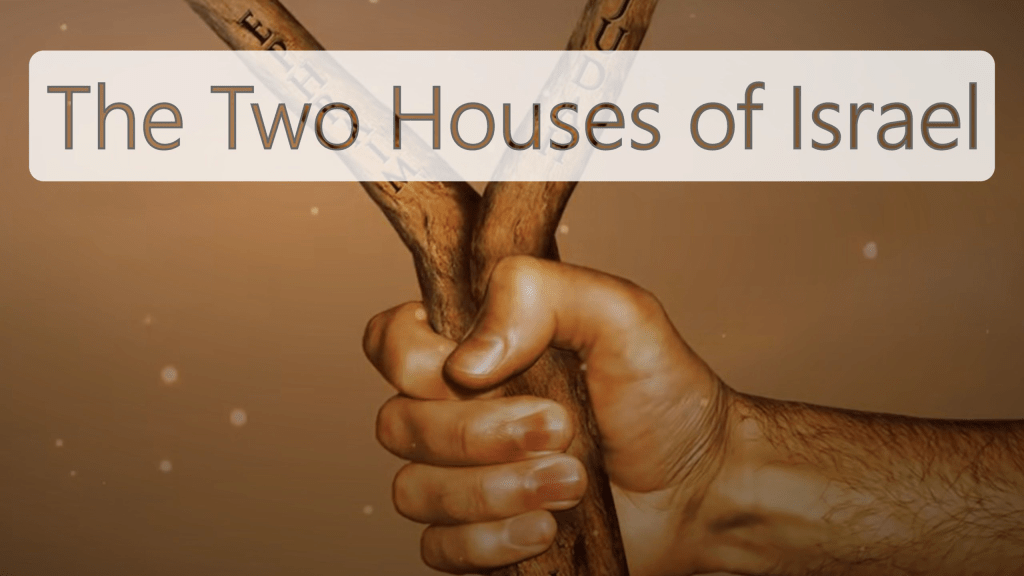
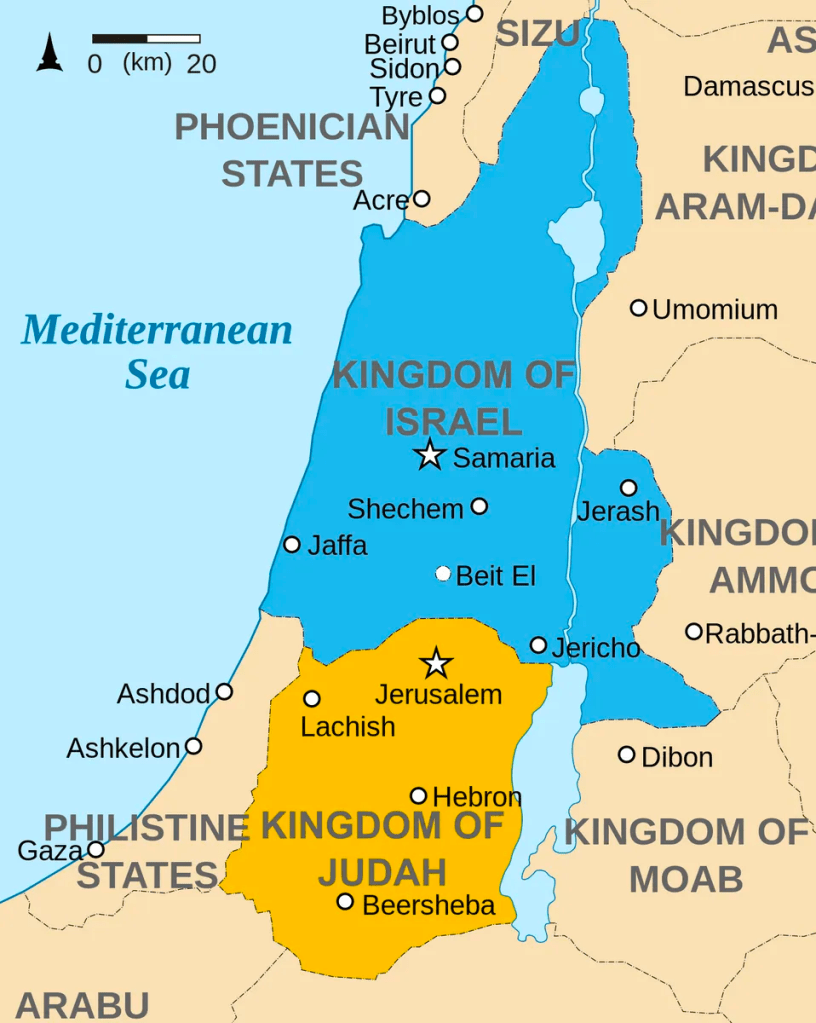











 Days of Noah