The Feast of Firstfruits Fulfilled

“But in fact Christ has been raised from the dead, the firstfruits of those who have fallen asleep.”

[1 Corinthians 15:20]
The significance of New Testament language and imagery is lost without a thorough knowledge of the Old Testament, and likewise the significance of the Feasts of the LORD is found in the Person and work of Yeshua the Messiah. God the Son came into the world to fulfill the law and the prophets and literally to bring the Feasts of the LORD to life!

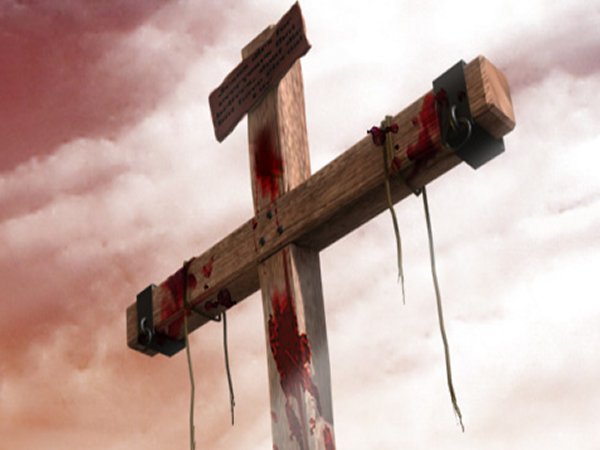
He laid down His perfect life as our Passover lamb, shedding His innocent blood to save us from our sin and death.

After being buried, His physical body did not decay in the grave, which is an absolute fulfillment of the Feast of Unleavened Bread.

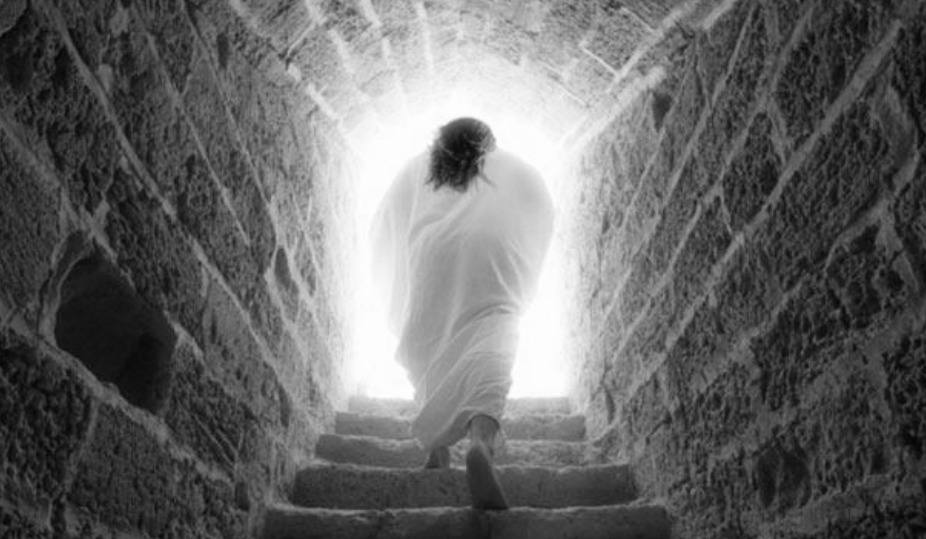
And on the day after the Sabbath, as predicted by the Feast of Firstfruits — early on the first day of the week — the Lord Jesus Christ was gloriously and miraculously resurrected from death to life!

As we peer more closely into this most significant event in human history, we will see how Jesus becomes the Firstfruits of our future hope in the coming harvest on the last day.

An Acceptable Sacrifice

One of the first connections we see between the resurrection of Christ and Firstfruits is that the priest was to wave the sheaf of barley during on the day after the Sabbath during the Feast of Unleavened Bread. Naturally, the day after the Sabbath is Sunday, the first day of the week and the day of new beginnings. In the gospel of Mark it says, “Now after He had risen early on the first day of the week, He first appeared to Mary Magdalene …” [Mark 16:9].

Secondly, the priest was to inspect the firstfruits offering and officially bless it before the ensuing harvest could be declared acceptable unto God. In the same way it is the resurrection of the Jesus that make us acceptable to God!

“He was delivered over to death for our sins and was raised to life for our justification.”

[Romans 4:25]

The resurrection of Jesus Christ was the divine validation and public declaration that His atoning sacrifice was accepted by God. In other words, without the validation of the resurrection, Jesus would have died in vain.

Jesus is the Firstfruits from among the Dead

The Apostle Paul acknowledges the divine nature of Christ as Creator and calls Him the “firstborn from among the dead so that in everything He might be preeminent” [Colossians 1:18]. Jesus is preeminent, meaning the beginning, the head, the supreme Lord over all creation, and as the first to rise from the dead in a glorified body, He alone possesses the power to give life to all who believe in Him. Our only future hope of resurrection is found in Christ.

“If the Spirit of him who raised Jesus from the dead dwells in you, he who raised Christ Jesus from the dead will also give life to your mortal bodies through his Spirit who dwells in you.”

[Romans 8:11]

Jesus is the FIRST to rise from the dead, which obviously implies that He will not be the last! Just as the priest waved the firstfruits of the barley harvest before the people as a symbolic promise of the harvest to come, so Jesus was put on display in His resurrected glory as the living testimony of what is to come in the future resurrection from the dead. We have good news to proclaim. There is a harvest coming!

“To this day I have had the help that comes from God, and so I stand here testifying both to small and great, saying nothing but what the prophets and Moses said would come to pass: that the Christ must suffer and that, by being the first to rise from the dead, he would proclaim light both to our people and to the Gentiles.”

[Acts 26:22-23]

Waiting for the Future Harvest

If spring is a time of planting and watering and autumn is the season of the harvest, then the last 2,000 years of history represent the long summer season of both working and waiting for the return of the Lord Jesus. He is the Firstfruits of the future resurrection of the saints, but we are still waiting out the last few days of the summer before He comes to harvest the earth.

After His death, burial and resurrection, the Lord Jesus showed Himself to many witnesses for a period of 40 days. Just prior to His ascension, He told His disciples something profound. He told them that there was much work to be done before the restoration of all things.

So when they had come together, they asked him, “Lord, will you at this time restore the kingdom to Israel?” He said to them, “It is not for you to know times or seasons (appointed feasts) that the Father has fixed by his own authority. But you will receive power when the Holy Spirit has come upon you, and you will be my witnesses in Jerusalem and in all Judea and Samaria, and to the end of the earth.”

[Acts 1:6-8]

Jesus wanted to make sure that the disciples remained focused on their primary mission — the Great Commission — by making disciples of all nations and proclaiming the gospel to all of creation. God has been working this “summer” season to redeem people from every nation, tribe, and language, as a people for His own possession. By the time this summer season of grace has been extended to the Gentiles, God’s people will be scattered to all four corners of the earth.

It was not for the disciples and their generation, however, to be concerned about the future fulfillment of the appointed feasts and final harvest on the last day. That would be revealed to another future generation — perhaps our very own.

The days of summer work are nearing the end and the waiting period for the harvest is quickly closing. Jesus has promised to give life to our mortal bodies and redeem us from the bondage of suffering and physical death once and for all. Only Jesus can give us what we all are longing for — ultimate and total redemption! Future resurrection! The Coming Kingdom!

So when does this harvest take place? When is the resurrection of the dead? When will all of creation be liberated from its bondage to decay and corruption? When will we receive new, glorified bodies like the Lord Himself?

On the Last Day

As followers of Yeshua, we should be expecting and awaiting the great harvest of the earth, which means our resurrection. Many Scriptures remind us that the future resurrection and harvest of God’s people will occur on the last day at the 2nd Coming of the Lord Jesus. For those of us who believe and have been sealed with the Holy Spirit, we will be delivered in the end and receive resurrected bodies to inherit the Kingdom of God.

Jesus says that the harvest will take place at “the end of the age” [Matthew 13:39], and He also says that those who have believed upon Him will be raised up “on the last day” [John 6:39-40]. Martha believed her brother Lazarus would “rise again in the resurrection at the last day,” after which Jesus declared Himself to be “the resurrection and the life” [John 11:24-25].

Paul, echoing the words of Jesus Himself (see Matthew 24:29-31) declares that the resurrection of the dead will take place at the glorious and triumphant return of the Lord Jesus to earth. Immediately after the great tribulation, the sun and moon will be darkened and the Lord will descend from heaven in a cloud, at the last trump, and will gather His elect from the four winds of heaven (see also 1 Corinthians 15:50-52, 1 Thessalonians 4:13-18).

The Apostle John received confirmation of this great harvest in a vision.

Then I looked, and behold, a white cloud, and seated on the cloud one like a son of man, with a golden crown on his head, and a sharp sickle in his hand. And another angel came out of the temple, calling with a loud voice to him who sat on the cloud, “Put in your sickle, and reap, for the hour to reap has come, for the harvest of the earth is fully ripe.” So he who sat on the cloud swung his sickle across the earth, and the earth was reaped.

[Revelation 14:14-16]

The Holy Spirit is the living seal in the soul of every believer, bearing witness with our spirit that we belong to the Father and will one day be adopted into His Kingdom. As Paul says, “And not only the creation, but we ourselves, who have the firstfruits of the Spirit, groan inwardly as we wait eagerly for adoption as sons, the redemption of our bodies” [Romans 8:23].

Paul also reminds us in His great treatise on the resurrection that Christ has indeed been raised as the firstfruits of our faith and that the rest of God’s purposes must continue in order, just like His appointed seasons. As surely as the summer follows spring and the autumn follows summer, so will we follow the Lord Jesus in the resurrection on that Day when He is glorified in all His saints!

But in fact Christ has been raised from the dead, the firstfruits of those who have fallen asleep. For as by a man came death, by a man has come also the resurrection of the dead. For as in Adam all die, so also in Christ shall all be made alive. But each in his own order: Christ the firstfruits, then at his coming those who belong to Christ. Then comes the end, when he delivers the kingdom to God the Father after destroying every rule and every authority and power. 

[1 Corinthians 15:20-24]
The Feast of Firstfruits — Part 1

And the LORD spoke to Moses, saying, “Speak to the people of Israel and say to them, When you come into the land that I give you and reap its harvest, you shall bring the sheaf of the firstfruits of your harvest to the priest, and he shall wave the sheaf before the LORD, so that you may be accepted. On the day after the Sabbath the priest shall wave it.”

[Leviticus 23:9-11]

Following the blood sacrifice of the Passover and during the Feast of Unleavened Bread, the LORD commemorated another holy convocation for the children of Israel to observe each year — Firstfruits. As with all of the Feasts of the LORD, Firstfruits is brimming with symbolic significance concerning the coming of Messiah, more specifically with His resurrection from the dead.

The Feasts of the LORD directly are connected to the Promised Land of Israel and subsequently to the produce of the land. Everything revolves around the seasons of planting and harvest in an agricultural society, and the LORD knew that the symbolic word pictures in the feasts could best be communicated to His people through the natural rhythms of agrarian life.

What are ‘Firstfruits?’

The concept of firstfruits is a thread that runs consistently throughout Scripture. Abel understood the importance of bringing his firstborn and choicest portions from his flocks as an offering to the LORD (Genesis 4:4). The LORD required the Israelites to consecrate every firstborn son uniquely to His service (Exodus 13:1-2) and also set apart the sons of Levi for lifetime service to the priesthood.

The Israelites were expected to bring the firstfuits of their harvest as a tithe (tenth) to the LORD, which would be used to feed the poor, sojourners, orphans, and widows in the land (Deuteronomy 26). The LORD later rebuked the Jews in Malachi’s day for “robbing God” by holding back the best of their flocks and grain offerings (Malachi 1, 3).

The principle of firstfruits is simple. God expects His people to give their very best to Him FIRST as an act of obedience and worship, while trusting in His promise to provide and bless. Of course this principle can be applied today in any number of ways. We are called to give the LORD the firstfruits of our time, talents, and treasures. Anything less than our very best is unacceptable because the LORD God is worthy to receive our very best.

Waving the Sheaf of Firstfruits

The Feast of Unleavened Bread and Firstfruits occurs in the spring of the year just when the barley harvest is beginning to ripen. God instructed the Israelites that before reaping the barley harvest they were to take a sheaf of the first grain to the priest, who would wave it before the Lord as an offering.

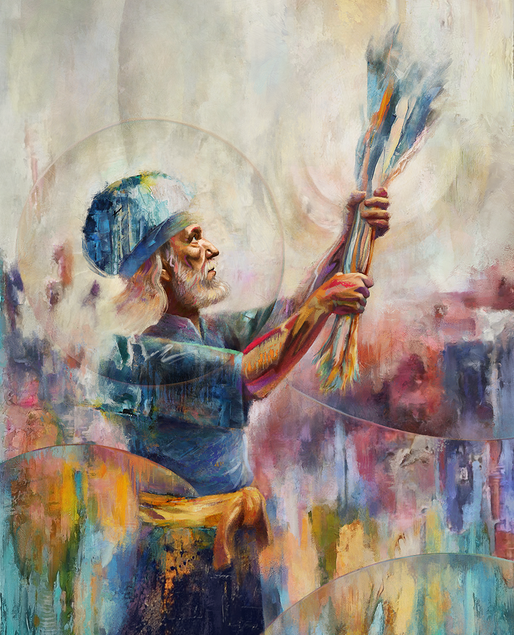
As the priest waved the sheaf of firstfruits to the left and the right, it was representative of the crop throughout the entire land. They did this to acknowledge and thank the Lord in expectation for the coming harvest and to ask His blessing upon it. It was a joyous occasion and an expression of faith in God who provided the firstfruits, believing He also would provide the future harvest.

As we will see later, the Feast of Pentecost (Shavuot) and the fall feasts are also connected to firstfruits and the coming harvest.

Waiting Patiently for the Coming Harvest

The Apostle Paul reminds us that laboring in the kingdom is much like laboring in the fields. He says that some are called to plant seeds, while others may come along and water, but only God causes the growth.

“So neither he who plants nor he who waters is anything, but only God who gives the growth. He who plants and he who waters are one, and each will receive his wages according to his labor. For we are God’s fellow workers. You are God’s field, God’s building.”

[1 Corinthians 3:7-9]

The Lord Jesus also spoke of the “summer season” of waiting until the coming harvest.

“The one who sows the good seed is the Son of Man. The field is the world, and the good seed is the sons of the kingdom. The weeds are the sons of the evil one, and the enemy who sowed them is the devil. The harvest is the end of the age, and the reapers are angels. Just as the weeds are gathered and burned with fire, so will it be at the end of the age.”

[Matthew 13:37-40]

One of the lessons we learn from the Feast of Firstfruits is the valuable lesson of learning how to wait patiently in hopeful expectation of good things to come. The summer is long and often hard, but the harvest will come. As God’s people, we must regularly be reminded of this essential truth.

“And not only the creation, but we ourselves, who have the firstfruits of the Spirit, groan inwardly as we wait eagerly for adoption as sons, the redemption of our bodies. For in this hope we were saved. Now hope that is seen is not hope. For who hopes for what he sees? But if we hope for what we do not see, we wait for it with patience.”

[Romans 8:23-25]

The Feast of Unleavened Bread Fulfilled

And He took the bread, gave thanks and broke it, and gave it to them, saying, “This is My body, given for you; do this in remembrance of Me.”

[Luke 22:19]

Just as the Israelites were saved out of Egypt on the first Passover night, the Lord Jesus — our Passover Lamb — willingly shed His lifeblood on the cross as the atoning sacrifice for sin. It is by faith in His finished work on the cross that we are forgiven and saved from sin and death.

And just as the Israelites were commanded by God to purge the yeast from their homes and be sustained only by unleavened bread during the hasty Exodus journey, the Lord Jesus willingly gave His body to be bruised and crushed for our benefit. As the LORD God of Israel established the holy convocation of Unleavened Bread, He was teaching His people a valuable lesson about the future coming of Messiah — the Bread of Life.

His Body the Bread

Consequently, when Christ came into the world, he said, “Sacrifices and offerings you have not desired,
but a body have you prepared for me …”

[Hebrews 10:5]

If the blood of the Passover Lamb ultimately was fulfilled in the precious blood of Christ, then the Feast of Unleavened Bread prefigured and pointed to the broken body of Christ. The Lord Yeshua often used bread in His teachings to correspond to His body.

John the sixth chapter is full of the body/bread imagery. Yeshua is correlating bread with sustenance and sustenance with life and then contrasting physical life with eternal life.

“Do not work for the food that perishes, but for the food that endures to eternal life, which the Son of Man will give to you. For on him God the Father has set his seal.”

[John 6:27]

John 6 is also one of the most misunderstood Gospel passages because of the unusual language used by Yeshua when speaking of his body and blood. After feeding a multitude with only a few small fish and loaves of bread, Yeshua tells his disciples that unless they are willing to “eat the flesh of the Son of Man and drink his blood, you have no life in you” [John 6:53]. This extreme hyperbole apparently was too much for many of his followers to process, which resulted in a mass defection from Jesus.

Had they only stayed a little longer to hear Jesus provide his explanation, they would have understood that the Lord was using extreme word pictures to communicate a spiritual concept. He was not advocating some perverse form of cannibalism. He was speaking of the necessity of being filled with the Word of God (living bread) and born of the Spirit of God. “It is the Spirit who gives life; the flesh is no help at all. The words that I have spoken to you are spirit and life” [John 6:63].

Yeshua repeatedly refers to Himself as the Bread of Life, and it is during the Passover meal on the night before He was betrayed that Jesus took the unleavened bread (matzah) and broke it before His disciples and told them to eat it as a symbol of the necessary life they would find only in Him. Christ also revealed the new meaning of the unleavened bread, as He told the disciples to proclaim His death as often as they would eat in remembrance of Him.

His body would be bruised and crushed for our iniquities and punished for our sins. We cannot underestimate the human suffering and death of our Savior — in the flesh — as it is essential in understanding the gospel itself.

His Body was Buried

The Apostle Paul received the gospel message and delivered it once and for all to the church as that of first importance.

“For I delivered to you as of first importance what I also received: that Christ died for our sins in accordance with the Scriptures, that he was buried …”

[1 Corinthians 15:3-4a]

The burial of Christ is critical to the integrity of the gospel. Not only is it essential that we understand the literal, physical death of Christ on the cross, but also the burial is the very bridge that creates the path from death to resurrection. A physically dead body must also be a physically resurrected body, not some ghostly apparition or disembodied spirit, which was introduced and suggested by the heretical gnostics.

The body of Jesus — the Bread of Life — was dead, and His lifeless body was wrapped and laid in a tomb. The tomb was sealed. The disciples were despondent. Hope temporarily was lost. But we know that was not the end of the story!

His Body Did Not DeCay in the Grave

For David says concerning him,

“I saw the Lord always before me,
for he is at my right hand that I may not be shaken;
therefore my heart was glad, and my tongue rejoiced;
my flesh also will dwell in hope.
For you will not abandon my soul to Hades,
or let your Holy One see corruption.”

[Acts 2:25-27 — Quoted from Psalm 16]

As I shared in my last post, the purpose of the unleavened bread during the Exodus was both practical and prophetic. Unleavened bread would not spoil or ferment as would leavened bread. Unleavened bread could be preserved and consumed by the Israelites to sustain life during the long journey to the Promised Land.

But prophetically speaking, the unleavened bread was always about Jesus and His sinless life. He was free of the yeast of sin and immorality and hypocrisy. He perfectly fulfilled the law of God and no one can convict Him of sin. The unleavened bread was always about His body being wrapped and laid in a tomb. It was always about the promise that God’s Holy One — the Messiah — would suffer and taste the pangs of death but that DEATH COULD NOT HOLD HIM!

Death is our great and final enemy. All mankind is bound inextricably to Adam and because sin came into the world through Adam — and death through sin — then we all will die because we all are sinners. We needed a Savior who first would die on our behalf, but we also needed a Savior who would not remain dead. We needed a Savior who could somehow overcome the pangs of death and reverse the curse of death. And the good news is that Yeshua of Nazareth is all of that and more.

The Apostle Peter puts this into perspective when comparing and contrasting David, who wrote Psalm 16, and Yeshua the Messiah.

“Brothers, I may say to you with confidence about the patriarch David that he both died and was buried, and his tomb is with us to this day. Being therefore a prophet, and knowing that God had sworn with an oath to him that he would set one of his descendants on his throne, he foresaw and spoke about the resurrection of the Christ, that he was not abandoned to Hades, nor did his flesh see corruption.

[Acts 2:29-31]

The body of Jesus — the Unleavened Bread of Life — did not decompose in the grave but rather was preserved and raised victoriously! His flesh did not see corruption. He is the One who now gives life to all who believe in Him and will sustain us and fill us on our journey to the Promised Land.

Jesus of Nazareth is our unleavened bread, and has fulfilled this appointed feast in His first coming, through His death and burial, and as we will see next time, Jesus perfectly completes the feast of first fruits in His glorious resurrection from the dead!

The Feast of Unleavened Bread — Part 1

“And you shall observe the Feast of Unleavened Bread, for on this very day I brought your hosts out of the land of Egypt. Therefore you shall observe this day, throughout your generations, as a statute forever.”

[Exodus 12:17]
matzah

Passover is merely the initial 24-hour period for what traditionally is called the Feast of Unleavened Bread. Beginning on the day after Passover (Nisan 15) and continuing for the next seven days to Nisan 22, the Feast of Unleavened Bread was established by the LORD as a holy convocation for the children of Israel. Year after year, the Israelites were to reenact the Exodus story by removing all the leaven from their homes and only partaking of unleavened bread for the duration the feast.

So serious was this commandment that the LORD warned, “If anyone eats what is leavened, that person will be cut off from the congregation of Israel, whether he is a sojourner or a native of the land” [Exodus 12:19]. One may wonder why the LORD would place such an emphasis on purging the yeast from each home. What’s so bad about yeast? Although certain grain offerings were also to be presented to the priests without yeast (Leviticus 2:11, 7:12), there was no other prohibition in Israel about eating leavened bread.

On the surface there was at least one practical reason the LORD commanded the Hebrews to prepare unleavened bread for the Exodus — preservation. At the very moment the destroying angel killed every firstborn in Egypt, the Israelites had to be ready to make haste and leave immediately. They would be bringing whatever possessions they could carry from Egypt and taking an arduous journey through the wilderness for an indefinite amount of time.

Naturally, it only made sense to prepare food for the journey that would not sour or ruin but that would keep for days to come. Something like the equivalent of the dehydrated meals designed for survival in extreme conditions.

We’ve all likely experienced the effects of yeast first hand.

I can remember as a child that my favorite after school snack was a peanut butter and jelly sandwich with a cold glass of milk. Nothing was worse than having my mind set on a good ole PB&J only to discover the loaf of bread had soured and was covered in mold. My only option at that point was to look for the next best thing — crackers.

And the one thing I could count on is that if there were any saltines in the house — no matter how old and stale — they at least would be edible.

Why? … Obviously, No yeast.

Yeast is a fungus that binds with the sugars in bread causing it to rise, and while it’s hard to beat fresh-baked bread hot out of the oven, we all know that it won’t keep long because the yeast accelerates the fermentation process and causes the bread to spoil much faster.

Practically, the Israelites needed sustainable food for their journey that would keep during the days and weeks ahead without spoiling. Bread would be essential to keep them alive in a harsh environment, and only unleavened bread could be preserved long enough to meet their most basic need — daily bread.

Yet with nearly everything God does for us and communicates to us, He does so on multiple levels and with a variety of applications — not just physically or practically — but spiritually as well. By using unleavened bread, the LORD was providing an important object lesson for His people, a symbolic picture of something much deeper and much more spiritually significant.

Jesus and His Teachings on Leaven

Yeshua of Nazareth in fulfilling all righteousness as the Messiah of Israel would have faithfully observed the appointed feast of Unleavened Bread His entire life. We know that on the night that Yeshua was betrayed, He observed the Passover with His disciples, and as the Lord led His disciples in the first holy communion of the New Covenant, He brought new significance to the Passover meal. Jesus would have taken the unleavened bread at the table, pronounced a blessing over it, and broke it before giving it to His disciples.

Jesus also regularly used the concept of leaven to teach His disciples about the dangers of sin. By doing this, Jesus was expanding on the symbolic meaning of leaven and contrasting His own character and ministry with that of other religious groups of His day.

“How is it that you fail to understand that I did not speak about bread? Beware of the leaven of the Pharisees and Sadducees.” Then they understood that he did not tell them to beware of the leaven of bread, but of the teaching of the Pharisees and Sadducees.

[Matthew 16:11-12]

Jesus began to say to his disciples first, “Beware of the leaven of the Pharisees, which is hypocrisy.”

[Luke 12:1]

Jesus clearly associates leaven with the dangerous sins of false teaching and self-righteous hypocrisy. The Apostle Paul also uses the same wordplay when speaking of the dangers of allowing a little leaven (sin) into our lives, which will eventually infect and ruin the whole lump — either as individuals or as a corporate church body [see 1 Corinthians 5].

Leaven, therefore, is a word picture and symbolic representation of sin, hypocrisy, corruption, ruin, and spiritual impurity. This will be critical in understanding the significance of how the Lord Jesus has perfectly fulfilled the Feast of Unleavened Bread.

Until next time, I have provided a link which describes how the Jewish community observes the Feast of Unleavened Bread to this day with matzah and other symbolic gestures that point directly to Yeshua the Messiah.

You can discover more here.

The Feast of Passover Fulfilled

For Christ, our Passover lamb, has been sacrificed…

[1 Corinthians 5:7]

The parallels between the Passover and the Passion of Yeshua the Messiah simply are astounding. The Passover Feast paints not only the big picture of God’s redemptive work through the Messiah but also satisfies even the most intricate details.

As a disclaimer, I will say that this post will not attempt to harmonize the exact timing of the crucifixion of Jesus as it coincided with the offering of the passover lambs in Jerusalem. I will admit that while some scholars have gone to great lengths to prove that Jesus was literally crucified the exact day and hour of the Passover (14th of Nisan), there are some Scriptural nuances and complexities that create clear challenges — challenges that go beyond the scope of this article.

Although we know Jesus most certainly was crucified during the week of Passover, it is difficult to prove from the Biblical text that He was being sacrificed at the very moment the Jews were offering their own passover lambs at twilight on the 14th of Nisan.

For example, the Gospels clearly portray Jesus sharing a Passover meal (Last Supper) with His disciples the night before He is betrayed and crucified. The Gospels also agree that He died on the day of Preparation before a Sabbath (which may not have been Saturday but rather a High Sabbath rest on the first day of Unleavened Bread).

So one obvious question is, “if Jesus observed the Passover with His disciples, then how could He have already been at killed on Passover?”

Like I said, this is just one of many complex issues that requires scholarly attention, which is not my aim here. I for one believe that there are sufficient answers to reconcile these challenges but either way, I don’t want to lose focus from the bigger picture, which is how God purposefully and powerfully reveals Christ in the Passover Feast.

The Big Picture

“Knowing that you were ransomed from the futile ways inherited from your forefathers, not with perishable things such as silver or gold, but with the precious blood of Christ, like that of a lamb without blemish or spot.”

[1 Peter 1:18-19]

Paul calls Jesus our “Passover lamb.” John the Baptist says of Jesus, “Behold, the Lamb of God who takes away the sins of the world” [John 1:29]. Peter likens Christ to a “lamb without blemish or spot.” The Apostle John in a vision heard the host of heaven glorifying the Risen Lord Jesus, saying “Worthy is the Lamb!” [Revelation 5:12]

All of these descriptions are directly connected to the Feast of Passover and the fulfillment found in Christ, our Passover. Let us consider many of the big picture elements found in the Passover.

The Exodus account portrays a people enslaved in sin, in bondage to a cruel master (Pharaoh) and trapped in the evil Egyptian system of oppression (i.e. the world). The Israelites are without hope and powerless to save themselves, and yet the LORD hears their cries and pleas for mercy and comes in power working wonders to bring judgment on Pharaoh and the gods of Egypt, to redeem Israel out of slavery, and to claim them as a people for His own possession — giving them new life, a new home, a hope, and a future.

At the same time the LORD raises up a deliverer for Israel — Moses — who takes on the roles of Prophet, Deliverer, Ruler, Mediator, Judge, and Shepherd of God’s people. The many parallels between Moses and the Lord Jesus deserve a separate study altogether, as Moses is one of the great Old Testament types of the Messiah.

Now compare the Exodus story to the greater redemptive work of Christ Jesus, who entered His own creation — brining light into this dark and evil world — so that He might preach the good news to the poor and set the captives free and proclaim liberty the oppressed.

It is Jesus who looked down with mercy upon this world, seeing us in our sinful condition, unable to save ourselves and trapped in a world system under the heavy hand of a cruel master, the devil, who is the ruler of this world.

It is Jesus who came declaring the Word of God and the Way of salvation to all people, working wonders and miracles to validate His message.

It is Jesus who came to destroy the works of the devil and openly put to shame the spiritual rulers and principalities of evil in this dark world. It is Jesus who came to redeem a people out of bondage for His own possession, delivering us from the domain of darkness into God’s Kingdom.

“But you are a chosen race, a royal priesthood, a holy nation, a people for his own possession, that you may proclaim the excellencies of him who called you out of darkness into his marvelous light. Once you were not a people, but now you are God’s people; once you had not received mercy, but now you have received mercy.”

[1 Peter 2:9-10]

Jesus will lead his people into the greater Promised Land, a better country (Hebrews 11:16), as He has gone to prepare a place for all who belong to Him. Jesus came as God in the flesh, the Prophet greater than Moses, and remains our Great High Priest and One True Mediator between God and man.

Ultimately, Jesus gave His own life as a ransom for many, shedding His precious blood on the cross as the atoning sacrifice necessary and sufficient to pay for the sins of the whole world. It was through this one heroic act of self sacrifice, as Jesus stretched out his arm, where the love and justice of God converged, providing salvation for all mankind.

And they sang a new song: “Worthy are You to take the scroll and open its seals, because You were slain, and by Your blood You purchased for God those from every tribe and tongue and people and nation. You have made them into a kingdom, priests to serve our God, and they will reign upon the earth.”

[Revelation 5:9-10]

Down to the Details

Let us not forget the purpose of establishing these feasts as holy convocations, or dress rehearsals, for God’s people. Every detail of the Passover Feast was meant to invoke an image or a symbol of the coming Messiah, and when we examine the Lord Jesus Christ, He is the substance of every shadow picture portrayed in the Passover.

  1. Passover lamb was male – Unto us a child is born, unto us a son is given. The angel told Mary that she would bear a son and call Him Jesus because He would save His people from their sins.
  2. Four days of examination – just as the Passover lamb had to be brought into the home and cared for and examined for four days before the sacrifice, Jesus entered into Jerusalem four days prior to being crucified so that He could be closely watched and examined by the Jews one last time.
  3. Without Defect or Blemish – the one-year old male lamb most importantly could have no defect or deformity or infirmity. Even the smallest spot of its wool would disqualify the lamb for acceptable sacrifice. In the same way, no one could convict Jesus of sin. As Peter says, “He committed no sin, neither was deceit found in his mouth” [1 Peter 2:22]. Because Jesus was perfectly righteous and without sin, He alone could qualify as the acceptable Sacrifice of God for the sins of the world.
  4. Sacrificed at Twilight – the Passover lamb was to be sacrificed by the priest at twilight, just before sundown. Jesus died during Passover week at 3 pm, which was considered the beginning of the twilight window for sacrifice.
  5. Hyssop Plant – The Israelites were to smear the blood of the lamb on their doorposts with a hyssop plant. Ironically, as Jesus agonized on the cross, the Roman guards offered Jesus sour wine on a hyssop plant (John 19:29).
  6. Atoning Blood Sacrifice – The Passover Lamb was innocent and yet its blood would be the atoning sacrifice for the sins of the people, because without the shedding of blood there is no forgiveness of sin. In the same way, Jesus was offered as the atoning sacrifice for our sin, our substitute. He died in our place so that we may live.
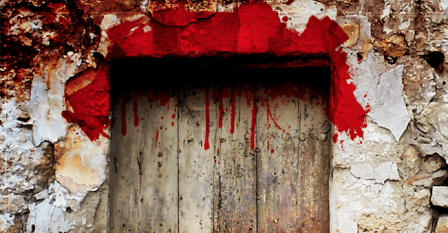
  7. Smearing the Blood on the Doorframes – As the Israelites took the hyssop and smeared the blood on the wooden doorframes of their homes, they were symbolically drawing a crucifix in the blood the lamb — another picture of the bloodstained cross of Christ as He was nailed to a tree.
  8. Saved by Grace through Faith – let us not forget that the Israelites were saved on Passover not because of any work they had done but only by believing the good news of salvation that the LORD had provided. They had to exercise faith and believe that what God had said was true and then obey His commandment. We too are saved by the grace of God – His provision through Christ – through faith.
  9. Only One Way – notice that there was only one way the Israelites could be saved from the angel of death. Any attempt to circumvent God’s way of salvation or attempt to be saved another way would have resulted in imminent death. Jesus says, “I am the Way, the Truth and the Life. No one comes to the Father except through me” [John 14:6].
  10. The angel of death passed over – Only the homes covered by the blood of the lamb were saved from the destroying angel, and likewise only those of us who have believed in God’s only provision for salvation and are covered by the blood of Jesus Christ will be saved from death and destruction. Jesus says that whoever believes in Him has not come into judgment but has crossed over from death into life! [John 5:24]

Obviously, entire books have been written to compare and contrast the Passover with the redemptive work of Jesus Christ; therefore, I won’t dare attempt an exhaustive examination of this sacred appointed feast.

My primary goal is to demonstrate how Jesus of Nazareth perfectly and completely fulfilled the Passover Feast in His first coming — during the actual Passover Feast! The Appointed times and seasons of these feasts are not at random but have prophetic purpose.

And as we will see with the Feast of Unleavened Bread and following, Yeshua the Messiah fulfills all the Feasts of the LORD, giving further validation that He is the Jewish Messiah and True Savior of the world.

The Feast of Passover — Part 1

“The blood shall be a sign for you, on the houses where you are. And when I see the blood, I will pass over you, and no plague will befall you to destroy you, when I strike the land of Egypt.”

[Exodus 12:13]

The LORD established the Biblical feasts for His people to serve as holy convocations (literal rehearsals) both to remember God’s faithfulness in the past and also to foreshadow symbolic pictures of the good things to come in Messiah.

When it comes to understanding these sacred feasts, the Passover is the natural place to begin. Passover not only represents God’s unforgettable work of redeeming His people Israel out of Egyptian bondage, but also it signifies the literal birth of a new nation and beginning of a new year of liberty for God’s people. As we will see with all of the feasts, Passover is abundantly rich with Messianic hope and fulfillment, as Yahweh used this monumental and miraculous occasion to point His people to even greater things to come.

As the Apostle Paul says …

“Therefore let no one pass judgment on you in questions of food and drink, or with regard to a feast or a new moon or a Sabbath. These are a shadow of the things to come, but the substance belongs to Christ.”

[Colossians 2:16-17]

The Exodus

The only way to understand and appreciate the Passover is to revisit its origin in the true account of the Exodus. Yahweh — the LORD — had entered into an everlasting covenant with Abraham, Isaac and Jacob and their descendants after them. This covenant included the land, a nation, blessing, and the Seed of promise — Messiah. The LORD made a promise to Abram that later would be realized through the Exodus from Egypt.

Then the LORD said to Abram, “Know for certain that your offspring will be sojourners in a land that is not theirs and will be servants there, and they will be afflicted for four hundred years. But I will bring judgment on the nation that they serve, and afterward they shall come out with great possessions.”

[Genesis 15:13-14]

As predicted, the Israelites became enslaved in Egypt under the heavy hand of Pharaoh and suffered for 400 years, while at the same time growing into a great nation. When the fullness of time had come, the LORD raised up a deliverer in Moses and sent him to bring judgment on Pharaoh and redemption for His people.

After a barrage of plagues solidified the hardness of Pharaoh’s rebellious heart, the LORD informed Moses that a 10th and final plague was coming upon the land of Egypt — a plague of death for every firstborn son. Before sending the destroying angel to carry out this severe judgment, the LORD told Moses how the Israelites would be saved from certain death.

The LORD provided only one way for His people to be saved, which required unwavering faith and total obedience. The Passover would become the day of salvation for Israel. The day of new birth. The day of deliverance.

The Passover

Let’s revisit some of the critical details about the Passover.

  1. The LORD commanded each family to select a lamb on the 10th day of Nisan and examine and care for it until the 14th day Nisan [Exodus 12:1-6]
  2. The lamb had to be a male, one year old, and most importantly without blemish or defect [Exodus 12:5]
  3. Just before sunset on the 14th day of Nisan, each family was then to sacrifice the innocent lamb and smear its blood on the doorframes of each dwelling using a hyssop branch [Exodus 12:6-7]
  4. The family was then commanded to eat the lamb, along with other bitter herbs and unleavened bread [Exodus 12:8-10]
  5. All of the Israelites were to pack up and eat in haste and be prepared to leave at a moment’s notice [Exodus 12:11]
  6. All of the Israelites were to remain inside their dwellings until the destroying angel passed through the land, killing every firstborn son in Egypt [Exodus 12:12]
  7. The lamb’s blood on the doorposts would serve as a “sign” for God’s people, as the angel of the LORD would passover the bloodstained wood, saving them from God’s destructive judgment [Exodus 12:13]
  8. This is the LORD’s Passover, which “shall be for you a memorial day, and you shall keep it as a feast to the LORD; throughout your generations, as a statute forever, you shall keep it as a feast.” [Exodus 12:14]

The Observance of Passover in Israel

The Feast of Passover/Unleavened Bread was one of three appointed feasts in which the LORD required all the eligible men of Israel to present themselves in Jerusalem [Deuteronomy 16:16]. Despite the LORD’s clear command that the Passover was to remembered as a holy convocation each year, the Bible says that by the time of the Judges, God’s people neglected to keep the Passover for 500 years! It wasn’t until King Josiah discovered the scroll of Torah in the Temple that the Passover was reinstated in Judah.

“And the king commanded all the people, ‘Keep the Passover to the LORD your God, as it is written in this Book of the Covenant.’ For no such Passover had been kept since the days of the judges who judged Israel, or during all the days of the kings of Israel or of the kings of Judah.”

[2 Kings 23:21-22]

We also know that Passover was observed within the religious culture of Jesus’ day because Jesus commanded His own disciples to prepare the Passover meal before his death. He would have observed all the appointed feasts in order to fulfill all righteousness and satisfy the requirements of the law.

“And they went and found it just as he had told them, and they prepared the Passover. And when the hour came, he reclined at table, and the apostles with him. And he said to them, ‘I have earnestly desired to eat this Passover with you before I suffer.  For I tell you I will not eat it until it is fulfilled in the kingdom of God.’”

[Luke 22:13-16]

As we will see next time, Passover ultimately strikes at the heart of the gospel and provides one of the most significant pictures of the sacrificial death of our Lord and Savior Jesus Christ. Stay tuned.

Rediscovering the Appointed Feasts of the LORD

“Now concerning the times and the seasons, brothers, you have no need to have anything written to you. For you yourselves are fully aware that the day of the Lord will come like a thief in the night.”

[1 Thessalonians 5:1-2]

The early New Testament church primarily consisted of Jewish believers who embraced the Salvation and Lordship of Yeshua of Nazareth and were witnesses to His glory as the Unique Son of God. These Jewish believers were zealous for the law of Moses and were able to understand how the testimony of the Torah and the prophets had been fulfilled in part by the very Person and work of Yeshua.

Yeshua Himself proclaimed that He came not to abolish but rather to fulfill the law and the prophets [Matthew 5:17] and bring greater significance and meaning to the writings of the Old Testament [Luke 24:27]. With this new perspective, the Jewish believers in Jesus would have been able to read their sacred Scriptures afresh with new eyes and with the assistance of the Holy Spirit and proclaim with confidence the good news of the Messiah to the whole world!

Unfortunately, as more and more Gentile believers were grafted in by faith and incorporated into the commonwealth of Israel, the Jewish roots of our faith gradually were forgotten, anti-semitism began to poison the church, and the Roman Catholic Church began to dominate the ecclesiastical direction of Christendom. The heretical doctrine of replacement theology (supersessionism) has since infected large segments of the church (especially in reformed circles), which has effectively diminished the essential role of the Old Testament in understanding the New Testament.

Case in point.

Consider the Appointed Feasts of the LORD, which He prescribed and established to be remembered and celebrated by God’s people FOREVER as literal dress rehearsals in preparation for the coming of Messiah. Without a proper understanding of these seven sacred feasts, much of what God intended for us to know has been lost in translation and ignored for centuries.

Yet in returning to a robust study and understanding of these unique feasts, the LORD is willing to reveal the deep truths of His prophetic timeline to all who are paying attention and who seek wisdom in the last days.

For the foreseeable future, my goal is to begin to rediscover the purpose of the appointed Feasts of the LORD and how they unlock the keys to understanding the first and second coming of the Lord Jesus Christ.

The 7 Feasts of the LORD

“The LORD spoke to Moses, saying, ‘Speak to the people of Israel and say to them, These are the appointed feasts of the LORD that you shall proclaim as holy convocations; they are my appointed feasts.'”

[Leviticus 23:1-2]

When is the last time your pastor preached a riveting series through the book of Leviticus?

How about never ….

While the book of Leviticus is most often avoided like the plague by modern churches, the Israelites historically have considered Leviticus as foundational to understanding the law of Moses and regarded its teachings as primary among all the writings of Torah.

The book of Leviticus provides in depth details into the purpose and application of the law, the priesthood and the sacrificial system, among other things, but it also provides the comprehensive description of the Feasts of the LORD. These feasts are not the feasts of Israel. They are the appointed Feasts of the LORD, and God intended them to be observed forever, throughout all generations. As we will see in subsequent posts, these feasts were to be made holy by God’s people and meticulously followed in detail.

In essence, the LORD gave the feasts to Israel to serve as a regular rehearsals of things to come. In other words by observing the feasts, God’s people symbolically would act out the very picture of salvation that Messiah would bring in His coming. The great irony is that had the Jews only recognized what they had been rehearsing through the feasts for centuries, none of them would have missed their Messiah, who perfectly fulfilled the spring feasts of the LORD in His first advent.

Spring Feasts

Primarily there are four spring feasts and three fall feasts on the Jewish religious calendar. [We also will later consider Hanukkah, Purim and Tisha B’Av]

All of them are sacred and significant, and I pray that this series of posts will help ignite a newfound appreciation for the Feasts of the LORD and an eager expectation among the church for the return of Christ.

The spring feasts are …

  1. PESACH (PASSOVER) — Observed at twilight on the fourteenth day of the first month (Nisan)
  2. CHAG HAMATZOT (UNLEAVENED BREAD) — Observed on the 15th day of Nisan (the day after Passover)
  3.  BIKKURIM (THE FEAST OF FIRSTFRUITS) — Observed on the 21st of Nisan
  4. SHAVUOT (FEAST OF WEEKS/PENTECOST) — Observed 7 weeks after Passover in the month of Sivan

Fall Feasts

Likewise, the fall feasts are …

  1. YOM TERUAH (ROSH HASHANAH/FEAST OF TRUMPETS) — Observed on the first day of the seventh month of Tishrei, which must be determined by the new moon. This is the first of the year on the Hebrew civic Calendar
  2. YOM KIPPUR (DAY OF ATONEMENT) — the most holy day on the Jewish calendar, observed on the 10th day of the month of Tishrei
  3. SUKKOT (FEAST OF TABERNACLES) — Observed on the 15th Day of Tishrei

As we will see, these 7 Feats of the LORD are rich with prophetic fulfillment and expectation, and I look forward to rediscovering the intended meaning within these holy days, especially in how they relate to these last days and the return of King Jesus.

Stay tuned for my next installment, as I intend to explore the significance of the Lord’s Passover.