“Now concerning the times and the seasons, brothers, you have no need to have anything written to you. For you yourselves are fully aware that the day of the Lord will come like a thief in the night.”
[1 Thessalonians 5:1-2]
The early New Testament church primarily consisted of Jewish believers who embraced the Salvation and Lordship of Yeshua of Nazareth and were witnesses to His glory as the Unique Son of God. These Jewish believers were zealous for the law of Moses and were able to understand how the testimony of the Torah and the prophets had been fulfilled in part by the very Person and work of Yeshua.
Yeshua Himself proclaimed that He came not to abolish but rather to fulfill the law and the prophets [Matthew 5:17] and bring greater significance and meaning to the writings of the Old Testament [Luke 24:27]. With this new perspective, the Jewish believers in Jesus would have been able to read their sacred Scriptures afresh with new eyes and with the assistance of the Holy Spirit and proclaim with confidence the good news of the Messiah to the whole world!
Unfortunately, as more and more Gentile believers were grafted in by faith and incorporated into the commonwealth of Israel, the Jewish roots of our faith gradually were forgotten, anti-semitism began to poison the church, and the Roman Catholic Church began to dominate the ecclesiastical direction of Christendom. The heretical doctrine of replacement theology (supersessionism) has since infected large segments of the church (especially in reformed circles), which has effectively diminished the essential role of the Old Testament in understanding the New Testament.
Case in point.
Consider the Appointed Feasts of the LORD, which He prescribed and established to be remembered and celebrated by God’s people FOREVER as literal dress rehearsals in preparation for the coming of Messiah. Without a proper understanding of these seven sacred feasts, much of what God intended for us to know has been lost in translation and ignored for centuries.
Yet in returning to a robust study and understanding of these unique feasts, the LORD is willing to reveal the deep truths of His prophetic timeline to all who are paying attention and who seek wisdom in the last days.
For the foreseeable future, my goal is to begin to rediscover the purpose of the appointed Feasts of the LORD and how they unlock the keys to understanding the first and second coming of the Lord Jesus Christ.
The 7 Feasts of the LORD
“The LORD spoke to Moses, saying, ‘Speak to the people of Israel and say to them, These are the appointed feasts of the LORD that you shall proclaim as holy convocations; they are my appointed feasts.'”
[Leviticus 23:1-2]
When is the last time your pastor preached a riveting series through the book of Leviticus?
How about never ….
While the book of Leviticus is most often avoided like the plague by modern churches, the Israelites historically have considered Leviticus as foundational to understanding the law of Moses and regarded its teachings as primary among all the writings of Torah.
The book of Leviticus provides in depth details into the purpose and application of the law, the priesthood and the sacrificial system, among other things, but it also provides the comprehensive description of the Feasts of the LORD. These feasts are not the feasts of Israel. They are the appointed Feasts of the LORD, and God intended them to be observed forever, throughout all generations. As we will see in subsequent posts, these feasts were to be made holy by God’s people and meticulously followed in detail.
In essence, the LORD gave the feasts to Israel to serve as a regular rehearsals of things to come. In other words by observing the feasts, God’s people symbolically would act out the very picture of salvation that Messiah would bring in His coming. The great irony is that had the Jews only recognized what they had been rehearsing through the feasts for centuries, none of them would have missed their Messiah, who perfectly fulfilled the spring feasts of the LORD in His first advent.
Spring Feasts
Primarily there are four spring feasts and three fall feasts on the Jewish religious calendar. [We also will later consider Hanukkah, PurimandTisha B’Av]
All of them are sacred and significant, and I pray that this series of posts will help ignite a newfound appreciation for the Feasts of the LORD and an eager expectation among the church for the return of Christ.
The spring feasts are …
PESACH (PASSOVER) — Observed at twilight on the fourteenth day of the first month (Nisan)
CHAG HAMATZOT (UNLEAVENED BREAD) — Observed on the 15th day of Nisan (the day after Passover)
BIKKURIM (THE FEAST OF FIRSTFRUITS) — Observed on the 21st of Nisan
SHAVUOT (FEAST OF WEEKS/PENTECOST) — Observed 7 weeks after Passover in the month of Sivan
Fall Feasts
Likewise, the fall feasts are …
YOM TERUAH (ROSH HASHANAH/FEAST OF TRUMPETS) — Observed on the first day of the seventh month of Tishrei, which must be determined by the new moon. This is the first of the year on the Hebrew civic Calendar
YOM KIPPUR (DAY OF ATONEMENT) — the most holy day on the Jewish calendar, observed on the 10th day of the month of Tishrei
SUKKOT (FEAST OF TABERNACLES) — Observed on the 15th Day of Tishrei
As we will see, these 7 Feats of the LORD are rich with prophetic fulfillment and expectation, and I look forward to rediscovering the intended meaning within these holy days, especially in how they relate to these last days and the return of King Jesus.
Stay tuned for my next installment, as I intend to explore the significance of the Lord’s Passover.
“Now you, brothers, like Isaac, are children of promise.”
[Galatians 4:28]
The ancient city of Jerusalem was built on a mountain called Moriah, which remains to this day. Mt. Moriah is significant on many different levels because it holds the key to understanding the age-old conflict in the Middle East between two people groups — Jews and Arabs.
We are first introduced to Mt. Moriah in Genesis 22, when the LORD tests Abraham’s allegiance and faith by asking him to do the very last thing he could have possibly imagined — sacrifice his beloved son, Isaac.
Abraham, unwavering in his faith in the LORD, took his son Isaac and journeyed to the foot of this sacred mountain. It was there on that rock that God would demonstrate one of the greatest foreshadowings of the eternal gospel of Jesus Christ.
Later King David and his son Solomon would choose that very same rock to build the Temple for the LORD. This is where sacrifices were made for atonement and where the high priest of Israel would mediate for his people. This was the place where sinful man could meet with Holy God and seek restoration. The Temple is where God manifested His glory before the people and where they would worship Him in reverence.
“Then Solomon began to build the house of the LORD in Jerusalem on Mount Moriah, where the LORD had appeared to David his father, at the place that David had appointed, on the threshing floor of Ornan the Jebusite.”
[2 Chronicles 3:1]
It is evident that the LORD has chosen that mountain as His own resting place for His name to be remembered forever. Consider what the LORD told Solomon at the dedication of the Temple on Mount Moriah.
And the LORD said to him, “I have heard your prayer and your plea, which you have made before me. I have consecrated this house that you have built, by putting my name there forever. My eyes and my heart will be there for all time.”
[1 Kings 9:3]
Abraham and Isaac
After these things God tested Abraham and said to him, “Abraham!” And he said, “Here I am.” He said, “Take your son, your only son Isaac, whom you love, and go to the land of Moriah, and offer him there as a burnt offering on one of the mountains of which I shall tell you.”
[Genesis 22:1-2]
Picture Abraham, an old man by this time, deliberately climbing the rough terrain of Moriah with his beloved son Isaac by his side. Picture him marching the son of promise to the place of his imminent death. Isaac bearing the wood for his own sacrifice on his back, submitting to his father’s will. Abraham had waited years to finally see the LORD provide this son of promise against all odds, and now the LORD was asking Abraham to lay his beloved son down on that rock and offer him as a sacrifice. Would Abraham be willing to give the one thing he loved the most back to God?
Abraham’s faith proved remarkable. Consider what the Scriptures say about his trust in God.
Then Abraham said to his young men, “Stay here with the donkey; I and the boy will go over there and worship and come again to you.”
[Genesis 22:5]
And Isaac said to his father Abraham, “My father!” And he said, “Here I am, my son.” He said, “Behold, the fire and the wood, but where is the lamb for a burnt offering?” Abraham said, “God will provide for himself the lamb for a burnt offering, my son.” So they went both of them together
[Genesis 22:7-8]
“By faith Abraham, when he was tested, offered up Isaac, and he who had received the promises was in the act of offering up his only son, of whom it was said, ‘Through Isaac shall your offspring be named.’ He considered that God was able even to raise him from the dead, from which, figuratively speaking, he did receive him back.”
[Hebrews 11:17-19]
The obedience displayed by Abraham and his son Isaac and the provision of God on that sacred mountain should deeply resonate within every believer because it effectively foreshadows the Person and redemptive work of our Lord and Savior Jesus Christ. The chart below shows how this one event is perhaps the greatest picture of the gospel in the Old Testament.
Abraham and Ishmael
The Arab people living in the Middle East are direct descendants from Abraham’s son, Ishmael, and to a lesser extent Isaac’s son, Esau. While waiting for the LORD to deliver on His promise for a son, Sarai became anxious and took matters into her own hands, suggesting that Abram sleep with the maidservant, Hagar. Abraham foolishly succumbed to his wife’s persuasion and a son was born to Hagar named Ishmael.
Although Abraham loved his son, Ishmael, this one act of disobedience caused perpetual turmoil and dysfunction in the home, and the LORD rebuked Abraham by reminding him that His covenant would not be established though Ishmael, who was illegitimate, but through Isaac, the son of promise. God still had compassion for Hagar and Ishmael and promised to make Ishmael into the father of a great nation (i.e. Arabs), but He unequivocally established his covenant with Isaac, not Ishmael. This is very significant in understanding the ongoing conflict between the Arabs and the Jews in Israel.
“And Abraham said to God, “Oh that Ishmael might live before you!” 19God said, “No, but Sarah your wife shall bear you a son, and you shall call his name Isaac. I will establish my covenant with him as an everlasting covenant for his offspring after him.20As for Ishmael, I have heard you; behold, I have blessed him and will make him fruitful and multiply him greatly. He shall father twelve princes, and I will make him into a great nation.21But I will establish my covenant with Isaac, whom Sarah shall bear to you at this time next year.”
[Genesis 17:18-21]
The reason this land is so fiercely disputed is because the Arabs, and more specifically the Muslim Arabs, claim Abraham as their father and therefore claim the land for themselves as his rightful heirs. It is true that Arabs are physical descendants of Abraham, but it is also true that the LORD did not establish his covenant with Ishmael, but rather Isaac. That is why He repeatedly calls Himself the God of Abraham, Isaac and Jacob — not Ishmael.
Although many Muslims today will claim that it was Ishmael who was carried up to Moriah to be sacrificed by Abraham, there is little historical support for such a claim in the Quran and the Muslim Hadith. As a matter of fact, there is actually more support in the Muslim writings that Isaac was the son Abraham took up on the mountain. You can read more here.
We must remember, that Islam emerged on the scene in the 7th Century A.D., which is over 2,600 years after the life of Abraham and over 2,000 years after Moses wrote the Torah. Anything the Muslim traditions add to the Scriptures of outright change must be categorically rejected.
This disagreement about the offspring of Abraham is at the heart of ongoing conflict in the Middle East, and unfortunately as long as Islam and Judaism exist and both live in that land, there is little hope for a resolution.
Which is why we must proclaim the truth to both unbelieving Jews and Muslims alike that they both are missing the True Son who made the ultimate sacrifice on that mountain — God’s beloved Son, the One and Only Savior of the world, Jesus Christ! And only in Christ will there ever be peace — peace with God, peace with mankind, and ultimately peace eternal in God’s kingdom!
Jesus Christ — the Prince of Peace
Perhaps no one has said it best than Christian Apologist Ravi Zacharias. Ravi at one point had the unique opportunity to speak with Sheikh Talal Sider, one of the founders of Hamas, and inspired by the Holy Spirit Ravi said the following.
But the last day, I saw one of the leaders of Hamas, one of the four founders. I went there for one reason; I had one question for him. He gave us a great meal, told us of eighteen years he’d served in prison, some of his children had been lost in suicide bombings, and this and that. And I had a question. I said, “Sheik, I may never see you again and forgive me if I’m asking you the wrong question. Please tell me, what do you think of suicide bombing and sending your children out like that?” I didn’t like his answer. I couldn’t say much. The room was full of smoke.
After he finished his answer, I said, “Sheik, you and I may never see each other again, so I want you to hear me. A little distance from here is a mountain upon which Abraham went 5,000 years ago to offer his son. You may say the son was one; I may say it’s another. Let’s not argue about that. He took his son up there. And as the axe was about to fall, God said, ‘Stop.’” I said, “Do you know what God said after that?” He shook his head. I said, “God said, ‘I myself will provide.’” He nodded his head. I said, “Very close to where you and I are sitting, Sheik, is a hill. Two thousand years ago, God kept that promise and brought his own Son and the axe did not stop this time. He sacrificed his own Son.”
I said, “Sheik, I just want you to hear this. Until you and I receive the Son God has provided, we’ll be offering our own sons and daughters on the battlefields of this world for many of the wrong reasons.”
“For the LORD has chosen Zion; he has desired it for his dwelling place. ‘This is my resting place forever; here I will dwell, for I have desired it.'”
(Psalm 132:13-14)
Jewish tradition says that the earth is at the center of the universe. Israel is at the center of the earth. Jerusalem is the center of Israel. The Temple Mount is the Epicenter of the Jerusalem, and the Holy of holies is the epicenter of the Temple Mount. [See Ezekiel 5:5]
Spiritually and symbolically speaking, this is true.
I just returned home from the experience of a lifetime visiting the Holy Land of Israel, and my cup overflows. Everything I was told in preparation for my first trip to Israel was true and even exceeded my expectations. Every true follower of Jesus Christ deserves to see this beautiful land firsthand. Pictures and words cannot do it justice.
Truly this place is the epicenter of the earth — the place where the Creator and Lord of the universe has claimed to be His resting place forever. From the very moment my feet touched the dry and dusty mountains of Israel, I knew that I was home. My heart burned within me, and my spirit yearned to remain in this peculiar land. I cannot quite explain it, but I felt like this ancient land was all too familiar.
Of course, as a representative of the evangelical Christian community and a committed follower of Jesus Christ, I am not the only one who claims Israel to be sacred. Millions visit this land every year because it has historical and spiritual significance for the three prominent monotheistic religions in the world — Judaism, Christianity, and Islam.
Israel is where these three main worldviews converge and in many ways collide. Tensions often run high and religious traditions are fiercely defended. Nothing saddened my heart and burdened my soul more than to see the multitudes of people in Israel who have been deceived and blinded by their own corrupt religious systems. The Apostle Paul’s words were never more clearly relevant.
“In their case the god of this world has blinded the minds of the unbelievers, to keep them from seeing the light of the gospel of the glory of Christ, who is the image of God.”
[2 Corinthians 4:4]
As a Bible-believing, gospel-loving follower of Jesus, I feel like I had unique perspective from among these competing religions — including the deeply rooted presence of Roman Catholicism in the Holy Land.
I would like to take a few moments to share that perspective.
Judaism
The miracle of the modern rebirth of Israel is one of the greatest prophetic acts in human history. Enough cannot be said how the Jewish nation was reestablished against all odds after nearly 2500 years of occupation, dissolution, and oppression. Since Israel was reborn in May of 1948, hundreds of thousands of Jews have been returning to the Holy Land, transforming the once desolate wasteland into a fruitful and flourishing oasis in the midst of the hostile nations surrounding her.
Israel represents the sole democracy in the Middle East and continues to be a blessing to the nations in spite of the relentless, irrational hatred toward her. Modern Zionists simply believe that Israel has a right to their Biblical homeland, a right to exist as a sovereign nation, and a right to defend herself, but it would seem that the rest of the world, including the United Nations, stand opposed to allowing Israel to exercise its basic rights.
While the geo-political dynamics remain complex, the ancient roots of Judaism continue to thrive in the Holy Land. Although the majority of Jews today would be considered more secular than religious, there remains a strong remnant of Orthodox Jews today who strive to keep Torah and maintain some semblance of the Jewish faith. One can find these Jews daily worshiping and praying at the Western Wall (i.e. Wailing Wall) of the Temple Mount, hoping they live to see the day when the Temple is rebuilt and Messiah reigns again from Jerusalem.
The irony is that the very One that these Orthodox Jews are hoping for has already come in the form of the Suffering Servant, Jesus Christ. And this Jesus promised to return as the Conquering King in all His glory to deliver Israel from her enemies and reestablish the nation of Israel, ushering in the Messianic age of renewal.
Sadly, apart from a small percentage of Messianic Jews, the overwhelming majority of Jewish people missed the coming of their Messiah in the person of Yeshua of Nazareth nearly 2000 years ago (see John 1:10-13) and therefore remain blinded and hardened toward the LORD God of Abraham, Isaac, and Jacob.
“I do not want you to be ignorant of this mystery, brothers, so that you will not be conceited: A hardening in part has come to Israel, until the full number of the Gentiles has come in.”
[Romans 11:25]
“Then I will pour out on the house of David and on the people of Jerusalem a spirit of grace and prayer, and they will look on Me, the One they have pierced. They will mourn for Him as one mourns an only child, and weep bitterly for Him as one grieves a firstborn son.”
[Zechariah 12:10]
“O Jerusalem, Jerusalem, the city that kills the prophets and stones those who are sent to it! How often would I have gathered your children together as a hen gathers her brood under her wings, and you were not willing!”
[Luke 13:34]
Islam
Roughly 600 years after the death, burial and resurrection of Jesus Christ, another religious group laid claim to the city of Jerusalem through different means — military force and political subjugation. The followers of Mohammed historically have walked in the example of their prophet, who commanded all Muslims to fight unbelievers and ruthlessly subjugate them into submission to the will of their god Allah.
“Fight against those who believe not in Allah, nor in the Last Day, nor forbid that which has been forbidden by Allah and His Messenger (Muhammad), and those who acknowledge not the religion of truth among the people of the Scripture (Jews and Christians), until they pay the Jizyah with willing submission, and feel themselves subdued.”
[Quran 9:29]
“O ye who believe! Take not the Jews and the Christians for friends. They are friends one to another. He among you who taketh them for friends is (one) of them. Lo! Allah guideth not wrongdoing folk.”
[Quran 5:51]
“So, when you meet those who disbelieve, smite (their) necks till when you have killed or wounded many of them, then bind a bond firmly.”
[Quran 47:4]
Mohammed tried to introduce his teachings both to Jews and Christians of his day, but when he and his teachings were rejected by both groups, he decided he would spread his religious system by other means. Islam rapidly spread into the Holy Land from Arabia in the mid 600s AD and once the Temple Mount was conquered, the Muslims erected their own “temple,” the Dome of the Rock, in 687AD, as a sign of dominance over the most holy site in Jerusalem.
To this day, Arab Muslims have control over the Temple Mount and other important “disputed territories,” such as the West Bank and the Gaza Strip. The modern-day Palestinian Liberation Organization exists to fully liberate the Palestinian people from all Israeli control by any means necessary.
The Palestinians, backed by the surrounding Arab nations, have adamantly rejected every legitimate peace deal since the inception of the Jewish nation in 1948. Even after the Jews repeatedly have relinquished land for peace, the sentiment among Muslims in the Middle East is that they will never be satisfied until Israel is removed from the map and the Jewish people are driven into the sea.
Although the descendants of Ishmael and Esau can claim Abraham as their father, the Bible is clear that God has established His covenant with the descendants of Isaac and Jacob — aka Israel.
“Behold, you are pregnant and shall bear a son. You shall call his name Ishmael, because the LORD has listened to your affliction. He shall be a wild donkey of a man, his hand against everyone and everyone’s hand against him, and he shall dwell over against all his kinsmen.”
[Genesis 16:11-12]
“And Abraham said to God, ‘Oh that Ishmael might live before you!’ God said, ‘No, but Sarah your wife shall bear you a son, and you shall call his name Isaac. I will establish my covenant with him as an everlasting covenant for his offspring after him.'”
[Genesis 17:18-19]
Roman Catholicism
Another dynamic in the Holy Land that adds a layer of religious complexity is the presence of Roman Catholicism. After Roman Emperor Constantine legalized Christianity as a viable religion in the empire in the 4th century, Constantine’s mother, Helena, embraced the faith and took a pilgrimage to the Holy Land, identifying and preserving many of the traditional holy sites.
As the Catholic Church morphed into a political juggernaut and gained power in the Roman Empire, its influence over the Holy Land also grew. What the Muslims destroyed over the centuries, the Crusaders eventually rebuilt throughout the Middle Ages, until the British finally gained control over Israel in the early 20th Century.
Although from a historical perspective, it is important that many of these sites were identified and preserved for our benefit, the Roman Catholic brand has most certainly been embedded in Israel with gaudy churches, ancient relics, and altars built for the Catholic saints.
For example, within Catholicism there is an unBiblical and unnatural emphasis placed on the deification of Mary, the mother of Jesus, where she is now called the Mother of God and given divine status as one immaculate and sinless in nature. Tens of thousands of Catholics pour into the Holy Land every year to touch the relics and pay homage to Mary and the saints, which frankly robs the Lord Jesus of the glory due Him alone.
I am NOT SAYING that all Catholics understand and embrace these doctrines or that one cannot be Catholic and still be in a relationship with the Lord Jesus Christ by faith alone, but I am saying that the Roman Catholic tradition does not accurately represent Biblical doctrine nor the gospel of our Lord Jesus Christ. The Roman Catholic presence, in my estimation, breeds more confusion than anything else — blurring the picture of Biblical history and the Christian community as a whole.
Conclusion
So much could be said about these complex and sensitive dynamics that converge in the Holy Land, which my time doesn’t allow. But I will say this …
With so much perversion of the truth and spiritual deception engrained in these primary religious systems that operate at the epicenter of the world, it is not difficult to see how the stage is set for Satan to unveil his unholy plan to unify the nations in the spirit of antichrist and set us his demonic system of political and religious power in these last days.
And what is most troubling to me is that I can see how Jews, Muslims, and Roman Catholics alike are susceptible to the coming delusion of the last days. My heart is more burdened today than ever before. As we pray for the peace of Jerusalem, we remember that these must take place before the coming of our Great God and Savior Jesus Christ.
Have mercy Lord Jesus.
“The coming of the lawless one is by the activity of Satan with all power and false signs and wonders, and with all wicked deception for those who are perishing, because they refused to love the truth and so be saved. Therefore God sends them a strong delusion, so that they may believe what is false, in order that all may be condemned who did not believe the truth but had pleasure in unrighteousness.”
“Are not all angels ministering spirits sent to serve those who will inherit salvation?”
[Hebrews 1:14 – NIV]
Angelology — or the study of angels — is one of the most underemphasized and misunderstood doctrines in all of Scripture.
Many have oversimplified their understanding of the unseen realm by reducing it down to God, the devil, and a few angels. This simplistic view of the heavenly host does not accurately represent what the Bible says about the heavenly host .
Putting church tradition and popular culture aside, we always must ask what does the Bible really say about these angelic beings?
For starters here are some fun facts about angels.
The host of heaven — including but not limited to angels — numbers in the hundreds of millions, if not more. [Daniel 7:10, Psalm 68:17, Nehemiah 9:6, Luke 2:13, Hebrews 12:22, Revelation 5:11]
Although angels are invisible spirits, they typically manifest in human form and sometimes get mistaken as mere men. (Genesis 18-19, Daniel 10:18, Luke 1:19-26, John 20:12, Hebrews 13:2)
There is NO Biblical teaching that states or even implies that humans turn into angels when they die.
Although angels have the capacity to fly (Daniel 9:21), they are never described in Scripture as having wings. [Only the cherubim and seraphim are described as having wings]
Angels often are described as being dressed in white (Acts 1:10) and sometimes radiant in appearance (Matthew 28:3, Luke 24:4).
The Scriptures imply that there is an order of rank among angelic beings which includes archangels, or chief princes, such as Michael (Daniel 10:21, Jude 1:9, Revelation 12:7-9)
Several angels are personally named in Scripture — Satan, Michael, Abaddon (Apollyon), Gabriel, Legion, and Beelzebub.
Angels are also called holy ones, sons of God, stars, winds, and spirits.
Scripture teaches that some angels “sinned” and abandoned their proper domain, introducing all sorts of evil to mankind [Genesis 6:1-5, Psalm 82, 2 Peter 2:2-4, Jude 1:6-7]. In response to these serious transgressions, the LORD punished this group of angels, casting them to the bottomless pit and binding them with chains until the day of judgment.
Jesus says that the fires of hell are reserved specifically for “the devil and his angels” [Matthew 25:41].
I will limit my focus for this post on the God-fearing angels who faithfully serve and obey the LORD. I will not address the cherubim and seraphim, having dealt with them in my last post here. And you may also want to read my post about The Angel of the LORD here.
I will deal with the fallen angels — aka demons — in my next post.
Angels are Created Spiritual Beings
Angels are called holy ones and the sons of God, and although they are portrayed to have extreme power, supreme intelligence, and some god-like atributres, they are created beings nonetheless. This means that the very existence of all spiritual beings is entirely contingent upon the One True Creator God (Colossians 1:15-17). No angel could or would exist without God, who is the only Necessary Being who exists.
“You are the LORD, you alone. You have made heaven, the heaven of heavens, with all their host, the earth and all that is on it, the seas and all that is in them; and you preserve all of them; and the host of heaven worships you.”
[Nehemiah 9:6]
And again, when he brings the firstborn into the world, he says, “Let all God’s angels worship him.”
[Hebrews 1:6]
“The LORD has established his throne in the heavens, and his kingdom rules over all. Bless the LORD, O you his angels, you mighty ones who do his word, obeying the voice of his word! Bless the LORD, all his hosts, his ministers, who do his will!”
[Psalm 103:19-21]
Angels are Servants of the Most High
It is important to understand the title of angel as more of a job description than anything else. In others words, “angel” more appropriately describes role and function than essence or being. While the ontological descriptions in the Bible include holy ones, sons of God, morning stars, and heavenly host, angel better implies what a being does as opposed to what a being is.
The Bible sheds some light on the jobs that angels perform.
Angels perpetually serve and worship Yahweh, presenting themselves before His throne (Daniel 7:10, Revelation 5:11-12), and are ever prepared to do His holy will as emissaries and ministering spirits (Hebrews 1:7).
Angels attended to Jesus immediately after he resisted the devil’s temptation in the wilderness (Matthew 4:11) and as he agonized in the garden of Gethsemane (Luke 22:43). Jesus also made reference to having the authority to command 12 legions of angels at any moment to serve Him.
“Do you think that I cannot appeal to my Father, and he will at once send me more than twelve legions of angels?”
[Matthew 26:53]
The LORD sent an angel to deliver Peter from prison (Acts 12:6-10), and angels are identified as end-time reapers, who harvest both the righteous and the wicked at the end of the age (Matthew 13:39-41, Revelation 14:14-20).
Angels are God’s Heavenly Messengers
The word angel — both the Hebrew word, malak, and the Greek word, aggelos — literally means messenger. Again, the word angel is more descriptive of function, and one of the primary jobs of angels is to deliver God’s messages to mankind.
The Greek word used for evangelism (euaggelizó,) which literally means to bring good news, finds its root in the same word, aggeols, or angelic messenger.
The Bible says that when the LORD gave the law to Moses on Mt. Sinai, it was mediated by angels. [Acts 7:53, Galatians 3:19]. Angels announced “good news for all people” to the shepherds in Luke 2:8-14, and God will send an angel to proclaim the eternal gospel to every nation before the return of Christ [Revelation 14:6-7].
Angels were there to tell the women at the tomb that Jesus had risen from the dead and also to encourage the disciples at the ascension of Jesus. The angel Gabriel in particular is named in both the Old and New Testament, as he helped Daniel understand his visions of the last days (Daniel 8-9) and later announced the birth of both John the Baptist and Jesus (Luke 1).
Angels War against the Spiritual Forces of Darkness
The Scriptures provide rare glimpses into the spiritual battle raging around us at any given moment, but we can be sure that there are angelic armies at war in the heavenly realm. Although the LORD sometimes sends his angelic army to engage in earthly affairs, such as when God struck down the Syrian army in the days of Elisha (2 Kings 6), the heavenly conflict is just as real (Ephesians 6:12).
John’s account of the Revelation of Jesus is one of the most obvious references to this spiritual war in heaven.
“Now war arose in heaven, Michael and his angels fighting against the dragon. And the dragon and his angels fought back, but he was defeated, and there was no longer any place for them in heaven. And the great dragon was thrown down, that ancient serpent, who is called the devil and Satan, the deceiver of the whole world—he was thrown down to the earth, and his angels were thrown down with him.”
[Revelation 12:7-9]
An angel also informed Daniel on one occasion that the dark prince of Persia prevented him from coming to Daniel sooner.
“However, the prince of the kingdom of Persia opposed me for twenty-one days. Then Michael, one of the chief princes, came to help me, for I had been left there with the kings of Persia … ‘Do you know why I have come to you?’ he said. ‘I must return at once to fight against the prince of Persia, and when I have gone forth, behold, the prince of Greece will come.'”
[Daniel 10:13, 20]
Angels Carry out God’s Divine Judgments
From beginning to end, the Bible speaks of angels as God’s instruments of judgment upon the ungodly.
In Genesis 18-19 the LORD sends two angels into Sodom to deliver Lot before the destruction of the plain.
In the account of the Exodus, the LORD sends the destroying angel throughout Egypt to strike down ever first born son.
The Day of the LORD is described as a day of great judgment and fire and is often associated with an angelic army, such as with the prophet Joel.
“The LORD utters his voice before his army, for his camp is exceedingly great; he who executes his word is powerful. For the day of the LORD is great and very awesome; who can endure it?”
[Joel 2:11]
When Jesus returns in all His glory, He is coming on the clouds with all His holy ones with Him to judge and make war on His enemies (see Matthew 25:31, Jude 1:14-15, Revelation 19:11-16).
“To grant relief to you who are afflicted as well as to us, when the Lord Jesus is revealed from heaven with his mighty angels in flaming fire, inflicting vengeance on those who do not know God and on those who do not obey the gospel of our Lord Jesus.”
[2 Thessalonians 1:7-8]
Angels are Amazed by the Divine Mystery of the Gospel
While the Scriptures implicitly teach that the fate of the devil and his angels is sealed and that they cannot be redeemed for their rebellious treason against God, salvation has been offered to mankind through the Person and work of Jesus Christ. It is perhaps the greatest divine mystery of all! How can a holy God forgive sinful man and yet maintain His righteousness?
Of course the answer is found in the cross of Jesus Christ, who is both the Just and the justifier of all who believe. The Bible says that there is “joy in the presence of God’s angels over one sinner who repents” (Luke 15:10), and the Apostle Peter says that the revelation of God and the gospel of our salvation is of great significance to the angels.
“It was revealed to them that they were serving not themselves but you, in the things that have now been announced to you through those who preached the good news to you by the Holy Spirit sent from heaven, things into which angels long to look.”
[1 Peter 1:12]
Angels Protect God’s People from Harm
Although we can’t be dogmatic about the existence of individual guardian angels, the Scriptures do seem to suggest that God’s angels are tasked with protecting His people.
Consider these passages.
“Are not all angels ministering spirits sent to serve those who will inherit salvation?”
[Hebrews 1:14]
“For he will command his angels concerning you to guard you in all your ways.”
[Psalm 91:11]
“See that you do not despise one of these little ones. For I tell you that in heaven their angels always see the face of my Father who is in heaven.”
[Matthew 18:10]
Angels will be Judged by the Saints of God
One of the most profound statements in all of Scripture is found in Paul’s first letter to the church in Corinth. Almost in passing Paul says …
“Or do you not know that the saints will judge the world? And if the world is to be judged by you, are you incompetent to try trivial cases? Do you not know that we are to judge angels? How much more, then, matters pertaining to this life!”
[1 Corinthians 6:2-3]
As joint heirs and co-regents with Jesus Christ — the King of kings – the saints of God will be given authority to rule and reign with Christ in His eternal kingdom, which means that the redeemed of the LORD will be given the right to judge the world and even the angels.
“He drove out the man, and at the east of the garden of Eden he placed the cherubim and a flaming sword that turned every way to guard the way to the tree of life.”
[Genesis 3:24 – ESV]
The Word of God is unique in that the Holy Spirit inspired human authors as His divine instruments to communicate heavenly concepts to an earthy audience within the limits of human language. One of the greatest challenges for Biblical authors, therefore, was attempting to convey spiritual realities in an earthly context.
Whenever the heavenly realm intersects with the earthly realm, one would expect some things to get lost in translation. No matter how hard we try, there are spiritual realties that simply cannot adequately be described by the human language. As the Apostle Paul says about his translation into the third heaven, “And I know that this man was caught up into paradise—whether in the body or out of the body I do not know, God knows— and he heard things that cannot be told, which man may not utter” [2 Corinthians 12:3-4].
Even if Paul could express what he heard and saw in the third heaven, he was not permitted to do so.
Fortunately for us, the prophets and Apostles under the inspiration of the Holy Spirit were allowed to describe their own heavenly visions and supernatural encounters. Men like Ezekiel, Isaiah, and the Apostle John all provide interesting perspectives into the spiritual realm, and more specifically into the very throne room of the LORD God Almighty.
In these peculiar visions, we are introduced to a unique class of celestial beings — aka living creatures — called cherubim and seraphim.
Of all the depictions in the Bible, there are perhaps none stranger than these.
Basic Etymology and Introduction
Before discovering what the Bible says about these mysterious creatures, it would be beneficial to consider the original Hebrew meaning behind these words.
The Hebrew root for cherub and its plural form cherubim is “kerub,”which has an unknown Hebrew derivation but universally is understood as an order of angelic beings. The majority of Biblical references to cherubim are found in Exodus and 1 Kings, specifically concerning the imagery in the tabernacle of Moses and Solomon’s temple, as well as in the prophetic visions of Ezekiel.
The Hebrew word for seraph, or seraphim, is “saraph,” which literally means a fiery serpent, or a burning one. This word is used to describe both the poisonous snakes that plagued the Israelites in the wilderness and the bronze serpent that Moses lifted up in Numbers 21. It is also used by Isaiah to describe the spirit beings who surrounded the throne room of the LORD in Isaiah 6.
As we will see, the cherubim and seraphim from the Old Testament undeniably are synonymous with the “living creatures” described by the Apostle John in Revelation 4-5.
Cherubim were Posted as Guardians of Eden
The first Scriptural reference to the cherubim is found after man’s expulsion from the garden in Genesis 3:24, where the LORD “placed the cherubim and a flaming sword” to guard the entrance to Eden and restrict man’s access to the tree of life. Genesis provides little description of the cherubim beyond their function as guardians or sentinels. The flaming sword may also be considered a clue to the manifestation of these spirit beings as being “fiery ones.”
Cherubim Imagery was Included on the Ark of the Covenant and Solomon’s Temple
Once the Israelites are redeemed out of Egypt and brought to Sinai to enter into a covenant with the LORD, Moses is commissioned with the task of constructing the tabernacle — or tent of meeting — as the centerpiece of Israel’s encampment. At the heart of the tabernacle was the Holy of holies, where the ark of the covenant was kept. The ark was considered the mercy seat of God and the footstool of the LORD and was the place where heaven and earth was meant to intersect. Holy God meeting with sinful man.
On the top of the ark of the covenant, the LORD instructed Moses to overlay two cherubim images with gold, facing each other, as a covering for the mercy seat.
“The cherubim spread out their wings above, overshadowing the mercy seat with their wings, with their faces one to another; toward the mercy seat were the faces of the cherubim.”
[Exodus 37:9]
Ark of the Covenant
This is the first reference we have describing the cherubim as winged creatures. Unfortunately because of the influence of Renaissance art, cherubs became synonymous with plump, angelic babies with wings, which is nothing like the Biblical representation.
Raphael – cherubs
Later, when Solomon was commissioned to build the permanent Temple in Jerusalem, the king posted two massive cherubs within the inner sanctuary of the Temple to provide imagery consistent with the presence of the LORD and the holiness of His throne room.
“The height of one cherub was ten cubits, and so was that of the other cherub. He put the cherubim in the innermost part of the house. And the wings of the cherubim were spread out so that a wing of one touched the one wall, and a wing of the other cherub touched the other wall; their other wings touched each other in the middle of the house. And he overlaid the cherubim with gold. Around all the walls of the house he carved engraved figures of cherubim and palm trees and open flowers, in the inner and outer rooms.”
[1 Kings 6:26-29]
Depiction of Holy of holies in Solomon’s Temple
Cherubim and Seraphim Perpetually Serve the LORD as His Personal Throne Guardians
Near-Eastern archaeologists and historians have discovered mystifying hybrid creatures in the typography and iconography of ancient Mesopotamia and Babylon. These unusual creatures have since been mythologized but they provide a historical context for the Biblical portrayals of cherubim and seraphim.
The enigmatic sphinx of Egypt and Babylon, as well as the majestic griffin of the Assyrians, are just a few exotic examples of these hybrid creatures found in ancient cultures. Almost universally these hybrid creatures were depicted as throne guardians of the ancient kings and their inner court.
We know that the cherubim in Solomon’s Temple were described as kruvim arayot, or “Cherub-Lions” (1 Kings 7:36), which suggests that the Cherubs had a lion-like appearance, just as the Mesopotamian kuribu often had [kuribu in Akkadian, karabu or kirubu in Babylonian and Assyrian].
Most ancient pagan cultures would place large statues at entrances to important venues which served as guardians. They typically had the body of a bull or lion, with wings, and a human head.
Assyrian Kirubu
At times these unique beings were worshipped as pagan guardian deities, but the Scriptures provide the true nature of these created beings, as always deferring to the LORD God and worshiping Him alone as King and Creator.
Jewish scribes and scholars historically have placed the cherubim and seraphim as preeminent within the hierarchy of angelic beings because of their proximity to the LORD and their role as guardians of His throne. The Scriptures also distinguish the winged cherubs from among the angels and the rest of the heavenly host.
The cherubim and seraphim are tasked with the perpetual responsibility of preserving the sanctity and sacredness of God’s holy space in the third heaven — aka the highest heaven. Whenever these unique creatures are seen in Scripture, it is almost always associated with the majesty of God’s throne and His immense glory and power.
Comparative Texts
There are three primary texts that attempt to describe these throne-guardians. When the accounts are harmonized, it is clear that Isaiah, Ezekiel, and John all were granted a glimpse into the throne room of heaven. Although these passages are a bit lengthy, it is necessary to read them in context and compare them in order to harmonize them.
First, let us consider how Isaiah describes the seraphim.
In the year that King Uzziah died I saw the Lord sitting upon a throne, high and lifted up; and the train of his robe filled the temple. Above him stood the seraphim. Each had six wings: with two he covered his face, and with two he covered his feet, and with two he flew. And one called to another and said: “Holy, holy, holy is the LORD of hosts; the whole earth is full of his glory!” And the foundations of the thresholds shook at the voice of him who called, and the house was filled with smoke. And I said: “Woe is me! For I am lost; for I am a man of unclean lips, and I dwell in the midst of a people of unclean lips; for my eyes have seen the King, the LORD of hosts!” Then one of the seraphim flew to me, having in his hand a burning coal that he had taken with tongs from the altar. And he touched my mouth and said: “Behold, this has touched your lips; your guilt is taken away, and your sin atoned for.”
[Isaiah 6:1-7]
Next, consider Ezekiel’s depiction of the living creatures, which he later calls cherubim in Ezekiel 10.
“As I looked, behold, a stormy wind came out of the north, and a great cloud, with brightness around it, and fire flashing forth continually, and in the midst of the fire, as it were gleaming metal. And from the midst of it came the likeness of four living creatures. And this was their appearance: they had a human likeness, but each had four faces, and each of them had four wings. Their legs were straight, and the soles of their feet were like the sole of a calf’s foot. And they sparkled like burnished bronze. Under their wings on their four sides they had human hands. And the four had their faces and their wings thus: their wings touched one another. Each one of them went straight forward, without turning as they went. As for the likeness of their faces, each had a human face. The four had the face of a lion on the right side, the four had the face of an ox on the left side, and the four had the face of an eagle … As for the likeness of the living creatures, their appearance was like burning coals of fire, like the appearance of torches moving to and fro among the living creatures. And the fire was bright, and out of the fire went forth lightning. And the living creatures darted to and fro, like the appearance of a flash of lightning … And above the expanse over their heads there was the likeness of a throne, in appearance like sapphire; and seated above the likeness of a throne was a likeness with a human appearance. And upward from what had the appearance of his waist I saw as it were gleaming metal, like the appearance of fire enclosed all around. And downward from what had the appearance of his waist I saw as it were the appearance of fire, and there was brightness around him. Like the appearance of the bow that is in the cloud on the day of rain, so was the appearance of the brightness all around. Such was the appearance of the likeness of the glory of the LORD. And when I saw it, I fell on my face, and I heard the voice of one speaking.
[Ezekiel 1:4-10, 13-14, 26-28]
Finally, John sees a similar vision of the throne room of heaven and shares it in Revelation 4.
“And before the throne there was as it were a sea of glass, like crystal. And around the throne, on each side of the throne, are four living creatures, full of eyes in front and behind: the first living creature like a lion, the second living creature like an ox, the third living creature with the face of a man, and the fourth living creature like an eagle in flight. And the four living creatures, each of them with six wings, are full of eyes all around and within, and day and night they never cease to say, “Holy, holy, holy, is the Lord God Almighty, who was and is and is to come!”
[Revelation 4:6-8 – ESV]
Although we may not fully understand the nature of these mystical creatures, I believe we will see the day when the Lord Jesus returns to establish His eternal throne in Jerusalem and all of heaven and earth will reunified under the glory of God. On this day, we should expect to see the heavenly host made manifest in the kingdom of God, which undoubtedly will include the cherubim and seraphim guardians of God’s holy throne.
For more insight, you can watch the following video by Dr. Michael Heiser.
“Now the men of Sodom were wicked, great sinners against the LORD.”
[Genesis 13:13]
The notorious city of ancient Sodom will be forever remembered for its extreme wickedness and its severe judgment. The Bible has much to say about Sodom, and frankly, none of it is good. Something exceptionally perverse and grossly immoral was taking place among the people of the plains.
Granted, all men are sinful in the eyes of God and deserve His righteous judgment.
The sin of Sodom, however, must have been extraordinarily offensive to the LORD, as the Scriptures repeatedly refer back to Sodom as one of the most extreme examples of spiritual depravity, cultural corruption, and sexual immorality.
So what can we learn from this perverse place and its peculiar punishment?
Sodom had become Comprehensively Corrupt
Sodom’s sin had become so grievous that the LORD Himself decided to come down in physical form to see it for Himself. It’s not that He had to come down to know what was happening, but rather it was a sign of extreme divine displeasure on God’s part. Much like the LORD “came down” to observe the rebellion at Babel [Genesis 11], God felt the need to personally intervene after hearing the outcry against Sodom.
“Because the outcry against Sodom and Gomorrah is great and their sin is very grave, I will go down to see whether they have done altogether according to the outcry that has come to me. And if not, I will know.”
[Genesis 18:20-21]
We know that the corruption of Sodom was comprehensive because Abraham’s plea for the righteous was reduced to Lot and his family. The LORD had said that for the sake of 10 righteous people in the city He would not destroy it [Genesis 18:32], but in the end it seemed that Lot alone was the last righteous man left.
Most historians and archaeologists estimate that Sodom and the other cities of the plain easily could have sustained a population of well over 50,000. Just as it was in the days of Noah when “all flesh had corrupted their way on the earth” [Genesis 6:12], Sodom and Gomorrah morally had reached the point of no return, and the LORD could withhold judgment no longer.
Pride was the Root of Sodom’s Sin
“Behold, this was the guilt of your sister Sodom: she and her daughters had pride, excess of food, and prosperous ease, but did not aid the poor and needy. They were haughty and did an abomination before me. So I removed them, when I saw it.”
[Ezekiel 16:49-50]
The people of Sodom represent the epitome of evil mankind attempting to live independently of God — totally without restraint — indulging in the appetites of the flesh, even defiantly flaunting their sins in the face of the Creator. Sodom had grown so brazenly rebellious in the eyes of God that they practically were daring the Judge of the earth to punish them.
To put Judah’s rebellion in perspective, the LORD condemned His own people and the inhabitants of Jerusalem for being even more wicked than Sodom in her day. Consider God’s word of judgment on Judah just prior to the destruction of Jerusalem and the Babylonian exile.
“As I live, declares the Lord GOD, your sister Sodom and her daughters have not done as you and your daughters have done … Samaria has not committed half your sins. You have committed more abominations than they, and have made your sisters appear righteous by all the abominations that you have committed.”
[Ezekiel 16:48, 51]
Homosexuality was the Rotten Fruit of Sodom’s Sin
Pride and arrogance may have been at the root of Sodom’s rebellion, but the depravity of this wicked people was made manifest in the abominable act of rampant homosexuality. An abomination is a unique sin against the LORD that makes Him sick. The LORD was repulsed by the blatant acts of sexual perversion in Sodom, specifically the sin of homosexuality.
The LORD designed sexuality within the parameters of a faithful, monogamous marriage relationship, and all other sexual deviancies are an offense to God and a perversion of His purpose for sexuality. Fornication, prostitution, rape, and adultery clearly violate God’s design for sexual expression and are destructive in their own right.
But there are certain sexual sins that are even more repulsive and offensive to God because they violate the created order and nature itself. These sins would include homosexuality, pedophila, incest, and bestiality.
The LORD instructed the children of Israel about the unique seriousness of these sexual sins.
“You shall not lie with a male as with a woman; it is an abomination. And you shall not lie with any animal and so make yourself unclean with it, neither shall any woman give herself to an animal to lie with it: it is perversion … If a man lies with a male as with a woman, both of them have committed an abomination; they shall surely be put to death; their blood is upon them … If a man lies with an animal, he shall surely be put to death, and you shall kill the animal.”
[Leviticus 18:22-23, 20:13,15]
While revisionists and liberal scholars have tried to suggest that Sodom’s sin had nothing to do with homosexuality, or at least that it wasn’t Sodom’s primary transgression, the Bible clearly connects Sodom’s judgment with its sexual perversion.
LOT’S JUDGMENT WAS AGAINST SODOM’S UNNATURAL DESIRE
The Bible says that the men of Sodom were wicked and “great sinners against LORD” [Genesis 13:13]. This emphasis strongly implies something shamefully wicked. Just a casual reading of the rescue of Lot in Genesis 19 also helps fill in the blanks.
“But before they lay down, the men of the city, the men of Sodom, both young and old, all the people to the last man, surrounded the house. And they called to Lot, “Where are the men who came to you tonight? Bring them out to us, that we may know them.” Lot went out to the men at the entrance, shut the door after him, and said, “I beg you, my brothers, do not act so wickedly. Behold, I have two daughters who have not known any man. Let me bring them out to you, and do to them as you please. Only do nothing to these men, for they have come under the shelter of my roof.”
[Genesis 19:4-8]
Homosexuality is clearly in view here, when you consider the following …
All the men of the city, apparently every last one, rushed to Lot’s house at night and demanded that Lot release the two men (angels) so that could “know them.” This is a Hebrew euphemism for sexual intercourse. The men wanted to have sex with Lot’s two guests.
Lot acknowledged their unnatural desire as a “wicked” thing.
Lot sadly offered his two virgin daughters to the men, which was pathetic in its own right, yet this also proves that the men of Sodom were seeking to satisfy sexual desires.
The Apostle Peter also comments on the torment that Lot endured living in such a sexually perverse culture. He mentions the wicked men of Lot displayed an unbridled sexual lust.
“If by turning the cities of Sodom and Gomorrah to ashes he condemned them to extinction, making them an example of what is going to happen to the ungodly; and if he rescued righteous Lot, greatly distressed by the sensual conduct of the wicked (for as that righteous man lived among them day after day, he was tormenting his righteous soul over their lawless deeds that he saw and heard);”
[2 Peter 2:6-8]
JUDE’S JUDGEMENT WAS AGAINST SODOM’S UNNATURAL DESIRE
Jude, the biological brother of James and the Lord Jesus, also correlated the sexual sin of Sodom with that of the fallen angels in Genesis 6:1-4, who left their proper dwelling place and had sex with human wives and so violating God’s created order. Just as the fallen angels lusted after “strange” or “unnatural flesh,” so the men of Sodom preferred to have sex with men rather than women.
“And the angels who did not stay within their own position of authority, but left their proper dwelling, he has kept in eternal chains under gloomy darkness until the judgment of the great day— just as Sodom and Gomorrah and the surrounding cities, which likewise indulged in sexual immorality and pursued unnatural desire, serve as an example by undergoing a punishment of eternal fire.”
[Jude 1:6-7]
Sodom serves as an Example for the Coming Judgment
Although there is much more to be written about the sin of Sodom, we must remember that history unfortunately repeats itself and that the Lord Jesus warned us that just as it was in the days of Sodom, so will be at His coming.
First, those who reject the gospel of the Lord Jesus and refuse to receive God’s only provision for salvation will suffer worse fate than Sodom [Matthew 10:15; Matthew 11:24].
Second, the LORD compares the wickedness of Lot’s generation with the wickedness in our generation today, where homosexuality is becoming more and more normalized and celebrated in our sexually perverse culture.
As the Apostle Paul says, “the wrath of God is revealed from heaven against all ungodliness and unrighteousness of men, who by their unrighteousness suppress the truth … For this reason God gave them up to dishonorable passions. For their women exchanged natural relations for those that are contrary to nature; and the men likewise gave up natural relations with women and were consumed with passion for one another, men committing shameless acts with men and receiving in themselves the due penalty for their error” [Romans 1:18, 26-27].
And sadly, like Sodom, “though they know God’s righteous decree that those who practice such things deserve to die, they not only do them but give approval to those who practice them” [Romans 1:32].
We may be tormented like Lot in this generation, but we must continue to boldly preach the gospel like Noah did in his own wicked generation. Calling all to repent and believe in the Lord Jesus Christ before He comes to judge the earth.
“Likewise, just as it was in the days of Lot—they were eating and drinking, buying and selling, planting and building, but on the day when Lot went out from Sodom, fire and sulfur rained from heaven and destroyed them all— so will it be on the day when the Son of Man is revealed. On that day, let the one who is on the housetop, with his goods in the house, not come down to take them away, and likewise let the one who is in the field not turn back. Remember Lot’s wife. Whoever seeks to preserve his life will lose it, but whoever loses his life will keep it.”
“He is the image of the invisible God, the firstborn of all creation.”
[Colossians 1:16]
Rendering of the Fiery Furnace
The doctrine of the Trinity is one of the most complex and transcendent concepts within the Christian faith. We believe in the One True God who eternally exists in three distinct Persons within the Godhead — Father, Son and Holy Spirit.
While it is apparent that the LORD has chosen to progressively reveal the majesty of His divine nature to His people — culminating with the Incarnation of God the Son, Jesus Christ — the concept of the Trinity is not a purely “Christian” doctrine, as many Jewish scholars suggest. While most Talmudic Jews insist that the LORD is one (singular) in a strict monotheistic sense, the Hebrew Scriptures actually reveal something entirely different.
The Old Testament is full of language that implies a divine plurality when speaking of the nature of the LORD, where the oneness of God is not denied but it is revealed in three distinct Persons. Many misunderstand the doctrine of the Trinity by applying the following equation.
1+1+1 = 3
This misapplication leads both Jews and Muslims to accuse Christians of polytheism, or the worship of three different Gods, but a better mathematical formula can be used to help convey the Biblical concept of the Trinity.
1x1x1=1
Just as multiplication is exponentially more complex than addition, so the concept of the Trinity is more complex than strict monotheism. In other words, God is one but He is not a singularity. He is a triunity. He is not static. He is dynamic. He is not simplistic, but rather He is infinitely complex and compounded in His nature. He is One God in Three Persons. I will not pretend to grasp all of it, nor should I. Yet I believe it with full conviction because it is what the Scripture teaches, and no man could every conceive of such an idea on his own.
To discover how the Old Testament portrays the complexity and plurality of God’s triune nature, it would help to begin with “the Angel of the LORD.”
The angel of the LORD is first revealed in Genesis 16, as He appears to Hagar in the wilderness. This is the first of many manifestations of the angel of the LORD in the Old Testament, and the nature of these encounters leaves me convinced that this is no ordinary angel.
Encounters with the Angel of the LORD
In Hebrew the angel of the LORD literally means “the messenger of Yahweh,” and in some cases this divine messenger is called “the angel of God (Elohim)” [see Genesis 21:17]. As we will see, there seems to be a purposeful distinction made in the Hebrew language by using the definite article “the” angel of the LORD, as opposed to just “an” angel or angels.
When “the” angel of the LORD shows up in Scripture, several interesting things happen. First, He speaks as if He is God, but at the same time He distinguishes Himself from Yahweh. Second, those who encounter Him believe and behave as if they have just encountered God Himself.
Let’s look at a few examples.
The Angel of the LORD and Hagar
In Genesis 16 the angel of the LORD appears to Hagar and promises her things that only God can do, such as multiplying her descendants.
The angel of the LORD also said to her, “I will surely multiply your offspring so that they cannot be numbered for multitude.”
[Genesis 16:10]
Yet in the very next verse, the angel of LORD speaks of Yahweh (the LORD) in third person, which clearly makes a distinction between Him and Yahweh. [Genesis 16:11]
Finally, Hagar’s response is telling. She obviously saw the angel of the LORD in human form and believed that she had spoken to God.
She gave this name to the LORD who spoke to her: “You are the God who sees me,” for she said, “I have now seen the One who sees me.”
[Genesis 16:13]
The Angel of the LORD and Abraham
Abraham’s encounter with the LORD in Genesis 18-19 is unique, and although the exact title “angel of the LORD” is not used, there is good reason to believe that this is the same Person who revealed Himself to Hagar. Genesis 18:1 says the LORD “appeared” to Abraham in physical form, along with two angels. Abraham clearly distinguishes the LORD from the two angels and bows down to Him before inviting them to stay and refresh themselves with a meal.
The LORD speaks as only God would. He says that He is the One who is about to destroy Sodom and that He is the One who has chosen Abraham to be blessing to all nations [see Genesis 12:1-3]. He also speaks of Yahweh in the third person [Genesis 18:14,19], which would be quite strange unless He were distinct from Yahweh. Again, we have the LORD appearing in physical form and speaking of the LORD as an entirely different Person.
The next time Abraham encounters the angel of the LORD it is on Mount Moriah with his beloved son Isaac. This time the angel of the LORD calls out to Abraham from heaven to stop him from following through with the sacrifice of his son. Interestingly, the angel of the LORD speaks of God in third person again, but also clearly refers to Himself as God — the One who will bless Abraham.
“But the angel of the LORD called to him from heaven and said, “Abraham, Abraham!” And he said, “Here I am.” He said, “Do not lay your hand on the boy or do anything to him, for now I know that you fear God, seeing you have not withheld your son, your only son, from me.”
[Genesis 22:11-12]
The Angel of the LORD and Jacob
Jacob had a dream in Haran where he saw “angels of God ascending and descending” on a stairway to heaven. Then he sees the LORD in physical form standing above the stairway, and says, “surely the LORD is in this place.” [Genesis 28:10-17]
Later in Genesis 32, Jacob wrestles with a man until daybreak, but he quickly discovers that this is no ordinary man. This is the angel of the LORD.
So Jacob called the name of the place Peniel, saying, “For I have seen God face to face, and yet my life has been delivered.”
[Genesis 32:30]
The Angel of the LORD and Moses
Moses encounters the angel of the LORD appearing in physical form from within the burning bush and on Mount Sinai [Exodus 33:17-23]. Once again, the angel of the LORD clearly is God but is also distinct from God.
And the angel of the LORD appeared to him in a flame of fire out of the midst of a bush. He looked, and behold, the bush was burning, yet it was not consumed. 3And Moses said, “I will turn aside to see this great sight, why the bush is not burned.” 4When the LORD saw that he turned aside to see, God called to him out of the bush, “Moses, Moses!” And he said, “Here I am.” 5Then he said, “Do not come near; take your sandals off your feet, for the place on which you are standing is holy ground.” 6And he said, “I am the God of your father, the God of Abraham, the God of Isaac, and the God of Jacob.” And Moses hid his face, for he was afraid to look at God.“
[Exodus 3:2-6]
Other Examples
Without attempting to compile an exhaustive list, I must only mention a few more encounters with the angel of the LORD.
Joshua meets the Commander of the LORD’s army, having His sword drawn for battle [Joshua 5:13-15]. Just before Joshua dies, the same angel of the LORD meets with the whole house of Israel to rebuke them for their disobedience [Judges 2:1-4].
The angel of the LORD appears to Gideon and calls him to deliver Israel [Judges 6:11-24], and Gideon is overcome in God’s presence.
Then Gideon perceived that he was the angel of the LORD. And Gideon said, “Alas, O Lord GOD! For now I have seen the angel of the LORD face to face.”
[Judges 6:22]
Samson’s parents had an encounter with the angel of the LORD [Judges 13] and reacted in a similar manner, saying, “We shall surely die, for we have seen God.” [Judges 13:22]
The Angel of the LORD aND Jesus
It is clear that nearly every Old Testament encounter with the Angel of the LORD was a visible, physical encounter with God Himself. It is also clear that the Angel of the LORD is distinct from God but also expresses the same power and speaks with the same authority as God.
So if the LORD is one, how do we explain this counterintuitive concept?
Fortunately, the New Testament brings everything into clear focus with the incarnation and personal revelation of God in human form — the Lord Jesus Christ. It is interesting to note that while the New Testament has much to say about God’s angels — His messengers — it does not specifically mention “the” Angel of the LORD.
That is because the Angel of the LORD is God the Son — Jesus Christ.
The Apostle Paul says that Jesus is “the image of the invisible God,” and that “in him all the fullness of God was pleased to dwell.” [Colossians 1:15, 19]
What this means is that each and every time the Immortal, Invisible, Eternal God and Creator of the universe appears in physical form, it is God the Son. God the Father is an invisible spirit. God the Holy Spirit is an invisible spirit. But God the Son, Jesus Christ, is the image of the Invisible God.
Jesus is the Eternal Word who became flesh [John 1:14] — God in human form — and He is the “radiance of the glory of God and the exact representation of His nature.” [Hebrews 1:3]
Every encounter with the Angel of the LORD in the Old Testament was an encounter with God the Son appearing in physical form, revealing the Invisible God to mankind. This is also known as a Christophany or Theophany, which is a physical manifestation of Jesus Christ prior to His being born of woman in the fullness of time [Galatians 4:4].
So the concept of the Trinity was already well established in the Old Testament and further solidified in the New Testament. There is only One True God who eternally exists in three distinct Persons — Father, Son, and Holy Spirit.
“If you had known Me, you would have known My Father also; from now on you know Him, and have seen Him.” Philip said to Him, “Lord, show us the Father, and it is enough for us.” Jesus said to him, “Have I been so long with you, and yet you have not come to know Me, Philip? He who has seen Me has seen the Father …”
The LORD has sworn and will not change his mind, “You are a priest forever after the order of Melchizedek.”
[Psalm 110:4 – ESV]
When it comes to the stranger things in the Bible, Melchizedek is certainly at the top of the list.
We are first introduced to this mysterious character in Genesis 14. Abram and a group of his fighting men had just recused his nephew Lot from Chedorlaomer and his coalition of kings. The scene picks up in the King’s Valley, which is right outside the old city of Jerusalem. The king of Sodom is meeting Abram there to receive back his citizens and his possessions that were lost to Chedorlaomer in battle.
And suddenly the king of Salem (Jerusalem), who is named Melchizedek, comes out to meet Abram in the King’s Valley and commences to bless Abram in the name of God Most High.
And Melchizedek king of Salem brought out bread and wine. (He was priest of God Most High.) And he blessed him and said, “Blessed be Abram by God Most High, Possessor of heaven and earth; and blessed be God Most High, who has delivered your enemies into your hand!” And Abram gave him a tenth of everything.
[Genesis 14:18-20]
You may already be picking up on some symbolic language that makes an obvious connection with the Lord Jesus Christ. For instance …
Melchizedek is the king of Jerusalem
He offered Abram bread and wine [i.e. Lord’s Supper]
Not only was he a king but also a priest of the Most High God
He blessed Abram, demonstrating authority over him
Abram gave a tenth of his possessions to him
After this brief introduction, the Bible doesn’t mention Melchizedek again until the Holy Spirit inspired King David to write Psalm 110, which is one of the most quoted Messianic Psalms in the New Testament. For the sake of context, it is worth reading all of Psalm 110.
A Psalm of David
1The LORD says to my Lord: “Sit at my right hand, until I make your enemies your footstool.”
2The LORD sends forth from Zion your mighty scepter. Rule in the midst of your enemies! 3Your people will offer themselves freely on the day of your power, in holy garments; from the womb of the morning, the dew of your youth will be yours.c 4The LORD has sworn and will not change his mind, “You are a priest forever after the order of Melchizedek.”
5The Lord is at your right hand; he will shatter kings on the day of his wrath. 6He will execute judgment among the nations, filling them with corpses; he will shatter chiefs over the wide earth. 7He will drink from the brook by the way; therefore he will lift up his head.
Clearly David is speaking of the King of Zion (Jerusalem) and Lord of Glory — the coming Messiah — who will crush God’s enemies and establish His throne forever. There are countless cross references and supporting passages that build on this Psalm, and even Jesus Himself used this Psalm to prove His deity and silence the Pharisees [Matthew 22:41-46].
Fortunately, the author of Hebrews ties all of this together and shows how Jesus has proven to be superior to all kings and priests, as both the King of kings and our Great High Priest. He says that Jesus, who is a priest in the order of Melchizedek, is the “guarantor of a better covenant” [Hebrews 7:22].
“For this Melchizedek, king of Salem, priest of the Most High God, met Abraham returning from the slaughter of the kings and blessed him, and to him Abraham apportioned a tenth part of everything. He is first, by translation of his name, king of righteousness, and then he is also king of Salem, that is, king of peace. He is without father or mother or genealogy, having neither beginning of days nor end of life, but resembling the Son of God he continues a priest forever.“
[Hebrews 7:1-3]
While the author of Hebrews sheds some light on the nature of Melchizedek, he at the same time raises more questions.
We know that Melchizedek literally means “king of righteousness,” and he also was the “king of peace.” We know that he was the priest of the Most High prior to the Levitical priesthood established by God through Moses and Aaron.
We know that the Messiah, King Jesus, is the true King of righteousness and Prince of Peace, who became our faithful High Priest by giving His own righteous life as a sacrifice for sin. We know that the Lord Jesus will return in glory and power to rule from Jerusalem and establish His throne forever.
I believe King Jesus will sit on David’s throne in the midst of the Temple on that day, as He will have perfectly combined both offices of priest and king.
But there is still one question that remains … who was Melchizedek?
Without the commentary from Hebrews, I would say that Melchizedek was nothing more than a human king and priest — one of the many types and prefigures of Christ in the Old Testament. But Hebrews 7:3 causes me to pause and consider perhaps he was something more.
Consider the additional information we get from Hebrews 7:3.
Melchizedek is without father or mother or genealogy
He had neither beginning of days or end of life
He resembles Jesus, the Son of God
He continues as a priest forever
So we must ask the question. What does this mean?
Was Melchizedek a supernatural being? Was he a pre-incarnate manifestation of the Lord Jesus Christ? [ see Christophany]
Frankly, the language in Hebrews 7 creates more problems than offers solutions.
Based on the description that Melchizedek was “without father or mother or genealogy,” and the he “had neither beginning of days or end of life,” I am tempted to lean toward the possibility that Abram encountered the Lord Jesus in human form, and that Melchizedek was an Old Testament manifestation of Christ.
We know that Abram encountered the LORD in human form on multiple occasions [see Genesis 17-18], so it is likely Melchizedek was another divine encounter.
Not to mention, Melchizedek blessed Abram, of which the author of Hebrews says that “the lesser is blessed the greater” [Hebrews 7:7], and Abram gave a tenth of all he had to the king.
Perhaps this mysterious encounter was what Jesus had in mind when He told the Pharisees, “Your father Abraham rejoiced at the thought of seeing my day; he saw it and was glad” [John 8:56].
“When the Most High gave to the nations their inheritance, when he divided mankind, he fixed the borders of the peoples according to the number of the sons of God.”
[Deuteronomy 32:8]
The tower of Babel has been mythologized and symbolized as mankind’s collective attempt to achieve technological greatness by building a tower that reached into the heavens.
Some have proposed that they were trying to reach outer space — perhaps creating a bridge to the moon.
Some say they simply were trying flaunt their engineering capabilities by building the highest sky scraper in the world.
But is that what the tower of Babel is really about?
There is tremendous anthropologic significance within the Biblical account of Babel, as it explains the origination of the many different languages, ethnic groups and nations found on the earth today.
There also are theological implications to the Babel account, as it provides the backdrop for our understanding of cosmic geography, the rise of the ancient pagan civilizations, spiritual warfare, the birth of the church at Pentecost, and the Great Commission of our Lord Jesus Christ.
And while all of these things are both fascinating and foundational to our faith and should be discussed in time, I simply would like to try to discover what the tower itself was all about and why the LORD determined it must be stopped.
Here are some things to consider.
Babel represented a Centralized Civilization of Concentrated Rebellion
The two primary driving forces of evil before the flood were …
Man’s sinful depravity
The satanic principalities and powers of darkness at work in the world (aka the devil and the fallen sons of God – Watchers – Gen. 6:1-4)
This diabolical combination of evil corrupted all of creation and infected the entire human race to the point that “every inclination of the thoughts of his heart was only evil continually” [Genesis 6:5]. God was grieved and resolved to utterly destroy the earth, purging the evil with a flood and starting over with Noah and his family.
After the flood, the LORD gave Noah and his sons a mandate to multiply — replenish, reproduce, and repopulate the earth. In other words, SPREAD OUT!
“And God blessed Noah and his sons and said to them, ‘Be fruitful and multiply and fill the earth … And you, be fruitful and multiply, increase greatly on the earth and multiply in it.'”
[Genesis 9:1,7]
God’s desire was for Noah and his descendants to be His representatives throughout the earth. Man was given another chance to be the imagers and emissaries of the Living God. Man’s very purpose was to obey the will of the LORD and proclaim the word of the LORD to the ends of the earth. God’s plan has always been to spread His renown over the whole earth by sending His people on mission to establish His presence in all of creation!
Babel, at its core, was diametrically opposed to God’s plan and purposes. Babel was in direct rebellion to the word, will, and ways of God.
Babel was man’s attempt to create a centralized civilization by concentrating every ounce of rebellious energy against the Most High and build a kingdom of darkness on earth. We see this in their own mission statement.
Then they said, “Come, let us build ourselves a city and a tower with its top in the heavens, and let us make a name for ourselves, lest we be dispersed over the face of the whole earth.”
[Genesis 11:4]
I do not believe that every person on the earth at this time was part of this centralized rebellion in Babel. As a matter of fact, the texts in Genesis 10-11 imply that many people groups already had spread throughout the earth and established settlements by the time the people of Babel decided to move eastward and establish their own civilization.
The entire purpose for building this centralized city, however, was so that they would not be dispersed and divided and spread out over the whole earth. Men were intent on building a name for themselves and glorifying themselves, not God. This was an affront to God’s specific mandate and a declaration of war against the Most High.
Babel was a Supernatural Temple Complex
We cannot be sure why the people chose the plains of Shinar to build a city and a tower “to the heavens.” One would assume it would have been easier to start such a project on higher ground, but many historians and archeologists believe that Babel was a massive city surrounding a centralized temple complex, including the tower itself.
The significance of Babel wasn’t necessarily its size or its height, but rather its purpose and design. The people of Babel weren’t attempting to build a physical tower into outer space. They were not attempting to reach the stars. They weren’t trying to enter the abode of the gods.
On the contrary, they were bidding the “gods” come down to them.
The tower, which was most likely some ancient ziggurat structure, was specifically designed to create a “high place” for temple worship, where men could commune with the supernatural and demonic powers in the heavenly places. Mountains, or high places, have always been associated with pagan worship as sacred places where the “gods” came down to meet with man. The tower likely was a some type of inter-dimensional portal or gate, creating an opening into the spiritual realm.
“You shall surely destroy all the places where the nations whom you shall dispossess served their gods, on the high mountains and on the hills and under every green tree.”
[Deuteronomy 12:2]
After all, if the rebellious sons of God already came down before the flood to Mount Hermon [1 Enoch], perhaps Babel was man’s attempt to create another sacred high place that created an intersection between the supernatural “gods” and mankind.
Man was seeking occult knowledge, black magic, supernatural power, and vain glory, and Babel was the key to unlocking the door to those ends. Therefore, the LORD had to act before man destroyed himself again with the help of demons.
God’s Intervention at Babel was an Act of both Judgment and Mercy
Apparently Babel was such a threat to the future of mankind and such an affront to God’s purposes that the LORD Himself felt it necessary to come down and intervene in a very personal way. Obviously the LORD, who is omniscient and omnipresent, did not need to physically “come down” to investigate the rebellion at Babel, but the language in Genesis 11 seems to imply that He did just that.
The LORD’s intervention was significant on at least two levels.
The LORD brought judgment on mankind by dispersing and disinheriting the nations and effectively relinquishing them over to the “sons of God,” who in turn began to lead all the nations astray into pagan idolatry [see Deut. 4:19, 32:8-9, Psalm 82].
The LORD showed mercy by dispersing the nations and dividing all of the concentrated evil and Occult knowledge and power throughout the earth, which weakened and delayed Satan’s capacity to accomplish his destructive plan.
Babel was a Type of the End Times Kingdom of the Antichrist
Lastly, it is not difficult to make a connection with Babel and the evil empire of Antichrist in the last days. Much like Nimrod’s attempt to build his rebellious kingdom in Babel, the Antichrist is portrayed as doing the same in before the return of Christ. Satan has been working relentlessly through the centuries to regather all the occult knowledge, realign all the forces of darkness, reassemble all the powers of evil, and re-concentrate all the hatred of hell toward God and His people.
For this reason, the great tribulation will be a time of unparalleled wickedness, blasphemy, deception, violence, chaos, and evil on the earth. It will be Satan’s last ditch effort to reconstruct his kingdom on earth, and his vain attempt to exalt himself above God.
It (the Beast) opened its mouth to utter blasphemies against God, blaspheming his name and his dwelling, that is, those who dwell in heaven. 7Also it was allowed to make war on the saints and to conquer them. And authority was given it over every tribe and people and language and nation, 8and all who dwell on earth will worship it, everyone whose name has not been written before the foundation of the world in the book of life of the Lamb who was slain. 9If anyone has an ear, let him hear: 10If anyone is to be taken captive, to captivity he goes; if anyone is to be slain with the sword, with the sword must he be slain. Here is a call for the endurance and faith of the saints
[Revelation 13:6-10]
But just like the fate of Babel, the same satanic Babylonian system at work today will come down under the mighty judgment of our God.
“Alas! Alas! You great city, you mighty city, Babylon! For in a single hour your judgment has come.”
When Noah awoke from his wine and knew what his youngest son had done to him, he said, “Cursed be Canaan; a servant of servants shall he be to his brothers.”
[Genesis 9:24-25 -ESV]
One of the most peculiar accounts in the early chapters of Genesis is Noah’s curse upon his grandson, Canaan. On the surface, it seems that Noah’s son, Ham, simply walked in on his drunk and naked father and experienced an awkward moment before going back outside to tell his older brothers.
When Noah awoke, he immediately knew something shameful had happened and commenced to calling down curses — not on Ham per se — but on one of Ham’s sons — Canaan.
Seems a little extreme for an honest mistake right? Even if Ham did dishonor his father, Noah, or made light of the situation, does that merit a curse from the patriarch of the family?
Unlikely … unless there is more to the story.
Once again, we must remember that every account in Holy Scripture is included for a reason, so we can be sure that this peculiar event, though strange, is significant to the overall narrative of redemptive history.
To establish the context, let us read the story once again.
Noah began to be a man of the soil, and he planted a vineyard. He drank of the wine and became drunk and lay uncovered in his tent. And Ham, the father of Canaan, saw the nakedness of his father and told his two brothers outside. Then Shem and Japheth took a garment, laid it on both their shoulders, and walked backward and covered the nakedness of their father. Their faces were turned backward, and they did not see their father’s nakedness. When Noah awoke from his wine and knew what his youngest son had done to him, he said,
“Cursed be Canaan; a servant of servants shall he be to his brothers.”
He also said,
“Blessed be the LORD, the God of Shem; and let Canaan be his servant. May God enlarge Japheth, and let him dwell in the tents of Shem, and let Canaan be his servant.” [Genesis 9:20-27]
My goal is to get to the heart of this strange account by answering some important questions. So here goes…
What is the significance of Noah’s drunkenness?
The first detail that immediately jumps out is Noah’s drunken stupor. Apparently Noah didn’t just get a little tipsy. He was hammered — so much so that he didn’t even bother to cover himself up in his tent but crashed naked on the bed.
One of the unique characteristics of God’s word is that it paints the heroes of the faith in real and living color, revealing both their good and bad. The Scripture does not embellish nor attempt to sugar coat the truth. We can often learn from the negative examples in the Bible as much as from the positive ones.
Yes, Noah was a man of faith, righteous in the sight of God, but also a man susceptible to the desires of the flesh. And this particular sin put Noah in a vulnerable situation and brought some devastating consequences to his family.
And just in case you wondered … the Bible has no prohibition against drinking wine or alcohol in general. Even Jesus turned water into vintage wine and was accused of being a glutton and a drunkard for associating with a rough crowd. But the Scriptures repeatedly and clearly classify drunkenness as a sin. [see Proverbs 23:20-21, Ephesians 5:18]
What is the significance of ‘uncovering’ a man’s nakedness?
The language in Genesis 9 is specific and intentional for a reason. Noah was drunk and uncovered, and although the Bible says that Ham simply “saw” his father’s nakedness, there is most likely more to the story.
When we examine God’s laws against sexual immorality in Leviticus, the phrase “uncovering his nakedness” is used consistently to convey the act of sexual intercourse, especially in prohibiting incest. Consider the following passages.
“None of you shall approach any one of his close relatives to uncover nakedness. I am the LORD. You shall not uncover the nakedness of your father, which is the nakedness of your mother; she is your mother, you shall not uncover her nakedness. You shall not uncover the nakedness of your father’s wife; it is your father’s nakedness.”
“If a man lies with his father’s wife, he has uncovered his father’s nakedness; both of them shall surely be put to death; their blood is upon them … If a man lies with his uncle’s wife, he has uncovered his uncle’s nakedness; they shall bear their sin; they shall die childless.”
[Leviticus 18:6-8, 20:11, 20]
When we read Genesis 9 in light of this specific Hebrew phrase, the picture begins to come into focus. Most likely, Ham did something more than simply see his naked father and then run tell his brothers for a good laugh. Based on what we know from Leviticus, for a man to commit incest with his own mother or even his step-mother, he has “uncovered his father’s nakedness,” and must be put to death.
Granted, there has been much conjecture among scholars concerning the nature of Ham’s sin. Some have proposed that Ham perhaps committed a perverse sexual act on his father, Noah, because of the fact that the Bible says Noah immediate knew what Ham “had done to him.” Some have even suggested that Ham castrated his father as an act of patriarchal rebellion (which I reject), and some simply read it as the basic dishonoring of Noah with no sexual act involved.
My personal opinion is that Ham’s sin was sexual in nature and that it most likely involved him committing a shameful act of incest with his own mother, while his drunken father lay there unconscious. Such a heinous and perverse act would have warranted Noah’s fury and explain why he pronounced such a serious curse.
What is the significance of Noah’s curse of Canaan, not Ham?
To make matters even more confusing, when Noah awakes from his drunken stupor to realize that Ham had done such a wicked thing, he pronounces a curse — not on Ham personally — but upon on Canaan, the fourth born son of Ham.
So why Canaan and not Ham? Why Canaan and not any other son or sons of Ham, such as Cush or Egypt?
This mystery is not easily answered.
The first matter is to determine if Canaan had even been born at this point. At the least a few years had passed since the family left the ark because Noah had time to plant a vineyard, yield grapes, and ferment wine. But even if this was several years removed from the flood, would that have given Ham and his wife enough time to produce four sons?
The truth is that we don’t know if Noah was pronouncing a curse on his grandson, Canaan, that was already born or if Noah was prophetically cursing one of Ham’s future descendants that had yet to be born.
Another interesting theory is that perhaps Canaan was the result of Ham’s incestuous act with his mother. Dr. Darrell Pursiful explains.
“If Ham’s crime is understood as maternal incest, it becomes possible to explain Canaan’s origin as the fruit of that union. This insight suddenly illuminates two aspects of the text left unanswered by those who propose that Ham sodomized his father, namely, why it was Canaan who was cursed, and why Ham is repeatedly identified as “the father of Canaan.” Canaan is cursed because his origin was a vile, taboo act on the part of his father; and Ham is identified as “the father of Canaan” (vv. 18, 20) because the narrator wishes to signal the reader that this narrative explains how Ham became “the father of Canaan.”
Canaan’s curse was that he and his descendants would be inferior and subject to both of his brothers — Japheth and Shem — and their descendants. Of course, Abraham, Isaac, and Israel would become direct descendants of Shem, whereas we learn in Genesis 10 that Canaan was the patriarch of all of the wicked people groups who settled in the Promise Land, such as Sidon (Phoenicians), the Jebusites, the Amorites, the Girgashites, the Hivites etc… [Genesis 10:15-17].
In other words, the primary enemies of God’s people, Israel, would be the direct descendants of Ham (Egypt) and more specifically, Canaan.
Interestingly enough, there is another familiar story of drunken incest in the Scriptures that result in the birth of two of Israel’s primary enemies. Lot’s own daughters got him drunk and shamefully uncovered his nakedness, which produced two sons — Ammon and Moab [Genesis 19:34-38].
Finally, it is also worth noting that both Egypt and Canaan are directly identified as the originators of the shameful acts of sexual perversion prohibited in Leviticus 18 and 20. In other words, like father … like son.
“You shall not do as they do in the land of Egypt, where you lived, and you shall not do as they do in the land of Canaan, to which I am bringing you. You shall not walk in their statutes.”
[Leviticus 18:3]
I believe Canaan’s curse is so important because it provides the backstory behind the perpetual enmity between God’s people, Israel, and their worst enemies, the Canaanites. And sadly, the curse of Canaan became Israel’s own curse.
““Speak to the people of Israel and say to them, When you pass over the Jordan into the land of Canaan, then you shall drive out all the inhabitants of the land from before you and destroy all their figured stones and destroy all their metal images and demolish all their high places. And you shall take possession of the land and settle in it, for I have given the land to you to possess it … But if you do not drive out the inhabitants of the land from before you, then those of them whom you let remain shall be as barbs in your eyes and thorns in your sides, and they shall trouble you in the land where you dwell. And I will do to you as I thought to do to them.”


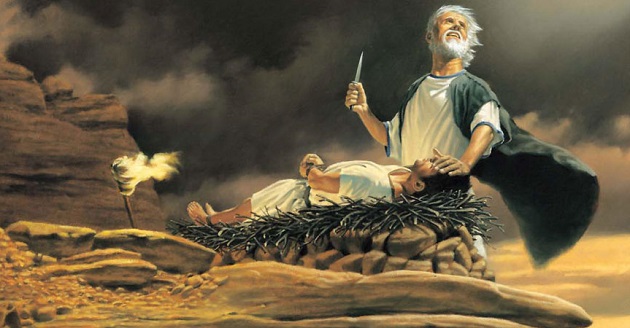
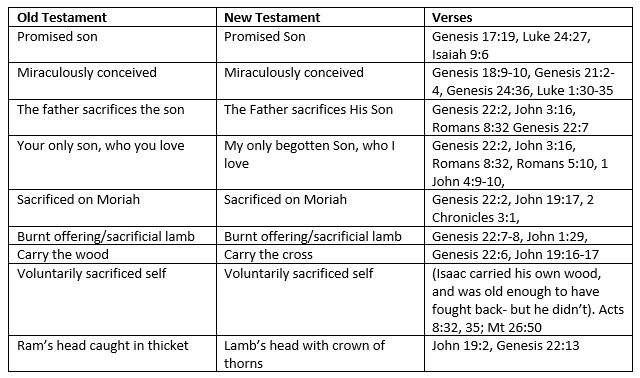

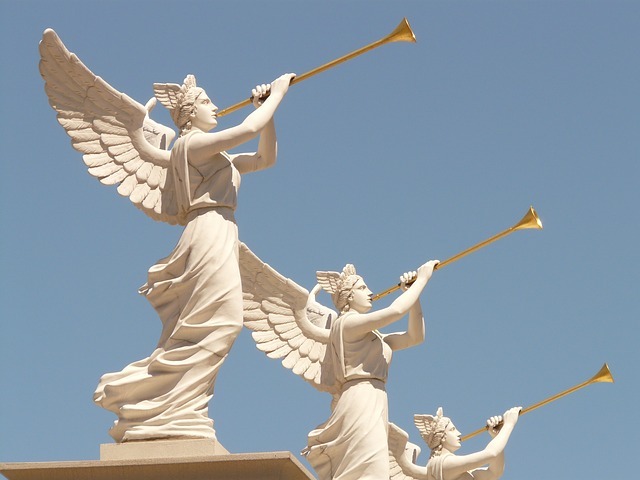
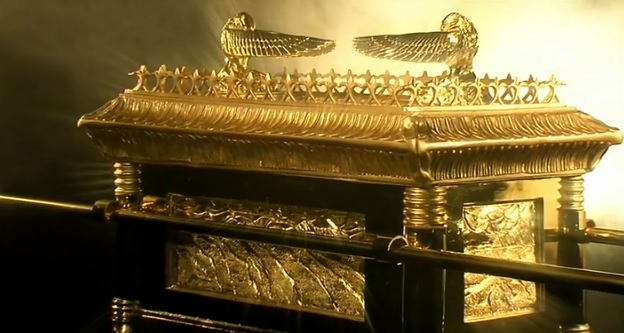
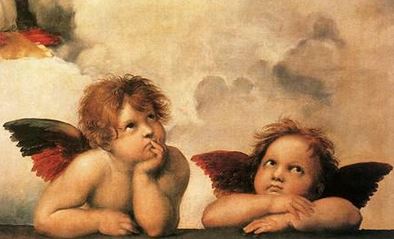
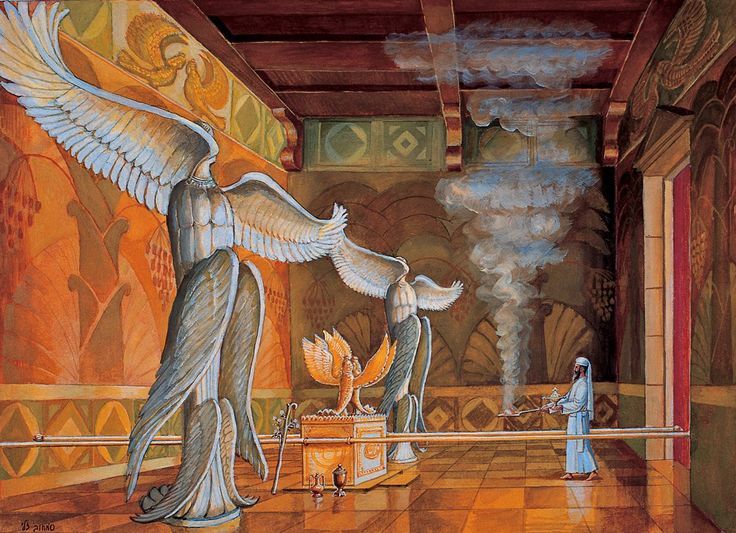
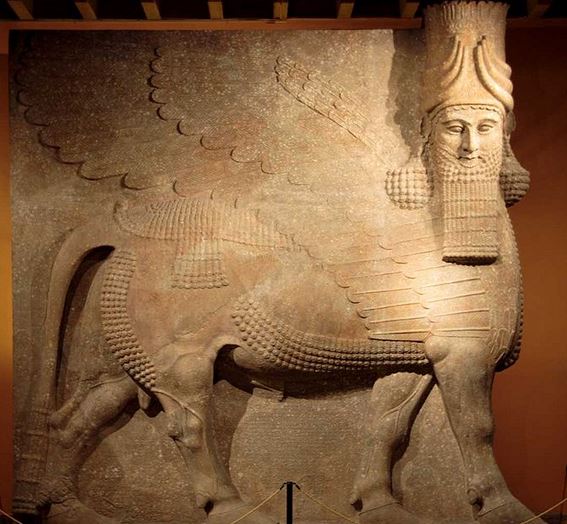
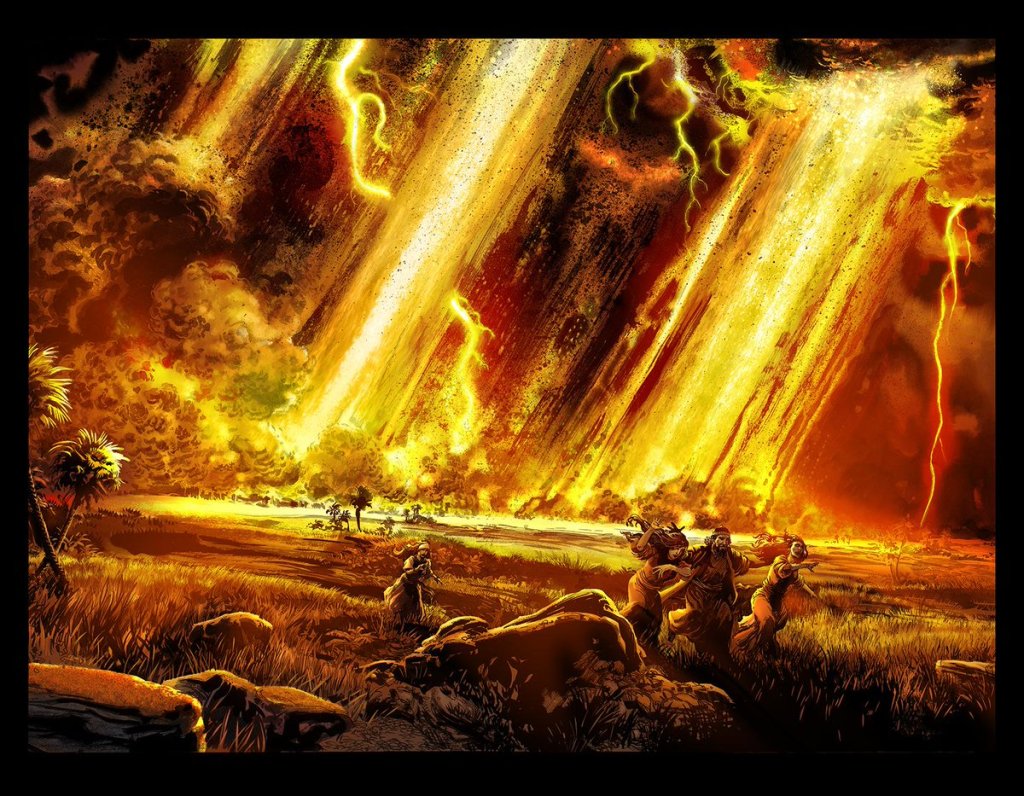
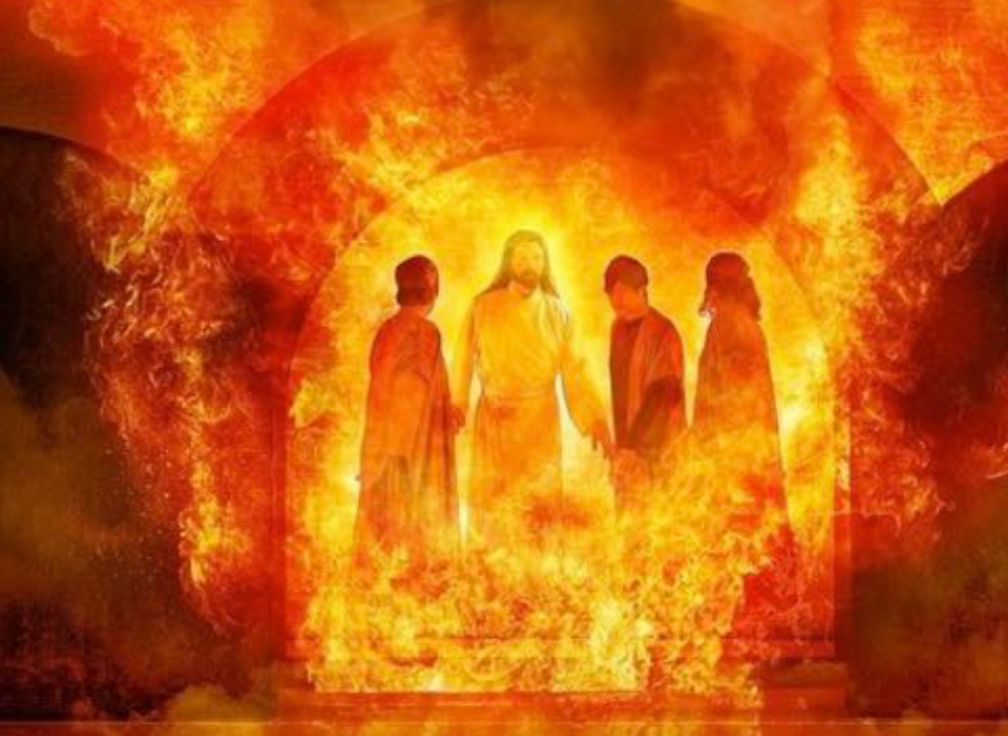
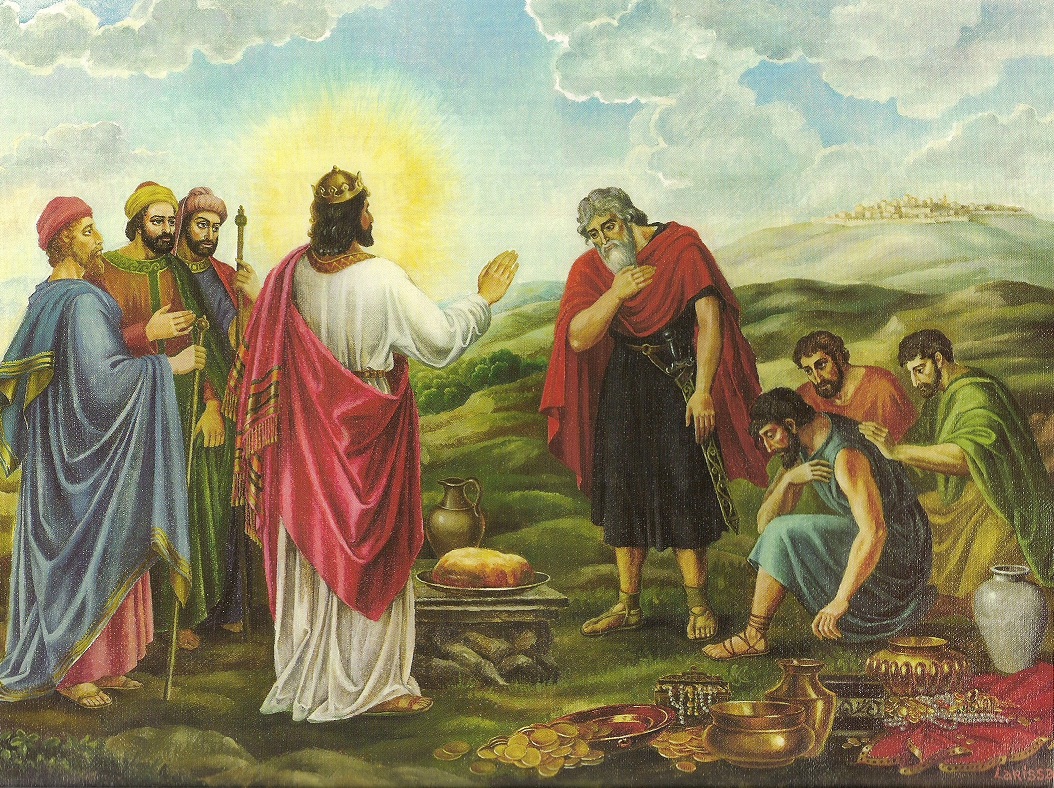
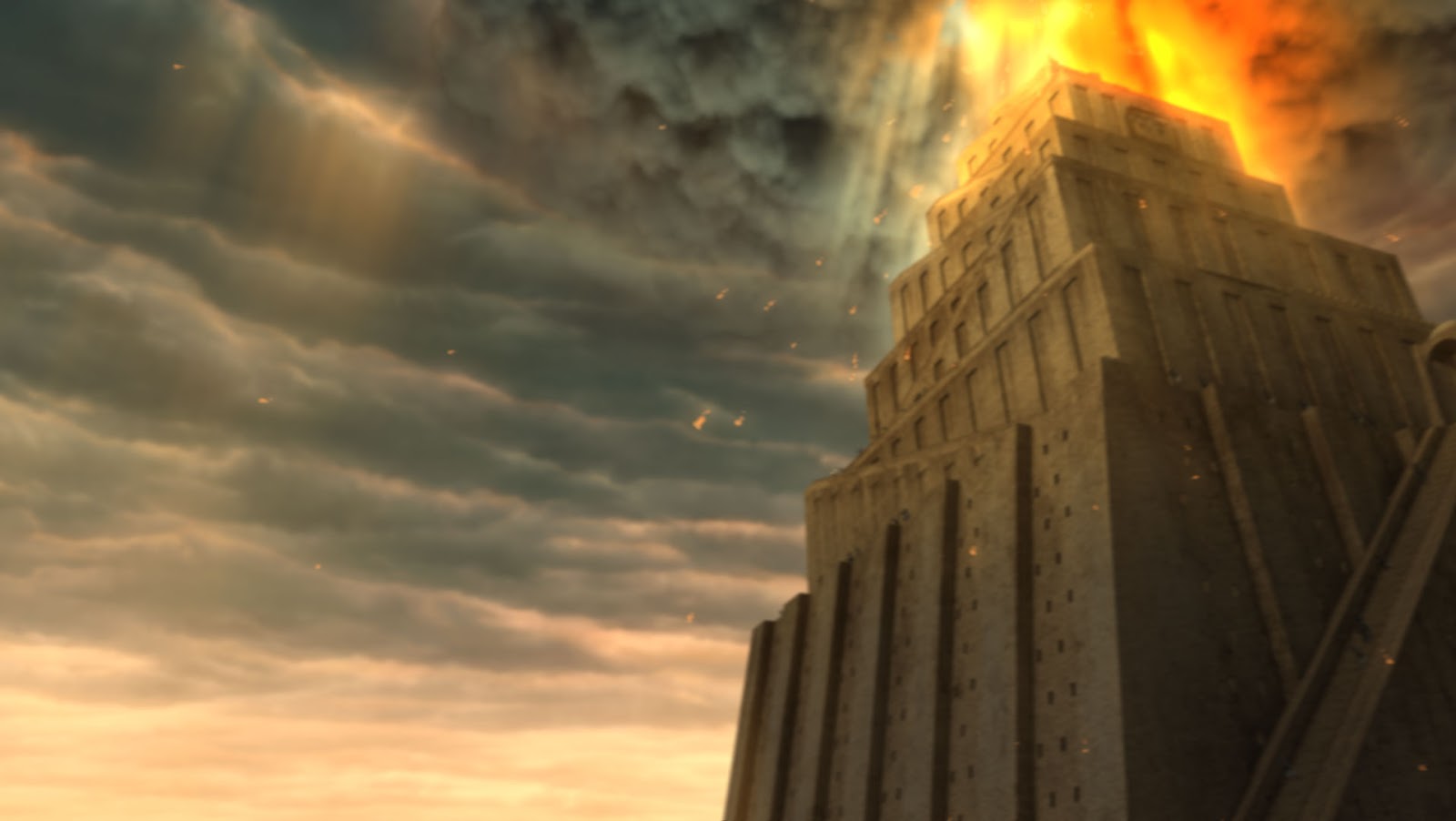
 Days of Noah