A Deep Dive into Daniel — Part 7 — The Mystery of Prophecy

“The vision of the evenings and the mornings that has been told is true, but seal up the vision, for it refers to many days from now.”

Daniel 8:26

The prophetic word carries with it a degree of ambiguity and mystery for a reason. Historically, it has required a considerable amount of hindsight to understand how the oracles of God have beeb fulfilled, but once God’s plans come into fruition, mystery dissolves into stunning clarity.

Take the profile of the Messiah for example. While the expectation of Israel predominantly focused on the coming of a Warrior King to liberate God’s people from their enemies, few were able to predict the coming of the Suffering Servant who would be nailed a cross, only to rise again. The lines between the first and second comings of Christ often were blurred in the Old Testament, creating some obvious interpretive challenges.

Although there are valid reasons why the LORD speaks in ambiguous and sometimes puzzling terms, I believe the best explanation is strategic at heart. Let us never forget, the Evil One — Satan himself — scours the Holy Scriptures for an advantage. He knows better than anyone that God has declared the end from the beginning, and so the devil undoubtedly is a serious student of Biblical prophecy.

Although the big picture is clear — God wins in the end — there are details concealed in the prophetic word that God purposefully wants to keep hidden from his arch enemy. The LORD reveals just enough to keep the powers of darkness guessing, but never too much to give them an advantage.

As understandable as that may be, the difficulties with the prophetic word also create somewhat of a challenge to God’s children, especially those who earnestly desire to put together the prophetic puzzle pieces involving the last days.

The book of Daniel is no exception. In all honesty, I find Daniel’s prophecies especially difficult to interpret, which should come as no surprise considering Daniel’s own troubles of grasping these future visions. Not only did the LORD command Daniel to seal up his prophecy until the appointed time of the end, but also Daniel struggled understanding the visions even after interpretations were given.

Consider what Daniel said after receiving his vision of the shaggy goat and the ram in chapter 8.

“And I, Daniel, was overcome and lay sick for some days. Then I rose and went about the king’s business, but I was appalled by the vision and did not understand it.”

Daniel 8:27

So if Daniel — who received both the vision and its interpretation — still could not fully comprehend what he saw, then surely we cannot expect to understand it all. Knowing this has brought me to a newfound level of humility and dependency on the Holy Spirit to approach this passage with great care and consideration.

I confess that there are parts Daniel 8 that I feel confident about and other parts that I simply don’t have a clue, but all in all, I believe we are called to dig in and dive deep and ask the God of the Word to help us understand and interpret the Word of God.

With that being said … I will do my best to work through Daniel 8 and attempt to address all the nuances and context clues that emerge. By necessity, I may need to camp out here for a while, but I hope that it will be well worth our time.

So here goes.

Daniel 8 Overview

Daniel chapter 8 is one of the most misinterpreted prophetic passages in all the Bible, which is unfortunate because this chapter provides some of the most important details of the future rise of the Antichrist and his early career. Most commentators and Bible scholars interpret Daniel 8 through strictly historical lenses, suggesting that everything revealed in the vision has been fulfilled in history past and therefore has little merit for future generations.

When we read Daniel 8 carefully, however, we get an entirely different perspective that clearly reveals this prophecy refers to the last days and remains to be fulfilled in the future. That’s not to say that there could have been a partial fulfillment in history that prefigures the time of the end, but if we restrict this passage to the past only, then we will miss one of the most important prophecies of the end times.

Let’s look at a brief overview to set the stage.

The Ram and the Goat

Much like the bizarre beast imagery found in Daniel 7, the vision in Daniel 8 picks up with two different beasts — a ram with two horns and a male goat with one prominent horn — representing two king/kingdoms. The ram shows significant military aggression before being confronted and defeated by the goat, led by this prominent horn/king. Shortly after the goat subdues the ram, the prominent horn is broken off and the kingdom is divided up into four other horns.

The good news about this chapter is that the LORD provides an interpretation of these two beasts. Like all Bible prophecy, we must remember that this passage is Israel-centric and pertains to Middle Eastern territories. Here is the interpretation provided to Daniel.

He said, “Behold, I will make known to you what shall be at the latter end of the indignation, for it refers to the appointed time of the end. As for the ram that you saw with the two horns, these are the kings of Media and Persia. And the goat is the king of Greece. And the great horn between his eyes is the first king. As for the horn that was broken, in place of which four others arose, four kingdoms shall arise from his nation, but not with his power.”

Daniel 8:19-22

So we know we are dealing with the territories/kingdoms of Medo-Persia and Greece — or Javan. Of course Daniel uses their ancient names, but today these same territories are controlled by the modern nations of Iran and Turkey. I will spend more time in a future post to demonstrate how Biblical Greece — or Javan — represents the Ancient Macedonian empire that spread from Asia Minor into the Middle East and Northern Africa.

But for now, I need to address the reasons why I believe this vision is still future and has not been fulfilled in history past.

The Appointed Time of the End

Whereas a rigid historical view of Daniel 8 proposes that the male goat is representative of the Alexander the Great and his Greek Empire and the two-horned ram is ancient Medo-Persia, the futurist view understands this passage as a prophecy that pertains to the appointed time of the end — or the latter days.

As I have said, there certainly were some partial foreshadows in Alexander’s career that can be applied to Daniel 8. Alexander the Great expanded eastward in lightening speed and unexpectedly died at the height of his empire. The Macedonian Empire was eventually divided up after Alexander’s death, and the subsequent career of Antiochus Epiphanes certainly qualifies as a historical type of the Antichrist. There are other details about this prophecy, however, that simply do not align with history.

While it is important to thoroughly investigate the historical accounts, I will not go into those details here. Instead, I would like to share with you the primary reason I interpret Daniel 8 as a future prophecy that applies to the latter days.

Simply because the Bible says so.

Consider the explicit language used in this passage. When the angel Gabriel is commanded to make Daniel understand the vision, he does not mix his words.

And I heard a man’s voice between the banks of the Ulai, and it called, “Gabriel, make this man understand the vision.” So he came near where I stood. And when he came, I was frightened and fell on my face. But he said to me, “Understand, O son of man, that the vision is for the time of the end.

Daniel 8:16-17

He said, “Behold, I will make known to you what shall be at the latter end of the indignation, for it refers to the appointed time of the end.

Daniel 8:19

And at the latter end of their kingdom, when the transgressors have reached their limit, a king of bold face, one who understands riddles, shall arise.”

Daniel 8:23

“The vision of the evenings and the mornings that has been told is true, but seal up the vision, for it refers to many days from now.”

Daniel 8:26

Not once. Not twice. Not three times.

But Daniel is told at least four times that his vision is referring to the last days, the end of days, the appointed time of the end.

I’m not sure how Bible scholars and historians miss this over-emphasis by Gabriel to make sure Daniel understands when this vision will be fulfilled. God Himself provided the interpretation of this prophecy, and it specifically refers to the last days just before the return of the Son of Man, who is coming like a stone from heaven to crush the evil empires of the Antichrist.

That truth in and of itself precludes a rigid historical view of this prophecy. Daniel 8 has not yet been fulfilled, and therefore we should be expecting it to unfold in the coming future.

In my next post, I will investigate the geopolitical climate between Iran and Turkey and do my best to understand how the rise of Antichrist is connected to this coming conflict in the Middle East.

A Deep Dive into Daniel — Part 6 — The Son of Man

“I saw in the night visions,

and behold, with the clouds of heaven
there came one like a son of man,
and he came to the Ancient of Days
and was presented before him.”

Daniel 7:13

When the Lord Jesus launched His public ministry, there was one unique title that he ascribed to Himself more than any other — the Son of Man — in Hebrew “ben adam.” Jesus referred to Himself by this title more than 80 times in the Gospels alone.

It is impossible to grasp the significance of this title without first reading and understanding the prophetic word of Daniel. Yeshua goes by many distinct titles. He is Lord. He is the Messiah — the Christ, or Anointed One. He is the Son of the Most High. He is the Son of God. He is the Son of David.

But no other title better communicates the mystery and majesty of the Lord Jesus Christ than “Son of Man.” This title identifies the true and complex nature of Jesus, both as a descendant of mankind — aka the “offspring” of the woman [Genesis 3:15] — and also as the divine King from heaven.

Daniel’s introduction to the Son of Man in his prophetic vision is essential when establishing the theological foundation and framework for this title. So what can we learn from Daniel’s prophecy?

The Son of Man IS Both Human And Divine

Daniel saw a vision of the heavenly throne room of Yahweh — the Ancient of Days. Yahweh is surrounded by thrones occupied by members of the divine council. Myriads of holy ones are attending the LORD and intently watching as witnesses. The court sits down in judgment and the books are opened.

Daniel is overwhelmed and out of place, trying to process what his eyes are beholding.

And that’s when Daniel sees Him — the Divine Prince — being presented before the Ancient of Days. This Divine Prince is riding the clouds of heaven in glorious power, and yet at the same time Daniel noticed that He was “like a son of man” — meaning He was human.

The focus of this entire vision is centered on the exchange between the Ancient of Days and the Son of Man. The fate of the world and the destiny of mankind hangs in the balance. The wicked kingdoms of the world and the blasphemous little horn are threatening to destroy God’s people.

It is as if the whole host of heaven is saying … who is worthy to break the seals and open the scroll? Who is able to save and deliver the world?

And the Son of Man is presented before the Ancient of Days to receive power and glory and the kingdom forever and ever amen!

“And to him was given dominion
and glory and a kingdom,
that all peoples, nations, and languages
should serve him;
his dominion is an everlasting dominion,
which shall not pass away,
and his kingdom one
that shall not be destroyed.”

Daniel 7:14

Jesus was fully aware of what He was saying when referred to Himself as the Son of Man. He was both human and divine. Truly man and truly God.

“If I have told you earthly things and you do not believe, how can you believe if I tell you heavenly things? No one has ascended into heaven except he who descended from heaven, the Son of Man.”

John 3:12-13

“But that you may know that the Son of Man has authority on earth to forgive sins”—he said to the paralytic— “I say to you, rise, pick up your bed, and go home.”

Mark 2:10-11

The Son of Man Is the Messiah

From a Jewish perspective, the Son of Man was regarded as one of the most authoritative Messianic titles of divinity. The Messiah is to be the Savior King who comes from heaven to destroy the enemies of Israel and establishes the Everlasting Kingdom of God on earth.

Of course, we now know that the same Son of Man — Yesuah — who came to suffer, die and rise again the first time — promised to return as the King of kings in all His power and glory. It was this language that really got Jesus in trouble with the Jewish authorities of His day.

But he remained silent and made no answer. Again the high priest asked him, “Are you the Christ, the Son of the Blessed?” 62And Jesus said, “I am, and you will see the Son of Man seated at the right hand of Power, and coming with the clouds of heaven.” 63And the high priest tore his garments and said, “What further witnesses do we need? 64You have heard his blasphemy. What is your decision?” And they all condemned him as deserving death.

Mark 14:61-64

The Son of Man Will Come on the Clouds in Great Glory

Perhaps the greatest distinction of the Son of Man is that He alone is the cloud-riding, devil-crushing, saint-saving King of glory who will come on that Day to establish His everlasting kingdom.

Daniel’s description of the Son of Man riding on the clouds is an exclusive characteristic that Jesus reserved for Himself. No one else qualifies for this monumental event in the future when heaven is rolled back like a scroll and Jesus descends from heaven on the clouds in power and great glory for every eye to see.

For a more in-depth dive into the significance of the One riding the clouds on the Day of the LORD, be sure to read my article here.

But for now, let us close with some of the most amazing prophecies that have been declared that Jesus is indeed the Son of Man spoken of by the prophet Daniel.

After He had said this, they watched as He was taken up, and a cloud hid Him from their sight. They were looking intently into the sky as He was going, when suddenly two men dressed in white stood beside them. “Men of Galilee,” they said, “why do you stand here looking into the sky? This same Jesus, who has been taken from you into heaven, will come back in the same way you have seen Him go into heaven.”

Acts 1:9-11

“Then will appear in heaven the sign of the Son of Man, and then all the tribes of the earth will mourn, and they will see the Son of Man coming on the clouds of heaven with power and great glory.” 

Matthew 24:30

Jesus said to him, “You have said so. But I tell you, from now on you will see the Son of Man seated at the right hand of Power and coming on the clouds of heaven.”

Matthew 26:64

Maranatha!

A Deep Dive into Daniel — Part 5 — The Little Horn will Prevail over God’s People

“Strengthening the souls of the disciples, encouraging them to continue in the faith, and saying that through many tribulations we must enter the kingdom of God.”

Acts 14:22

When Jesus gave His Olivet Discourse about the end of the age, He provided the general scope and basic timeline but did not get too deep into the fine details. Jesus told His disciples that the prophet Daniel had the details, and if the disciples wanted to put all the pieces together, then they needed to read and understand the book of Daniel first.

“So when you see the abomination of desolation spoken of by the prophet Daniel, standing in the holy place (let the reader understand) …”

Matthew 24:15

In my last post, I focused on the early career of the “little horn,” which is another name for the end-times Beast — or Antichrist. The Antichrist may start small, but he will come boasting of big things and speaking blasphemies against God the Father and the Lord Jesus Christ.

Once the little horn assumes power and creates his Middle Eastern empire, he will begin expanding his reach around the world and unleashing his wrath on the people of God. The global persecution of the saints is one of the clearest characteristics of the campaign of the Antichrist, which can only mean one thing.

Believers — aka saints — will be on the earth during the great tribulation to face the Antichrist and even suffer at his hand.

This flies in the face of the popular “pre-tribulation” view of the rapture, which falsely teaches that the saints will be removed from the earth prior to the tribulation period. Nothing could be further from the truth.

Remember, Jesus told us to read Daniel and to understand his prophecies in order to have an accurate eschatology, so I intend to do just that.

THE LITTLE HORN WILL PERSECUTE THE SAINTS

The overwhelming majority of Daniel’s prophecies are concerning the appointed time of the end, which culminates with the return of the Son of Man on the clouds in power and glory to crush the evil empire of the Beast and establish His everlasting Kingdom.

That’s the end game, but Daniel also provides some key details about the events leading up to the return of the LORD. One of those details involves a defined period of time for the Antichrist to prevail over God’s people.

Let’s take a closer look.

“As I looked, this horn made war with the saints and prevailed over them, until the Ancient of Days came, and judgment was given for the saints of the Most High, and the time came when the saints possessed the kingdom.”

Daniel 7:21-22

Daniel provides more details just a few verses later.

“He shall speak words against the Most High,
and shall wear out the saints of the Most High,
and shall think to change the times and the law;
and they shall be given into his hand
for a time, times, and half a time.

But the court shall sit in judgment,
and his dominion shall be taken away,
to be consumed and destroyed to the end.”

Daniel 7:25-26

Daniel himself provides many more details about the campaign of the Antichrist against God’s people, which I will save for later, but for now allow me to show how the testimony of the Biblical prophets is also in full agreement.

“Then they will deliver you up to tribulation and put you to death, and you will be hated by all nations for my name’s sake … For then there will be great tribulation, such as has not been from the beginning of the world until now, no, and never will be. And if those days had not been cut short, no human being would be saved. But for the sake of the elect those days will be cut short.”

Matthew 24:9, 21-22

“When he opened the fifth seal, I saw under the altar the souls of those who had been slain for the word of God and for the witness they had borne. They cried out with a loud voice, “O Sovereign Lord, holy and true, how long before you will judge and avenge our blood on those who dwell on the earth?” Then they were each given a white robe and told to rest a little longer, until the number of their fellow servants and their brothers should be complete, who were to be killed as they themselves had been.”

Revelation 6:9-11

Then one of the elders addressed me, saying, “Who are these, clothed in white robes, and from where have they come?” I said to him, “Sir, you know.” And he said to me, “These are the ones coming out of the great tribulation. They have washed their robes and made them white in the blood of the Lamb.

Revelation 7:13-14

And the beast was given a mouth uttering haughty and blasphemous words, and it was allowed to exercise authority for forty-two months. 6It opened its mouth to utter blasphemies against God, blaspheming his name and his dwelling, that is, those who dwell in heaven. 7Also it was allowed to make war on the saints and to conquer them. And authority was given it over every tribe and people and language and nation, 8and all who dwell on earth will worship it, everyone whose name has not been written before the foundation of the world in the book of life of the Lamb who was slain. 9If anyone has an ear, let him hear:

10If anyone is to be taken captive,
to captivity he goes;
if anyone is to be slain with the sword,
with the sword must he be slain.

Here is a call for the endurance and faith of the saints.

Revelation 13:5-10

I could provide many more Scriptures to support this sobering reality. The Antichrist will be given authority to make war and conquer God’s people — which will include a campaign against both ethnic Israel and all believers on the earth.

And if you have noticed the timeframe provided by many of these passages, the Antichrist will be given this authority for 3.5 years.

THE ANTICHRIST WILL RULE FOR 3.5 YEARS

When we get to Daniel 9, I will do my best to interpret the 70 weeks of Daniel’s prophecy, and more specifically the 70th week — which represents a unique 7-year period. Having said that, I am not fully convinced that Daniel’s 70th-week refers to the final 7 years of human history, although it could.

Furthermore, I fully reject the notion that the Great Tribulation is a 7-year period. There is no Scripture that teaches that the Great Tribulation — which will be the worst time in human history — will be 7 years.

The only definitive period of time that we are given in Scripture is 3.5 years, or 42 months, or 1260 days. If I have to put a timeframe on the Great Tribulation, then I believe it will fall within this 3.5 year period before the Lord Jesus returns.

Let’s compare some of the passages again.

He shall speak words against the Most High,
and shall wear out the saints of the Most High,
and shall think to change the times and the law;
and they shall be given into his hand
for a time, times, and half a time [
3.5 years].

Daniel 7:25

“And the woman [Israel] fled into the wilderness, where she has a place prepared by God, in which she is to be nourished for 1,260 days… But the woman [Israel] was given the two wings of the great eagle so that she might fly from the serpent into the wilderness, to the place where she is to be nourished for a time, and times, and half a time. 15The serpent poured water like a river out of his mouth after the woman, to sweep her away with a flood. 16But the earth came to the help of the woman, and the earth opened its mouth and swallowed the river that the dragon had poured from his mouth. 17Then the dragon became furious with the woman and went off to make war on the rest of her offspring, on those who keep the commandments of God and hold to the testimony of Jesus. And he stood on the sand of the sea.”

Revelation 12:6, 14-17

And the beast was given a mouth uttering haughty and blasphemous words, and it was allowed to exercise authority for forty-two months. “

Revelation 13:5

After describing the 3.5 year period of tribulation, Daniel reminds us of the rest of the story. Jesus returns and crushes Antichrist and saves His people.

“They [the saints] shall be given into his hand
for a time, times, and half a time.
But the court shall sit in judgment,
and his dominion shall be taken away,
to be consumed and destroyed to the end.
And the kingdom and the dominion
and the greatness of the kingdoms under the whole heaven
shall be given to the people of the saints of the Most High;
his kingdom shall be an everlasting kingdom,
and all dominions shall serve and obey him.”

Daniel 7:25-27

While the little horn will prevail for a season, Jesus will return in glory to crush him and establish His everlasting kingdom, which shall be given to the people of the saints of the Most High!

Next time I will introduce Daniel 8, as we investigate another future conflict that must take place before the revelation of the Antichrist.

Did Jesus Descend into Hell when He died?

Jesus Christ is the God-Man — truly God and also truly man. He transcends time and yet stepped into time when he was born as a baby. He is the Creator of the universe who willingly entered His own creation.

The very nature of Jesus Christ is mysterious and glorious at the same time.

On the one hand, God the Son is eternal, immortal and immutable in His deity. On the other hand, the Son of Man wrapped Himself in mortality and subjected Himself to the limitations of the physical world in His humanity — even to the point of death on a cross.

These mysteries — though worthy of discovery and study — are far beyond the scope of this post, but they are important to answering a controversial theological question about the death, burial and resurrection of our Lord Jesus Christ. That questions being …

Where did Jesus go when He died?

When Jesus — who is both truly God and truly man — died on the cross, where did He go? We know His body was laid in the tomb, but where did Jesus go in His spirit once departed from His human body?

The answer is important because some believe that between the cross and the resurrection, Jesus went to heaven, and still others believe He descended into hell, or Hades.

So which is it? And why does it matter?

The Apostles’ Creed

One of the oldest church traditions as expressed in the Apostles’ Creed says that upon His death, Jesus descended into hell before rising again. It should be noted that The Apostles’ Creed is a revision of the “Old Roman Creed,” which did not include the phrase “He descended into hell.” This is important because various theological doctrines have emerged from this teaching, such as the erroneous ransom theory of atonement, which proposes that Jesus went to hell to pay a ransom to Satan in order to set sinners free.

You can read more about the history and progressive development of the creed here. For those who need a refresher, the Apostles’ Creed in modern form is as follows.

I believe in God, the Father Almighty,
the Creator of heaven and earth,
and in Jesus Christ, His only Son, our Lord:
Who was conceived of the Holy Spirit,
born of the Virgin Mary,
suffered under Pontius Pilate,
was crucified, died, and was buried.
He descended into hell.
The third day He arose again from the dead.
He ascended into heaven
and sits at the right hand of God the Father Almighty,
whence He shall come to judge the living and the dead.
I believe in the Holy Spirit, the holy catholic church,
the communion of the saints,
the forgiveness of sins,
the resurrection of the body,
and life everlasting.
Amen.

The Apostles Creed

The Biblical Testimony

As always, we must ask the most essential question about any particular teaching or topic.

What does the Bible say?

As far as I can tell, there are only three, possibly four, relevant passages in the New Testament that provide the clear answer to this question. I will deal with them in order.

As far as the teaching that Jesus descended into hell before being raised to life on the third day, there are only two potential passages that come into view.

The first is Ephesians 4, where Paul is speaking about Jesus having “ascended” into heaven to give spiritual gifts to His church. Paul’s teaching actually is an interesting interpretation of Psalm 68, which clearly has the Second Coming in view. Nonetheless, let’s consider what Paul says to the church in Ephesus.

But grace was given to each one of us according to the measure of Christ’s gift. Therefore it says,

“When he ascended on high he led a host of captives,
and he gave gifts to men.”

(In saying, “He ascended,” what does it mean but that he had also descended into the lower regions, the earth? He who descended is the one who also ascended far above all the heavens, that he might fill all things.)

Ephesians 4:7-10 – ESV

In all consideration, I do not find real substance in this passage that is specific to the idea that Jesus somehow “descended” into hell/Hades before being raised on the third day. Many interpret this passage to simply represent the incarnation of the Lord Jesus, as he descended from heaven to the earth when taking on human form before ascending to heaven after his resurrection.

Then there is 1 Peter 3. This passage perhaps is most referenced when it comes to the idea of Jesus descending into hell. Let’s take a look.

“For Christ also suffered once for sins, the righteous for the unrighteous, that he might bring us to God, being put to death in the flesh but made alive in the spirit, in which he went and proclaimed to the spirits in prison, because they formerly did not obey, when God’s patience waited in the days of Noah, while the ark was being prepared, in which a few, that is, eight persons, were brought safely through water.”

1 Peter 3:18-20

Once again, if we read this passage carefully, with interpretive integrity, I believe the entire issue is resolved.

Verse 18 says that Jesus was put to death in the flesh, but made alive in the spirit, so the resurrection is already in view. When you read verse 19, it is connected to the resurrection of Jesus, not to the period of time his body was in the ground.

That is significant because what Peter is saying is that it was not until after His resurrection — after being made alive in the Spirit — that Jesus went and proclaimed victory over the rebellious spirits being held in prison for their sins in the days of Noah.

This passage says nothing about Jesus descending into Hades before His resurrection, which is why I reject that portion of the Apostles’ Creed.

The Simple Answer

Beyond that, I believe the Gospels provide the simple truth about where Jesus went after He died. He went immediately into the presence of God the Father. Let me prove it to you.

“And Jesus cried out again with a loud voice and yielded up his spirit.”

Matthew 27:50

When Jesus had received the sour wine, He said, “It is finished.” And bowing His head, He yielded up His spirit.

John 19:30

And he said, “Jesus, remember me when you come into your kingdom.” And he said to him, “Truly, I say to you, today you will be with me in paradise.”

Luke 23:42-43

Then Jesus, calling out with a loud voice, said, “Father, into your hands I commit my spirit!” And having said this he breathed his last.

Luke 23:46

Jesus yield up the ghost to God the Father and committed His spirit into the Father’s hands. To be absent from the body is to be present with the LORD.

Just another example of how man’s traditions can become church doctrines without Biblical foundations.

Why is Good Friday so Good?

“But he was pierced for our transgressions, he was crushed for our iniquities; the punishment that brought us peace was on him, and by his wounds we are healed.”

Isaiah 53:5

I’m not sure when the Friday before Resurrection Sunday became known as “Good Friday.” At first glance, there seems to be nothing good about it.

Good Friday is the day the Son of Man was beaten beyond recognition and tortured to within an inch of His life.

Good Friday is the day that the Righteous Son of God was punished for crimes He did not commit and for sins He never knew.

Good Friday is the day that the Lord of Glory — the Creator of the Universe — was rejected and murdered by His own people.

Good Friday is the day that Jesus Christ was nailed to a Roman cross, only to bear the full weight of the world’s wickedness and become the sole object of God’s unbridled wrath for the sins of mankind.

Good Friday doesn’t sound very good.

So why is it called “Good” Friday?

The Cross Was the Eternal Plan of God

The Scriptures remind us that the cross of Jesus Christ is the focal point and apex of God’s eternal plan of redemption. God would defeat death through death and destroy the works of the devil through the humble sacrifice of the Son.

The Scriptures also reveal that this plan of redemption was conceived in the heart of God before the very foundation of the world.

“Knowing that you were ransomed from the futile ways inherited from your forefathers, not with perishable things such as silver or gold, 19but with the precious blood of Christ, like that of a lamb without blemish or spot. 20He was foreknown before the foundation of the world but was made manifest in the last times for the sake of you 21who through him are believers in God, who raised him from the dead and gave him glory, so that your faith and hope are in God.”

1 Peter 1:18-21

“And this is eternal life, that they know you, the only true God, and Jesus Christ whom you have sent. I glorified you on earth, having accomplished the work that you gave me to do. And now, Father, glorify me in your own presence with the glory that I had with you before the world existed.”

John 17:3-5

“All who dwell on the earth will worship him [the Beast], whose names have not been written in the Book of Life of the Lamb slain from the foundation of the world.”

Revelation 13:8

Good Friday is good because it was the plan of God, accomplished by God, and for the glory of God.

The Cross was the Father’s Will

As Jesus agonized with blood and tears in the Garden of Gethsemane, He had to remind Himself of the very purpose for which He was born. All that Jesus came to do on earth was in perfect obedience to the Father’s will.

And he withdrew from them about a stone’s throw, and knelt down and prayed, saying, “Father, if you are willing, remove this cup from me. Nevertheless, not my will, but yours, be done.” 

Luke 22:42-43

The prophet Isaiah also reminds us of the Father’s will.

“Yet it was the will of the LORD to crush him;
he has put him to grief
;
when his soul makes an offering for guilt,
he shall see his offspring; he shall prolong his days;
the will of the LORD shall prosper in his hand.”

Isaiah 53:10

Good Friday was Jesus’ final step in obedience to the Father’s will, fulfilling all righteousness!

The Cross is Our Only Hope

More than anything, Good Friday is good news for all mankind because the cross of Jesus Christ is our only means of forgiveness and our only hope to be saved and restored to a Holy God.

When the Son of God was nailed to the cross, the greatest exchange in human history took place that day. All the universal guilt and shame and sin of mankind was placed on Jesus, as He suffered the punishment and took our place on the cross. At the same time, all the righteousness and perfection and purity of Jesus Christ was made available to everyone who would believe in Him by faith.

“Therefore, as one trespass led to condemnation for all men, so one act of righteousness leads to justification and life for all men. For as by the one man’s disobedience the many were made sinners, so by the one man’s obedience the many will be made righteous.”

Romans 5:18-19

Jesus is our substitute for sin. He was punished in our place. He suffered and died the death we deserve so that we could be forgiven and set free and live forever! The punishment that brought us peace was placed upon Him.

Jesus paid the price for our sin — a debt that we could never repay.

Jesus suffered the penalty for our sin — which was more than just the excruciating death on the cross. Jesus suffered the unbearable wrath of God. The Father crushed Him under the weight of His indignation. The Father exhausted the full measure of His wrath on Jesus that day.

That is why for those of us who have trusted in Christ alone for salvation, we are not destined for the wrath of God [1 Thessalonians 5:9]. Only those who reject the Lord Jesus remain in the imminent shadow of God’s righteous wrath.

Good Friday is good because it is the day that God made a way for sinners to saved and transgressors to be forgiven. Only by His wounds, are we healed.

As we remember the cross today … may we be overwhelmed by the grace of God and bow before our Holy God, who turned the worst day into the best day in human history!

“For our sake he made him to be sin who knew no sin, so that in him we might become the righteousness of God.”

2 Corinthians 5:21

The Paschal SuperMoon and the Signs of the Times

“And there will be signs in sun and moon and stars, and on the earth distress of nations in perplexity because of the roaring of the sea and the waves, people fainting with fear and with foreboding of what is coming on the world.”

Luke 21:25-26

Between sundown tonight, April 7th, and sunrise tomorrow, April 8, we will be shown a sign in the heavens. A full super moon will be visible in the night sky, appearing some 15% bigger and 30% brighter than normal.

This particular moon is being called a pink super moon, not necessarily because of its hue but because this April moon typically corresponds to the early springtime blooms of Phlox subulata, a pink wildflower native to eastern North America. It is “super” in brightness and appearance because it will be a full moon visible at its closest point in its orbit around Earth — also known as perigee.

From a Biblical perspective, however, it is always interesting when impressive signs in the heavens correspond to the appointed feasts of the LORD, which typically are associated with the lunar cycles. Tonight’s pink super moon will also be considered a Paschal moon because of its proximity to the Biblical Feast of Passover and Resurrection Sunday.

Passover is considered one of the most holy days in Biblical history, as it represents the greatest deliverance in Jewish history — the Exodus from Egypt — and was a foreshadowing of the greatest deliverance in human history — the substitutionary death of Jesus Christ on the cross.

Add this celestial phenomenon to everything else that is happening on a global scale in 2020, and one can easily awaken to the sobering reality that our Creator is doing His best to get our attention and force us to look heavenward. As Jesus Himself says …

“Now when these things begin to take place, straighten up and raise your heads, because your redemption is drawing near.”

Luke 21:28

Signs in the Heavens

From the very beginning, God told us that the sun, moon and stars were to serve as celestial signs — brilliant billboards in the heavens — that would provide ominous warnings and mark the appointed feasts of the LORD.

And God said, “Let there be lights in the expanse of the heavens to separate the day from the night. And let them be for signs and for seasons, and for days and years, and let them be lights in the expanse of the heavens to give light upon the earth.” And it was so. And God made the two great lights—the greater light to rule the day and the lesser light to rule the night—and he made the stars also. 

Genesis 1:14-16

No wonder that the magi from the east were tracking astronomical signs in the stars when they discovered the birth of King Jesus in Bethlehem. No surprise that a solar eclipse accompanied the crucifixion of Jesus Christ.

Jesus, along with the Old Testament prophets, also predicted that the sun, moon and stars would play a major role in announcing His triumphant return to earth. The prophet Isaiah spoke of the Day of the LORD and the signs in the heavens that coincide.

Behold, the day of the LORD comes, cruel, with wrath and fierce anger, to make the land a desolation and to destroy its sinners from it. For the stars of the heavens and their constellations will not give their light; the sun will be dark at its rising, and the moon will not shed its light.

Isaiah 13:9-10

Jesus builds on this imagery and reminds us to keep lookin up.

“Immediately after the tribulation of those days the sun will be darkened, and the moon will not give its light, and the stars will fall from heaven, and the powers of the heavens will be shaken. Then will appear in heaven the sign of the Son of Man, and then all the tribes of the earth will mourn, and they will see the Son of Man coming on the clouds of heaven with power and great glory. And he will send out his angels with a loud trumpet call, and they will gather his elect from the four winds, from one end of heaven to the other.

Matthew 24:29-32

Tonight’s super moon is a preliminary sign, a merciful reminder that God is on His throne and well in control of all the global chaos and this present crisis.

May we remember the faithfulness of our God when we observe the beauty of His creation tonight, and may we not worship the creation itself but the CREATOR who is forever to be praised.

Lift up your heads, O saint. For your redemption draws nearer than ever before!

A Deep Dive into Daniel — Part 4 — The Loud-Mouthed Little Horn

“I considered the horns, and behold, there came up among them another horn, a little one, before which three of the first horns were plucked up by the roots. And behold, in this horn were eyes like the eyes of a man, and a mouth speaking great things.”

Daniel 7:8

To summarize the prophecies of Daniel up unto this point, the kingdoms — or beasts — described both in Daniel chapters 2 and 7 represent the three historic pagan empires of Babylon, Persia, and Greece. The fourth kingdom, however, represents a dreadful empire to be revealed in the last days, only to be crushed by King Jesus on the Day of the LORD.

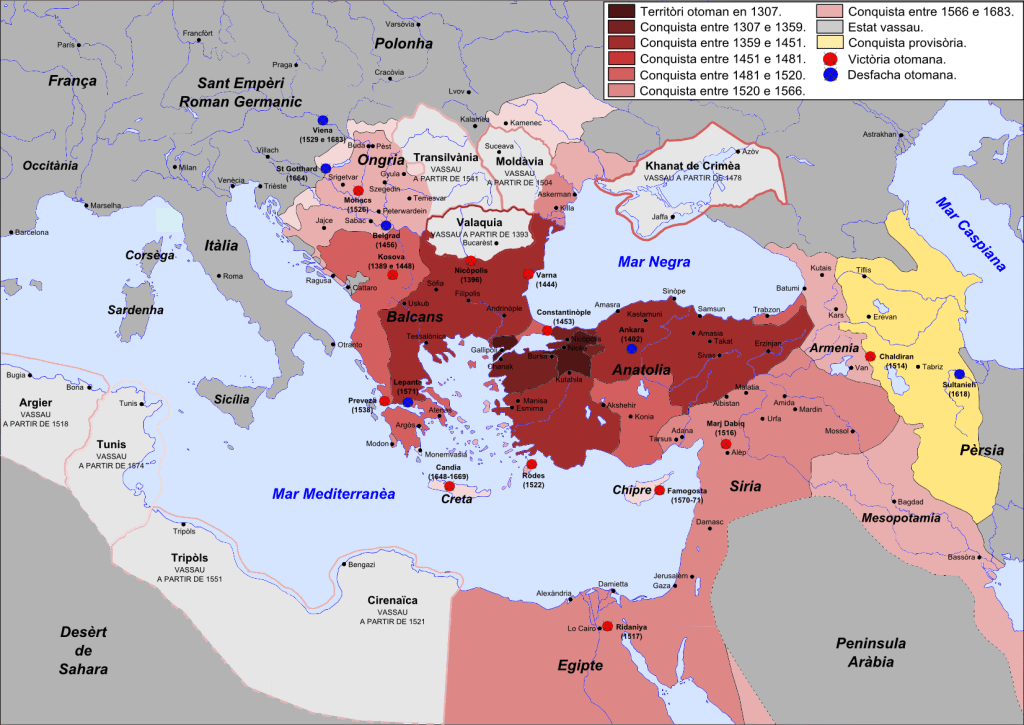
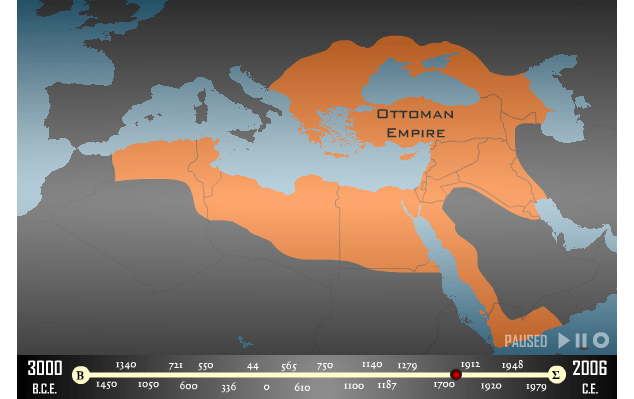
This fourth beast is distinct from all of the other beasts in that it will be a collective composite — an amalgamation — of the three historic kingdoms, occupying the same general Middle Eastern territory and dominating the region with fierce military aggression and terror. For those looking for a possible historical prefigurement of the fourth end-times kingdom, the Islamic Ottoman Empire [circa 1300-1920] most definitely fits the profile.

I have been very adamant about the Islamic identity of this fourth kingdom. Islam is concentrated in the Middle East, universally hostile toward Israel, and just one persuasive leader away from a revived and unified Islamic Caliphate.

Height of Ottoman Empire (Islamic Caliphate) from 1307-1683 AD

We learned in Daniel 2 that the fourth kingdom — the legs of iron and feet mixed with clay — would be as strong as iron but at the same time partly “divided” and “brittle.” The religious factions and inner turmoil within the Muslim world would best explain how this end-times kingdom could both be brutal and brittle.

Here in Daniel 7, as well as Revelation 13, we learn that the fourth beast kingdom will be “exceedingly strong.” The future kingdom of Antichrist will be characterized by the global concentration of evil and the unification of demonic, supernatural power. It seems that few will be able to withstand the strength of the Beast, as it will be be given authority to “devour the whole earth” [Daniel 7:23].

The ten toes in Daniel 2 and ten horns in Daniel 7 represent a coalition of 10 kings who eventually yield all their authority to the Beast [Revelation 17:12-13]. It is from these 10 horns — or kings — from which the Antichrist will emerge. We are first introduced to Satan’s superman in Daniel 7 by the name — little horn.

Although he may be given the title “little horn,” don’t let that fool you. As you will see, he comes boasting of great things and quickly rising to a place of power and dominance among his peers. The Antichrist may gradually emerge on the world stage in an unassuming way, but when the timing is right, this little horn will show his true colors.

The Little Horn Shall Start Small but Grow Strong

The fact that the Antichrist begins as the “little horn” speaks to his unimpressive beginnings. Daniel provides some key details about the military and political career of the little horn. He will start out operating on the periphery of the geopolitical stage. He will not have royal pedigree. He will advance by scheming behind the scenes with intrigue and seduction. He will plot and patiently wait for the opportune time to grab hold of what he wants — total control.

Consider how Daniel describes the little horn.

“In his place shall arise a contemptible person to whom royal majesty has not been given. He shall come in without warning and obtain the kingdom by flatteries. Armies shall be utterly swept away before him and broken, even the prince of the covenant. And from the time that an alliance is made with him he shall act deceitfully, and he shall become strong with a small people.

Daniel 11:21-23

“As for the ten horns, out of this kingdom ten kings shall arise, and another shall arise after them; he shall be different from the former ones, and shall put down three kings.”

Daniel 7:24

The little horn may not be included in the original 10-king alliance, but he will quickly rise to a place of prominence.

The Little Horn Shall Subdue Three Kings

Daniel 7 provides interesting insight into how the little horn will make his critical power play among the 10-king coalition. Apparently he will sabotage three of the original kings and supplant them.

“A fourth beast … it was different from all the beasts that were before it, and it had ten horns. I considered the horns, and behold, there came up among them another horn, a little one, before which three of the first horns were plucked up by the roots.” 

Daniel 7:7-8

“As for the ten horns, out of this kingdom ten kings shall arise, and another shall arise after them; he shall be different from the former ones, and shall put down three kings.

Daniel 7:24

One possible scenario is found in Daniel 8 involving the coming conflict between the goat (Javan/Turkey) and ram (Persia/Iran). I will spend more time in Daniel 8 later, but in summary this vision also pertains to the latter days and the appointed time of the end. Once the leader of Javan is broken off, the prophecy says that four kingdoms (kings) will emerge from Turkey — one of which will be the little horn.

“Then the goat became exceedingly great, but when he was strong, the great horn was broken, and instead of it there came up four conspicuous horns toward the four winds of heaven. Out of one of them came a little horn, which grew exceedingly great toward the south, toward the east, and toward the glorious land.”

Daniel 8:8-9

Is it possible that the little horn will overthrow his three counterparts and gain control of the entire Turkish territory?

The Little Horn will Boast of Great Things and Blaspheme God

Not only will the little horn conspire to make big power plays in the Middle East, but he apparently will have a loud mouth and come boasting blasphemies before God. Satan is a slanderer. He is an accuser. He is a blasphemer. He hates the LORD God and His Son Jesus Christ and will speak publicly to that end.

Once again, if there is an ideology and belief system alive today that perpetuates the spirit of antichrist and shows hatred for both Jews and Christians, it is Islam. The Quran teaches that the Jews and Christians are especially wicked for disbelieving in Allah. The people of God are called the “worst of creatures.”

Verily, those who [despite all evidence] are bent on denying the truth – [be they] from among the followers of earlier revelation or from among those who ascribe divinity to aught beside God [Jews and Christians] – will find themselves in the fire of hell, therein to abide: they are the worst of all creatures.”

Quran — Sura 98:6

But the little horn will not only speak evil of God’s people, but also he will come speaking against God the Father and His Son Jesus Christ.

“Every spirit that does not confess Jesus is not from God. This is the spirit of the antichrist, which you heard was coming and now is in the world already.”

1 John 4:3

Consider how Daniel repeatedly describes the loud mouth of the little horn.

 “And behold, in this horn were eyes like the eyes of a man, and a mouth speaking great things.

“I looked then because of the sound of the great words that the horn was speaking. And as I looked, the beast was killed, and its body destroyed and given over to be burned with fire.”

“About the ten horns that were on its head, and the other horn that came up and before which three of them fell, the horn that had eyes and a mouth that spoke great things, and that seemed greater than its companions.”

He shall speak words against the Most High …”

“And the king shall do as he wills. He shall exalt himself and magnify himself above every god, and shall speak astonishing things against the God of gods. He shall prosper till the indignation is accomplished; for what is decreed shall be done.”

Daniel 7:8, 11, 20, 25 — Daniel 11:36

As we will see next time, the loud-mouthed little horn not only will talk big but also will act in big way.

A Deep Dive into Daniel — Part 3 — The Four Beast Kingdoms

Daniel declared, “I saw in my vision by night, and behold, the four winds of heaven were stirring up the great sea. And four great beasts came up out of the sea, different from one another.”

Daniel 7:1-2

Having spent some considerable time unpacking the imagery in Daniel 2, I would now like to turn my attention to the greater portion of Daniel’s prophecies, which is found in chapters 7-12. The metallic image in Daniel 2 is the foundational passage that provides the comprehensive context for the rest of Daniel’s visions. Although Daniel prophesied in part about historical Babylon, Persia, and Greece, his focus remains to be the summation of pagan kingdoms that will converge into the final end-times empire of the Antichrist.

Daniel 7 is one of the most fascinating portions of his prophecy and will take some time to unpack. For this post, I would like to simply identify the four beast kingdoms in Daniel 7 and connect them to the same four kingdoms portrayed in the metal image of Nebuchadnezzar’s dream in Daniel 2. As I hope to demonstrate, these prophecies are describing the same four empires but simply using different imagery.

The Great Mediterranean Sea

The first clue to understanding Daniel 7 is to get a geographical framework on these kingdoms. When Daniel makes reference to the great sea [see Daniel 7:1-2], it is universally recognized to refer to the Mediterranean Sea. Again, we must always retain a Middle-Eastern, Israel-centric focus when studying Bible prophecy. When Biblical authors refer to the “sea,” or especially the “great sea,” they almost always are referring to the Mediterranean because it was the largest body of water in the context of the ancient Near East.

The reference to the great sea also alludes to Gentile nations in general, since Israel historically has been surrounded by pagan, Gentile nations. Once we put these two clues together, we get a clearer picture of the four beasts mentioned in Daniel’s vision. These beasts represent pagan, Gentile kingdoms from the Middle East or ancient Near East.

The Apostle John also draws from Daniel’s vision when describing the end-times kingdom of the Beast — aka Antichrist.

“And I saw a beast rising out of the sea, with ten horns and seven heads, with ten diadems on its horns and blasphemous names on its heads. And the beast that I saw was like a leopard; its feet were like a bear’s, and its mouth was like a lion’s mouth. And to it the dragon gave his power and his throne and great authority.”

Revelation 13:1-2

Like Daniel, John would have been using the sea to represent the region of the Mediterranean Sea and also to the pagan, Gentile nations surrounding the sea and Israel. Notice how John takes the very same beast imagery from Daniel 7 and combines them to describe the final “fourth” kingdom of the last days.

The Four Beast Kingdoms

Now just for reference, I would like to clarify how the four beast kingdoms described in Daniel 7 perfectly align with the four divisions described in the metallic image in Daniel 2. This will help ensure accurate interpretation of Daniel’s overall prophecy. Unfortunately, the majority of Biblical scholars and teachers today continue to perpetuate a Roman, or “European,” interpretation of the fourth kingdom, but I have provided my reasons for rejecting that view entirely.

I believe it is well established that the fourth and final beast kingdom will come from the Middle East — the same “ara” or territory — that includes ancient Babylon, Persia, and Macedonia (Greece).

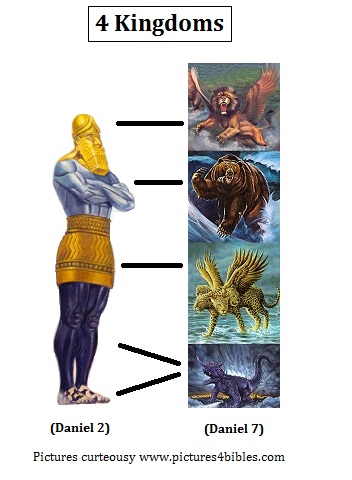
As demonstrated by the illustration above, Daniel 7 can be interpreted as follows.

  1. Babylon — The Head of Gold = the Lion with Eagle’s Wings
  2. Medo-Persia — The Chest and Arms of Silver = The Bear Raised on One Side
  3. Greece [Macedonia] — The Belly and Thighs of Bronze = The Four-Headed Leopard
  4. End-Times Kingdom of the Antichrist — The Legs of Iron and Feet mixed with clay = The Dreadful Terrifying Beast with 10 Horns

As we dive deeper into Daniel 7 next time, I will take more time developing the four beast kingdoms and how they are relevant to what is happening today in the Middle East.

The stage is being set for such a terrifying empire to arise out of the great sea, and Israel dwells in the midst of it all.

A Deep Dive into Daniel — Part 2 — The Iron Kingdom of Islam

“And there shall be a fourth kingdom, strong as iron, because iron breaks to pieces and shatters all things. And like iron that crushes, it shall break and crush all these.”

Daniel 2:40

In Part One of this series, I established that all four kingdoms of Nebuchadnezzar’s dream would occupy the same general land mass — or “ara” [אֲרַע] — see Daniel 2:39. The historical empires of Babylon, Persia, and Greece [Javan] were subsequent kingdoms that dominated the same territories in the Middle East and parts of Northern Africa. The geographical context provides the key to understanding the fourth and final kingdom that will emerge in the latter days.

By discovering the Middle Eastern context of the fourth kingdom, we can eliminate any chance for a “revived” Roman Empire as a valid candidate for the end-times kingdom of Antichrist. You can read here to get a more in-depth explanation as to why I reject the Roman Empire as the legs of iron in Daniel 2.

Furthermore, I established that the fourth and final kingdom — the legs and feet of iron mixed with clay — represents the end-times kingdom of the Beast [Antichrist]. This iron kingdom will be shattered by a “stone” not cut by human hands — meaning that this “stone” will originate from the God of heaven [Daniel 2:44]. Immediately after the “stone” from heaven destroys the fourth kingdom, God will establish His everlasting kingdom — his holy mountain — that will fill the whole earth.

When I take all of these things into consideration, there is only one legitimate candidate for the fourth kingdom of the last days. The legs of iron mixed with clay will be the Iron Kingdom of a revived Islamic Empire. While the European Union is weakening and disintegrating, Islam remains the fastest growing religious ideology in the world and remains a formidable force in the Middle East and around the world.

Let’s consider some more details that support Islam as the iron legs and feet mixed with clay.

Islam is Brutal but Fragile

Daniel 2 provides an interesting detail about this fourth and final kingdom in the last days. On the one hand it will be strong like iron, shattering and crushing everyone it conquers. From its inception, Islam has thrived in military conquest, using terrorism, oppression, and total domination of its enemies. The brutal tactics of Islam are well documented in both Muslim and secular sources. Islam is a merciless ideology that either kills or subjugates all conquered peoples and forces them to completely conform to the oppressive measures of shariah law.

As powerful as the Roman Empire became at its zenith, it never was characterized by annihilating other civilizations but rather allowed most conquered peoples to retain their cultural and religious identity. Not so in Islam. It is fiercely dominant and forces everyone to comply with sharia law and bow at the feet of Allah.

On the other hand, however, Islam is surprisingly fragile in and of itself and historically has been characterized by inner turmoil, religious factions, and political instability. Daniel speaks to this instability by saying that the fourth kingdom, although strong as iron, will at the same time be a “brittle” and “divided” kingdom — symbolized by the iron mixed with clay.

“And as you saw the feet and toes, partly of potter’s clay and partly of iron, it shall be a divided kingdom, but some of the firmness of iron shall be in it, just as you saw iron mixed with the soft clay. And as the toes of the feet were partly iron and partly clay, so the kingdom shall be partly strong and partly brittle.” 

Daniel 2:41-42

It is interesting that almost every closed Islamic system quickly disintegrates into civil unrest and conflict. Peace and harmony are not common qualities found in Islamic society. This, of course, should come as no surprise since the Bible predicted the future plight of the descendants of Ishmael, who are predominately Muslim today.

And the angel of the LORD said to her,

“Behold, you are pregnant
and shall bear a son.
You shall call his name Ishmael,
because the LORD has listened to your affliction.
He shall be a wild donkey of a man,
his hand against everyone
and everyone’s hand against him,
and he shall dwell over against all his kinsmen
.”

Genesis 16:11-12

Furthermore, Islam is especially fragile when one considers the perpetual schism between the Sunni and Shia branches of the Muslim faith. Although the Shia only represent 15-20% of Islam worldwide — mostly in Iran (Persia) — they retain significant influence and also represent a very extreme apocalyptic — almost fatalistic — ideology.

If the Antichrist — the Beast — is to emerge out of Islam, then one of his first objectives will be to somehow unify the Islamic world and bring the fragile factions of both Shia and Sunni together — perhaps through intermarriage [see Daniel 2:43]. Our study of Daniel 8 and 11 will provide more details about how this may happen, but for now, I would like to conclude by making mention of the ten toes in the metal image.

Ten Toes Represent Ten Kings

We discover that the ten toes in Daniel 2 are ten kings who will make an attempt at unification but ultimately will not hold together [Daniel 2:43-44]. This prophecy says that it will be in the “days of those kings” that the God of heaven will establish His kingdom that will never be destroyed.

The question is … what kings? Does the Bible provide any more support for a 10-king coalition brought together under the authority of the Antichrist in the last day?

Yes it does. Both Daniel and the book of Revelation further develop this important detail. I will leave you with some critical passages that are connected to the ten toes in Daniel 2.

“After this I saw in the night visions, and behold, a fourth beast, terrifying and dreadful and exceedingly strong. It had great iron teeth; it devoured and broke in pieces and stamped what was left with its feet. It was different from all the beasts that were before it, and it had ten horns.”

Thus he said:

“As for the fourth beast,there shall be a fourth kingdom on earth,
which shall be different from all the kingdoms,
and it shall devour the whole earth,
and trample it down, and break it to pieces.
As for the ten horns,
out of this kingdom ten kings shall arise,

and another shall arise after them;
he shall be different from the former ones,
and shall put down three kings.”

Daniel 7:7, 23-24

“And I saw a beast rising out of the sea, with ten horns and seven heads, with ten diadems on its horns and blasphemous names on its heads. And the beast that I saw was like a leopard; its feet were like a bear’s, and its mouth was like a lion’s mouth. And to it the dragon gave his power and his throne and great authority.”

Revelation 13:1-2

“And the ten horns that you saw are ten kings who have not yet received royal power, but they are to receive authority as kings for one hour, together with the beast. These are of one mind, and they hand over their power and authority to the beast. They will make war on the Lamb, and the Lamb will conquer them, for he is Lord of lords and King of kings, and those with him are called and chosen and faithful.”

Revelation 17:12-14

A Deep Dive into Daniel — Part 1 — The Five Kingdoms

“And in the days of those kings the God of heaven will set up a kingdom that shall never be destroyed, nor shall the kingdom be left to another people. It shall break in pieces all these kingdoms and bring them to an end, and it shall stand forever.”

Daniel 2:44

Daniel 2 lays some of the most important groundwork in all of Scripture for understanding the geopolitical climate in the last days and particularly the emergence of the final kingdom of the Antichrist — aka the Beast.

Simply by taking a look at the details provided in King Nebuchadnezzar’s dream in addition to Daniel’s interpretation, one can begin to form a pretty clear picture of what to expect during the unique time of the end. Let us not forget that Daniel himself told King Nebuchadnezzar that his dream specifically revealed “what will be in the latter days” [Daniel 2:28], which is the first big clue to interpreting this prophecy.

The metal image, or statue, that Nebuchadnezzar saw in his dream represents four earthly kingdoms, but there is a fifth kingdom — a mountain not cut with human hands — that ultimately will crush and shatter the previous four kingdoms in the last days. Daniel says that this fifth kingdom — this mountain that fills the whole earth — will never be destroyed and will stand forever [Daniel 2:44].

The primary reason we know that this prophecy applies to the time of the end is because we know that the inauguration of God’s eternal kingdom will not be realized until the King of kings returns from heaven to earth to crush His enemies and sit down on His glorious throne. This prophecy, therefore, will not be fulfilled until that Day when Jesus comes in power and glory to establish His kingdom on earth.

Now that we understand the timing of this prophecy in Daniel, it is important that we spend some time brushing up on our geography.

Building a Geographical Template

One of the most essential disciplines for any serious Bible student is to access the original languages by utilizing the various Hebrew and Greek lexicons and concordances at our disposal. Anyone who has a desire to rightly interpret Scripture should have these tools in their own personal library if at all possible, especially with the advantages provided by online resources and digital software.

I would like to demonstrate an unfortunate example of how the English translation of one simple Hebrew word can create an unnecessary obstacle to the accurate interpretation of Daniel 2. Trust me. This type of extreme examination may seem like technical overkill, and I would agree if it didn’t have such a significant impact on the meaning of the text.

In Daniel’s interpretation of the metal image, he explains to Nebuchadnezzar that the divisions in the statue represent subsequent kingdoms, beginning with his own kingdom — ancient Babylon as the head of gold. Now this is where an unfortunate English translation comes into play. Let’s read Daniel 2:38-39.

“You [Babylon] are the head of gold. Another kingdom inferior to you shall arise after you, and yet a third kingdom of bronze, which shall rule over all the earth.” 

Daniel 2:38b-39

Now stay with me because this is critical. I would not belabor this point unless it was necessary.

It is universally recognized that the first three kingdoms in Nebuchadnezzar’s image represent the ancient kingdoms of Babylon, Persia and Greece. Few will dispute that.

My issue, however, is with the English translation in Daniel 2:39 that reads, “inferior to you” because it fails to convey the real meaning of the Hebrew word used in the text. The Hebrew word used in Daniel 2:39 is “ara” — אֲרַע — which means earth or land. This particular Hebrew word is used 21 times in the Hebrew Bible and 20 out of the 21 times it simply is translated as earth or ground or land.

But for some bizarre reason, every English translation of Daniel 2:39 renders this Hebrew word — אֲרַע — as “inferior.” Now I have yet to find one good explanation that supports this translation. There is absolutely no rhyme of reason behind choosing the English word, “inferior,” in this verse. Something certainly was “lost” in translation.

The only thing that even begins to make sense is that there is some latitude within the meaning of “ara” that could possibly mean INTERIOR — with a T — but NOT INFERIOR — with an F. It is possible that translators somehow meant to translate this word as interior — meaning territory or land mass — but somehow transcribed it with an “F” instead of a “T.”

I’m not sure, but the reason all of this matters is because if this verse were translated properly in English to reflect the Hebrew, then it would read as follows.

“You [Babylon] are the head of gold. Another kingdom from your land shall arise after you, and yet a third kingdom of bronze, which shall rule over all the earth.” 

Daniel 2:38-39

Now can you see why this unfortunate English translation completely alters the original meaning of this verse? The silver arms and chest of Persia were never “inferior” to Babylon! On the contrary, the Persian Empire first conquered and later covered vastly more territory than Babylon. Persia and Greece were in no way inferior to Babylon but both did occupy the same territory — אֲרַע — as Babylon.

What we discover with a little linguistic homework is that the interpretation of this prophecy has everything to do with subsequent kingdoms that share the same geographical land mass or territory. In other words, the kingdoms of Babylon, Persia, Greece, and the fourth kingdom will emerge from the same part of the earth and occupy the same land, or אֲרַע.

Now that we have tackled this interpretive obstacle and established a geographical profile, let’s take a closer look at how the three previous kingdoms provide the composite picture of the fourth kingdom.

Babylon — The Head of Gold

The statue in Nebuchadnezzar’s dream must be understood as a composite of four kingdoms that occupy the same geographical land mass. Three of these kingdoms have come and gone — Babylon, Persia, and Greece — but the fourth kingdom is a future kingdom that will be comprised of the same geographical territories of the previous three.

Let’s take a look first at Babylon — the head of gold.

Notice that at the height of the empire, Babylon covered a vast territory from the Persian Gulf to the Mediterranean Sea.

Medo-Persia — The Arms and Chest of Silver

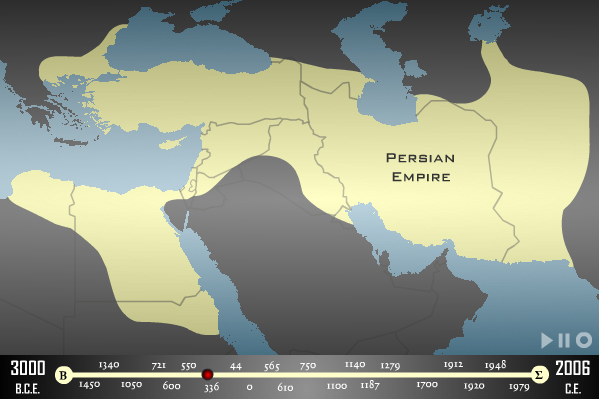
The Medes, and later the Persians, combined to form one of the greatest empires in history. You can see in the map above that the Babylonian territory was engulfed by the Persians, but also notice that the Persians expanded control into Northern Africa and modern-day Turkey.

Javan [Greece] — The Core and Thighs of Bronze

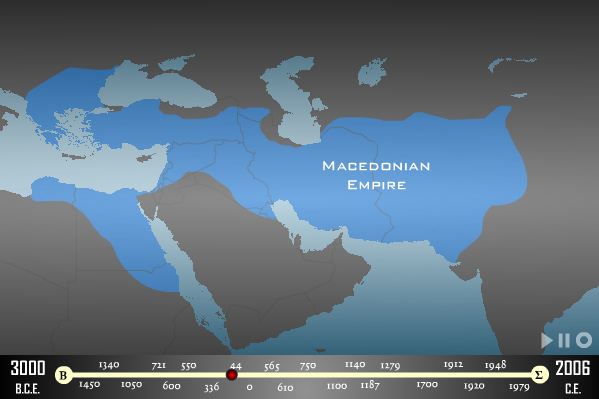
The Biblical name for Greece is “Javan,” and it represents the historical Macedonian Empire that reached its height under the leadership of Alexander the Great. This is important because when we think of modern Greece today, we often limit our scope to the European Greek Isles, but the ancient Macedonian Empire was a vast and powerful kingdom that covered more territory than the Persians.

Once again, notice how Javan covered the Middle East, parts of Northern Africa and all of Persia. In other words, ancient Greece occupied the same land mass as Babylon and Persia before it.

The geographical profile provides very important clues about the potential territory of the fourth kingdom in the last days that will be shattered to pieces by King Jesus Himself. One of the other key points of interpretation is that all three of these historical empires were foreign occupiers of Israel and oppressors of the Jews.

There is only one other historical kingdom that fits the profile of the previous three — a kingdom that occupied the same territory and that also oppressed the Jewish people. This empire, I believe, provides another critical clue in understanding what the fourth kingdom of Daniel 2 will be.

Just consider the map below until next time.